Skip to content

Dolly Parton Her Music Life Love Legacy
Dolly Parton: Her Life, Her Music, Her Charity Work and Her Enduring Legacy
There are entertainers who become famous, and there are rare figures who seem to become part of the emotional furniture of everyday life. Dolly Parton belonged to the second group. People who never bought a country record knew her voice. Children who had never heard “Jolene” knew her as the lady who sent them a book. Film lovers remembered her warmth in Steel Magnolias. Working women heard their frustration and humour in “9 to 5”. Songwriters admired the craft hidden beneath the rhinestones, while communities in need came to know that her generosity was practical, personal and often surprisingly quiet.
Dolly Rebecca Parton died peacefully in Nashville on 25 August 2026, aged 80. The official announcement of her death described a seven-decade career built not only on timeless music, but also on wit, warmth, kindness and resilience. It was a fitting summary. Dolly created one of the most recognisable public images in entertainment, yet her deepest legacy may be found in things that cannot be measured by costume, chart position or celebrity: a child opening a book addressed to them, a family receiving help after losing a home, a patient benefiting from medical research, or a person from a poor background seeing proof that where you begin does not have to decide where you finish.
A childhood in the Smoky Mountains
Dolly Parton was born on 19 January 1946 in Sevier County, Tennessee. She was one of twelve children raised by Robert Lee Parton and Avie Lee Owens Parton in a small home in the foothills of the Great Smoky Mountains. Money was extremely limited. The family’s circumstances were not a later publicity invention or a polished “rags to riches” slogan; poverty shaped the practical details of Dolly’s childhood and remained a central source of her storytelling.
Her father worked hard in farming and construction. He was intelligent, resourceful and respected by his daughter, but he had never learned to read and write. Dolly would later speak of how deeply illiteracy affected him. That memory became the emotional foundation of her largest charitable project, the Imagination Library. Her mother, meanwhile, filled the household with songs, old ballads, folklore and stories. In a crowded home with few material comforts, music became entertainment, memory, faith and escape.
She performed on local radio and television while still young and appeared at the Grand Ole Opry at the age of thirteen. Her uncle Bill Owens recognised her ability and helped her make trips to Nashville. According to the official account of her early career, Dolly signed with Monument Records in 1965 and later secured a songwriting agreement with Combine Music. She was not waiting to be discovered by accident. Even as a teenager, she understood that talent needed discipline, contacts, persistence and the nerve to enter rooms where decisions were made.
Her Appalachian childhood never became something she tried to erase. Instead, she turned it into art. “Coat of Many Colors” transformed a memory of being mocked for wearing a patchwork coat into a song about a mother’s love and a child’s dignity. “My Tennessee Mountain Home” preserved a sense of place without pretending that rural poverty was picturesque. Dolly could love where she came from while remaining honest about how hard it had been. That balance helped her avoid two traps: shame about poverty on one side and sentimental romanticising of it on the other.
The mountains gave her imagery, melodies, speech rhythms, humour and moral perspective. They also gave her a lasting instinct to remember people who were easily overlooked. She knew the difference between being poor and being without value. Much of her future philanthropy would be built on that same conviction.
Nashville, Porter Wagoner and the making of a star
After finishing school, Dolly moved to Nashville to pursue music full time. The city was the centre of the country-music industry, but opportunity was not distributed evenly. Women were often expected to fit narrow roles, accept male control and remain grateful for limited chances. Dolly entered that world with a sweet voice, striking appearance and apparently sunny manner, but behind the charm was a serious writer and a determined business mind.
Her debut album, Hello, I’m Dolly, arrived in 1967 and included “Dumb Blonde” and “Something Fishy”. The title “Dumb Blonde” was useful camouflage for a performer who understood precisely how she was being perceived. Dolly repeatedly turned assumptions about her looks into a kind of strategic advantage. If people underestimated her, she had more room to surprise them.
The decisive early breakthrough came when she joined The Porter Wagoner Show in 1967. Wagoner was already an established television and recording star. Appearing beside him brought Dolly into homes across the United States and helped establish her as part of one of country music’s best-known duos. They recorded a substantial body of work together and scored a run of successful singles.
The partnership provided exposure and experience, but it also became restrictive. Dolly wanted a solo career and the freedom to shape her own future. When she decided to leave the show in 1974, the separation was emotionally and professionally difficult. Rather than reducing the experience to a public feud, she did what great writers often do: she turned complicated feeling into a song.
“I Will Always Love You” was written as a farewell to Porter Wagoner. It was not originally a conventional romantic love song. It expressed gratitude, affection and the need to leave. That is why the lyric has always carried more emotional complexity than its title suggests. It is possible to love somebody and still know that staying would prevent you from becoming who you need to be.
The song reached number one on the country chart in 1974. Dolly’s own re-recorded version reached the top again in 1982 after appearing in The Best Little Whorehouse in Texas. Years later, Whitney Houston would transform it into a global pop and soul phenomenon for The Bodyguard. One composition therefore connected Nashville television, country music, Hollywood, R&B and one of the greatest voices of the twentieth century. Few songs have travelled so far while retaining their emotional centre.
Leaving Wagoner established more than Dolly’s independence as a performer. It demonstrated her willingness to risk security in order to own her direction. That pattern would continue throughout her career: she listened to advice, worked well with others and valued loyalty, but she did not hand over the final authority over her identity.
Dolly Parton the songwriter
The wigs, sequins and jokes sometimes distracted casual observers from a basic truth: Dolly Parton was an exceptional songwriter. Her melodies were accessible, but rarely careless. Her language sounded conversational, yet the strongest songs were tightly constructed. She could establish a character, setting, conflict and emotional turn within a few minutes.
Her writing drew from country tradition, Appalachian storytelling, gospel, pop and lived experience. She wrote about jealousy, poverty, work, motherhood, heartbreak, faith, ambition and self-respect. She was able to be vulnerable without sounding powerless and funny without making emotion feel cheap.
“Jolene” is one of the clearest examples. On paper, the story is simple: a woman begs a beautiful rival not to take her man. Yet the song avoids the aggression that might be expected from that situation. The narrator is frightened, captivated and painfully honest. She describes Jolene’s beauty in such vivid terms that admiration and jealousy become tangled together. The repeated name works like an incantation, while the urgent guitar pattern keeps the anxiety moving forward. The song has been covered across country, rock, pop, folk and other genres because the feeling is universal even when the arrangement changes.
“Coat of Many Colors” operates differently. It is small, intimate and autobiographical. The song does not deny that the family lacked money. Instead, it changes the meaning of the coat through the love with which it was made. The children who laugh see scraps; Dolly sees care, imagination and a story her mother has given her. The song’s power comes from refusing to let economic value become the only measure of worth.
“9 to 5” is witty, rhythmic and politically sharper than its cheerful surface may suggest. Dolly reportedly used the sound of her acrylic fingernails as part of the song’s typewriter-like rhythm. The lyric captures the exhaustion of workers whose effort enriches somebody else, especially women facing sexism and limited advancement. It became a chart-topping hit and an anthem because it made structural frustration singable. People could dance to it, laugh with it and still recognise the truth inside it.
“Here You Come Again” showed her ability to succeed in a smoother country-pop setting. “Islands in the Stream”, recorded with Kenny Rogers, became one of the defining duets of the 1980s. The Trio albums with Emmylou Harris and Linda Ronstadt placed three distinct voices into exquisite harmony. Later bluegrass work, including The Grass Is Blue, reconnected her with acoustic roots while proving she did not need to chase whatever style was currently fashionable.
The scale of her catalogue is extraordinary. The Recording Academy’s retrospective notes more than 100 million records sold worldwide, 25 number-one songs on Billboard’s Hot Country Songs chart and 11 Grammy Awards from 54 nominations. Those figures are impressive, but numbers alone cannot explain why the songs lasted. Longevity came from emotional precision. Dolly wrote in a way that made the personal shareable.
She also understood the importance of ownership. Songwriting was not merely a route to applause; publishing rights could protect a creator’s independence for decades. Her control of “I Will Always Love You” became especially significant after Whitney Houston’s recording generated enormous royalties. Dolly’s decision to treat her songs as intellectual property as well as emotional expression helped give her the resources to fund later businesses and charitable work.
Crossing from country into global popular culture
Dolly Parton never abandoned country music, but she refused to let the category become a cage. During the late 1970s, records such as “Here You Come Again” reached listeners beyond the traditional country audience. Some purists questioned the polished sound, yet Dolly understood that expanding her audience did not erase her roots.
Her move into film was equally successful. In 9 to 5, released in 1980, she appeared alongside Jane Fonda and Lily Tomlin. Dolly played Doralee Rhodes, a capable secretary subjected to rumours and harassment by a dishonest boss. The role used public assumptions about Dolly’s appearance, then overturned them. Doralee was not foolish or passive. She was warm, observant and unwilling to accept humiliation indefinitely.
The film’s workplace comedy carried a serious message about sexism, unequal power and the frustrations of employees treated as disposable. Its title song reached number one across the Billboard Hot 100, country and adult-contemporary charts, according to Dolly’s official album history. It also earned an Academy Award nomination.
Other film roles followed. The Best Little Whorehouse in Texas allowed her to combine music and screen charisma. Steel Magnolias placed her within an ensemble of formidable actresses and remains beloved for its mix of humour, friendship and grief. She also appeared in Rhinestone, Straight Talk and Joyful Noise, while her television projects introduced her to new generations.
Her production company, Sandollar Productions, demonstrated a further level of ambition. Dolly was not content merely to stand in front of a camera; she wanted a role in creating and controlling projects. Sandollar’s work included films and television, and the company co-produced Common Threads: Stories from the Quilt, the Academy Award-winning documentary about people memorialised through the AIDS Memorial Quilt. This was another example of her willingness to support stories outside the boundaries of her own public image.
Then there was Dollywood. When the theme park opened under that name in Pigeon Forge in 1986, it might have looked like a celebrity-branding exercise. In practice, it became a major regional employer and tourist attraction rooted in the culture of East Tennessee. The official Dolly Parton biography reports that Dollywood and associated businesses have drawn more than four million visitors annually and created jobs and opportunities for thousands of people in the region.
This matters because Dolly’s loyalty to her home area was economic as well as emotional. She did not simply sing about the Smoky Mountains after becoming wealthy elsewhere. She helped build a business capable of sustaining employment, tourism and local supply chains. Charity answers urgent needs; responsible enterprise can also create long-term stability. Her legacy includes both.
The Dollywood Foundation and a belief in education
Dolly established the Dollywood Foundation in 1988, initially to support educational success among children in her home county. One early initiative was the Buddy Program. Dolly offered seventh- and eighth-grade students $500 if they graduated from high school, and asked each student to choose a “buddy” who would encourage them to stay the course. According to the Dollywood Foundation’s own history, the dropout rate for those classes fell from 35 per cent to 6 per cent.
The programme reveals several features of Dolly’s charitable approach. It was local, because she understood the community. It was specific, because “help education” is vague whereas encouraging a defined group of students to graduate is measurable. It also recognised that young people need both resources and relationships. The payment mattered, but so did the idea of two students taking responsibility for encouraging each other.
Her father’s inability to read remained a powerful influence. Dolly admired him deeply and described him as one of the smartest people she knew, but she saw the embarrassment and limitation that illiteracy could create. Rather than using his story as a sad anecdote, she built a system designed to prevent the same disadvantage being passed to another generation.
Dolly Parton’s Imagination Library
The Imagination Library began in 1995 in Sevier County. Its central idea was beautifully simple: registered children would receive a high-quality, age-appropriate book by post every month from birth until the age of five, at no cost to their family. The programme was open regardless of household income wherever local coverage was available.
That last detail is important. Means-tested programmes can direct resources to those in greatest financial need, but they can also create paperwork, stigma and gaps in participation. The Imagination Library used a universal local model. A child did not have to prove poverty to deserve books. Affluent and deprived families could take part, while the effect was especially meaningful in homes where buying a new children’s book each month would be difficult.
The experience was about more than the object itself. Each book arrived addressed to the child. For a three-year-old, receiving personal post can feel extraordinary. It tells them that books belong to them and that somebody expects them to read, imagine and grow. Dolly understood the emotional theatre of giving. The parcel did not feel like leftover charity; it felt like a present.
The scheme expanded across the United States and later internationally. Canada joined in 2006, the United Kingdom in 2007, Australia in 2013 and the Republic of Ireland in 2019. In 2018, Dolly presented the 100 millionth donated book to the Library of Congress. By the end of 2025, the programme reported more than 304 million books gifted since its creation, including over 40 million during 2025 alone. Current programme information says more than three million books are mailed each month around the world. These figures come from the Imagination Library’s official year-in-review data and programme history.
The reach is impressive, but the deeper achievement is structural. Dolly did not personally select an occasional school for a photograph and then move on. The foundation created a replicable model involving publishers, local partners, funders, public bodies and community organisations. That network allowed a hometown idea to operate across different countries and administrative systems.
Dolly called herself the “Book Lady”, a title that may ultimately be as important as “Queen of Country”. A hit song can transform a moment. A book delivered every month can help transform the choices available across a lifetime.

Dolly Parton Her Very Own Music Life Love Legacy
Disaster relief: the My People Fund
In November 2016, devastating wildfires affected Sevier County and the Great Smoky Mountains area. Homes were destroyed and families were displaced in the region Dolly still regarded as her own. Within days, the Dollywood Foundation established the My People Fund.
The fund promised monthly payments of $1,000 to families whose primary homes had been lost or destroyed. Nearly 900 families received assistance in the early distribution period. In the final month, the support was increased to $5,000 per family. The response eventually distributed millions of dollars, and later funds were also given to volunteer fire departments that had served the community. Dolly’s official records state that each eligible family received regular cash support rather than being told precisely how to spend it.
That approach respected the fact that families know their own immediate needs. One household might require temporary rent, another a vehicle, clothing, medicine or replacement work equipment. Cash assistance offered flexibility at a time when normal decision-making had been shattered.
Medical research and children’s health
Dolly’s giving also supported healthcare. In 2020, during the early months of the COVID-19 pandemic, she donated $1 million to Vanderbilt University Medical Center. The Dolly Parton COVID-19 Research Fund supported teams working on treatments and scientific understanding. Vanderbilt later confirmed that the funded work included research connected with a Phase 1 trial of Moderna’s mRNA-1273 vaccine. It is most accurate to say that her donation helped support important COVID-19 research associated with the vaccine’s development—not that she personally “paid for the vaccine” or was its sole funder. Vanderbilt provides that clarification in its account of the research fund.
In 2022, she donated another $1 million to pediatric infectious-disease research at Vanderbilt. The work included the study, prevention, diagnosis and treatment of serious infections affecting children, including children with cancer. In announcing the donation, Dolly returned to a simple principle: children should not have to suffer when adults have the ability to help.
Her connection to healthcare also included support for the Dolly Parton Center for Women’s Services in Sevier County. In February 2026, East Tennessee Children’s Hospital announced a major partnership and was renamed Dolly Parton Children’s Hospital. Its leadership described her financial commitment as “generational and transformational”, intended to support staff, programmes, technology and expanded pediatric care across the region. The precise value of the gift was not publicly specified, so its importance should not be reduced to an invented dollar figure.
Medical research is less immediately visible than handing somebody a cheque or posting a child a book. Results may take years and may benefit people who never know the donor’s name. That makes it an important part of her charitable record. Dolly’s philanthropy was capable of operating at both levels: direct human relief and long-term scientific capacity.
Did Dolly Parton fund deprived Black areas?
The short answer is that there is a genuine, well-documented story behind this claim, but it is often described too broadly.
After Whitney Houston recorded “I Will Always Love You” for The Bodyguard in 1992, Dolly earned substantial songwriting and publishing royalties. In a 2021 television interview, she explained that she used some of that money to buy a commercial or office complex in a Nashville neighbourhood populated mainly by Black families and residents. She connected the location to Whitney and affectionately described it as the “house that Whitney built”. Contemporary reporting by ABC News and The Washington Post documented her comments.
This was an investment in a predominantly Black community, not a conventional grant to a charity. That distinction matters. Buying and developing commercial property can bring jobs, services, business activity and long-term attention to an area, but the social outcome depends on how the property is managed, who gains employment, what businesses can operate there and whether local residents benefit as values change. It is therefore safer to describe the act as a significant, symbolically deliberate community investment rather than to claim she solved deprivation or donated the entire royalty sum directly to Black households.
It is also wise to avoid repeating an exact figure unless a reliable financial record is available. News and social-media posts often state that the investment was worth approximately $10 million, but the best-supported core fact is Dolly’s own statement that some of the Houston-generated royalties were invested in the complex. The emotional logic was unmistakable: a Black artist’s extraordinary interpretation had generated new wealth from Dolly’s song, and Dolly wanted part of that wealth to have a visible presence within a Black Nashville community.
The story gains meaning from the relationship between the two recordings. Dolly wrote the song out of her own experience, but Whitney made it something different and equally valid. Houston’s performance did not erase the country original; it revealed the composition’s capacity to hold a gospel-influenced, technically astonishing R&B vocal. Dolly celebrated that success without territorial resentment. The Nashville investment extended the musical exchange into an economic gesture.
Her support for Black dignity was not limited to property. In 2020, Dolly publicly supported the principle that Black lives matter. She also changed the name of her “Dixie Stampede” attraction to “Dolly Parton’s Stampede”, explaining that people should respond when they learn that language causes harm. These actions did not turn her into a specialist racial-justice organisation, and they should not be used to obscure the work of Black activists who spent their lives confronting discrimination. They do, however, show a powerful white Southern entertainer choosing inclusion over nostalgia when the two came into conflict.
The Imagination Library also reaches Black children and families in underserved areas, as well as children from many other racial and economic backgrounds. Because the programme does not require a family to meet an income test, its books can enter homes facing deprivation without marking the recipient as poor. Local availability is still essential, and not every eligible child has always had access. Where coverage exists, however, the universal design can help reduce barriers associated with book cost, transport and limited local retail provision.
It would be inaccurate to say that all of Dolly’s literacy funding was created specifically for Black deprived neighbourhoods. It was not. The programme began in a predominantly white Appalachian county and expanded on a universal basis. Its value to Black communities arises from its scale, local partnerships and inclusive eligibility, not from a race-exclusive mission.
That may sound like a technical correction, but honest language strengthens the story. Dolly’s contribution did not consist of a single grand claim. It included a deliberate investment in a Black Nashville neighbourhood, public support for racial dignity, an embrace of Whitney Houston’s artistic achievement, and broad educational programmes capable of reaching children who face racial and economic inequality. Each part deserves recognition for what it actually was.
Awards, influence and the courage to keep changing
Dolly Parton was inducted into the Country Music Hall of Fame in 1999 and the Rock & Roll Hall of Fame in 2022. When the Rock Hall honour was first proposed, she responded with characteristic humility and uncertainty, questioning whether she belonged in the category. She later accepted and answered the challenge creatively by recording Rockstar, an expansive rock album released in 2023.
The episode captured something essential about her. She respected traditions, but she was not paralysed by them. She could move from Appalachian ballads to country-pop, workplace comedy, bluegrass, gospel, film, television, children’s books and rock without losing her recognisable centre.
Her influence can be heard in country artists who followed her path as singer-songwriters and businesswomen, but it also extends far beyond Nashville. Pop, rock, folk, soul and R&B performers have recorded her songs. “Jolene” has been repeatedly reinvented, while “I Will Always Love You” became inseparable from both Dolly and Whitney Houston: two very different vocal identities connected by one composition.
The private life behind the public personality
For all her fame, Dolly protected important parts of her private life. She married Carl Dean in 1966, and their marriage lasted nearly 59 years until his death in March 2025. Dean largely avoided the spotlight, creating an unusual contrast with one of the most recognisable women in the world. Dolly often turned that contrast into affectionate comedy, but she also guarded the relationship from public consumption.
After Carl’s death, Dolly spoke publicly about grief while continuing to work. Her own death the following year closed a partnership that had endured behind the scenes for most of her professional life. The official announcement stated that she was preceded in death by Carl, her parents and other loved ones, and that a private family service would be held. In lieu of flowers, supporters were encouraged to donate to the Imagination Library. Even the arrangements surrounding her death directed attention back towards children and books.
What Dolly Parton’s life can teach us
Dolly’s story is sometimes reduced to a reassuring formula: poor girl dreams big, works hard and becomes a star. That version is not false, but it is incomplete. Many poor children work hard and remain restricted by circumstances beyond their control. Dolly’s own charitable work recognised that talent needs access. A child needs books. A student may need an incentive and a supportive friend. A disaster survivor needs cash now, not admiration later. Scientists need funding before a breakthrough is certain.
Her life teaches the value of ownership. She protected her songs, built businesses and used the resulting income to support projects she cared about. Creative people are often encouraged to think that commercial judgement corrupts art. Dolly demonstrated the opposite possibility: sound business decisions can protect artistic freedom and finance generosity.
Perhaps most importantly, Dolly showed that dignity need not be rationed. She extended it to the rural poor, working women, Black neighbours, LGBTQ+ fans, sick children, grieving families and a father who could not read but whom she never described as unintelligent. Her generosity often began by refusing to confuse disadvantage with failure.
A legacy measured in songs, books and opened doors
It is difficult to summarise Dolly Parton because she seemed to contain several complete careers. She was a country singer with pop reach, a songwriter whose work survived radical reinterpretation, an actress with natural comic timing, a producer, author, businesswoman, theme-park partner and philanthropist. She could fill an arena, carry a film scene and speak to a preschool child without making any of those audiences feel like an afterthought.
Her music will remain the most immediate route into her world. Put on “Jolene” and the tension begins within seconds. Hear “Coat of Many Colors” and a poor child’s shame is transformed into pride. Play “9 to 5” and the working day becomes a chorus. Listen to Dolly’s “I Will Always Love You” after Whitney Houston’s version—or reverse the order—and it becomes possible to hear how one great song can hold two enormous truths.
Dolly Parton understood spectacle, but she also understood substance. She made herself impossible to overlook, then used that visibility to notice other people. That may be the clearest thread connecting her life, music and charity: she knew what it meant to be underestimated, and she spent much of her success telling others that they mattered.
The world will remember the voice, the hair, the laughter and the songs. It should also remember the systems she left working: books still being selected, partnerships still being formed, children still receiving parcels with their names on them, and communities still benefiting from decisions made by a woman who never forgot the crowded little home from which she began.
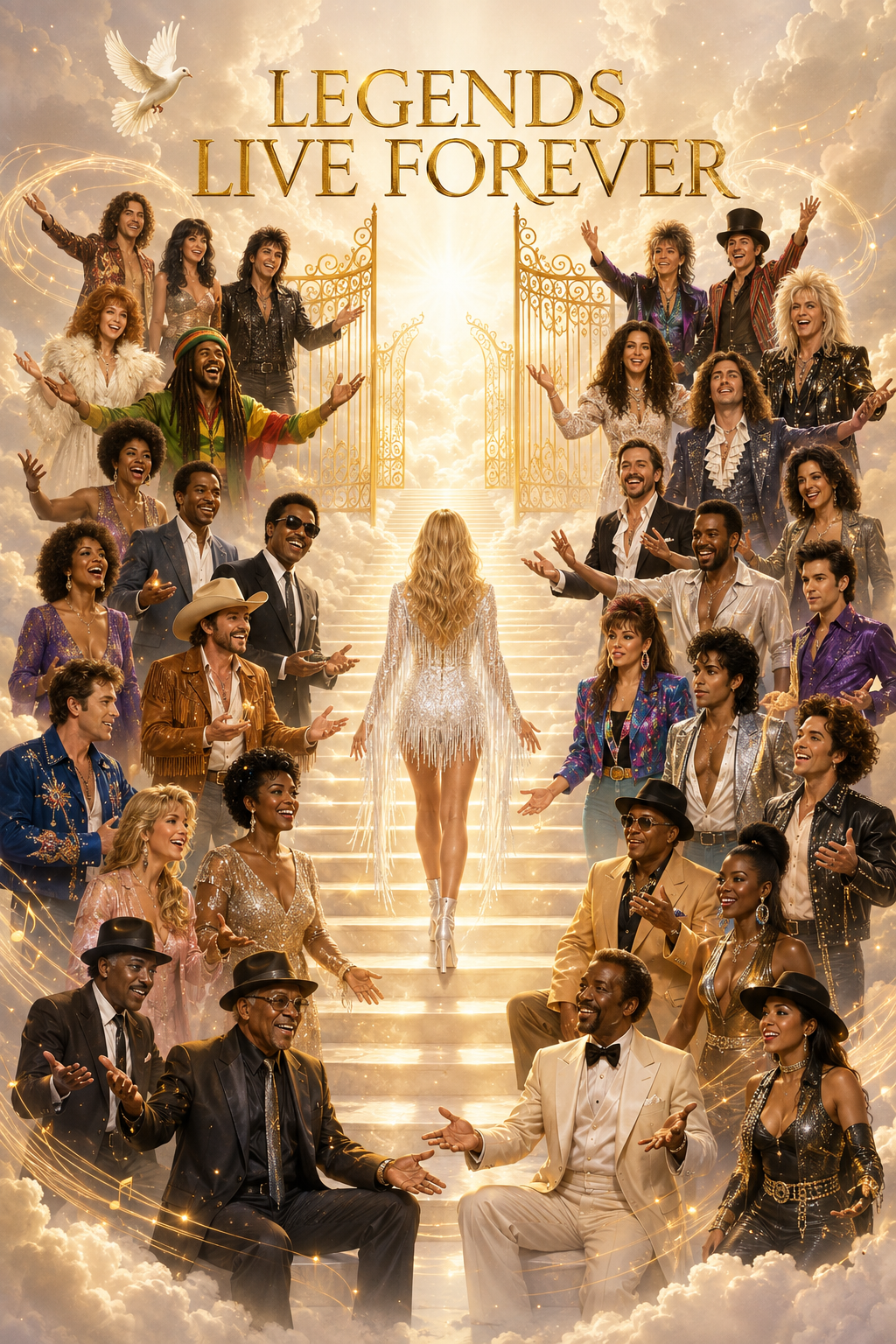
Dolly once wrote a farewell so generous that it became one of the most famous songs in modern music. After her death, its promise feels newly significant. She may have left the stage, but the love contained in her work did not leave with her. It remains in melodies, stories, research, jobs, relief funds, neighbourhoods and hundreds of millions of books.
That is more than fame. It is a legacy built to keep giving.
Frequently asked questions about Dolly Parton
When and where was Dolly Parton born?
Dolly Rebecca Parton was born on 19 January 1946 in Sevier County, Tennessee, near the Great Smoky Mountains. She was one of twelve children.
When did Dolly Parton die?
Dolly Parton died peacefully in Nashville on 25 August 2026. She was 80 years old.
What were Dolly Parton’s most famous songs?
Her best-known recordings include “Jolene”, “Coat of Many Colors”, “9 to 5”, “Here You Come Again”, “I Will Always Love You” and “Islands in the Stream” with Kenny Rogers. Her catalogue extended across country, pop, bluegrass, gospel and rock.
Did Dolly Parton write “I Will Always Love You”?
Yes. Dolly wrote the song as a farewell to Porter Wagoner when she was leaving their professional partnership. Her recording topped the country chart, and Whitney Houston later made the composition a worldwide phenomenon through her version for The Bodyguard.
What was Dolly Parton’s biggest charity project?
Dolly Parton’s Imagination Library was her largest and best-known charitable initiative. It mails free books every month to registered children from birth to age five in participating communities. By the end of 2025, the programme reported more than 304 million books gifted since 1995.
Did Dolly Parton help fund COVID-19 vaccine research?
Yes. She donated $1 million to Vanderbilt University Medical Center in 2020. The resulting fund supported COVID-19 research, including work connected with an early Moderna vaccine trial. She was an important donor, although the vaccine was the result of a much larger scientific and public-funding effort.
Did Dolly Parton invest in a Black neighbourhood?
Yes. Dolly said she used some of the royalties generated by Whitney Houston’s recording of “I Will Always Love You” to purchase a commercial complex in a predominantly Black Nashville neighbourhood. She associated the investment with Whitney’s legacy and called it the “house that Whitney built”. It is more accurate to call this a community property investment than a direct donation to all Black deprived areas.
How should Dolly Parton be remembered?
She should be remembered as a gifted songwriter, distinctive singer, pioneering businesswoman, entertainer and philanthropist. Her most lasting achievements include songs that crossed genres, businesses that supported her home region and a literacy programme that placed hundreds of millions of books into children’s hands.
Sources and further reading
- Dolly Parton official remembrance and biography
- Dolly Parton’s Imagination Library: programme history
- Imagination Library year-in-review statistics
- The Dollywood Foundation and Buddy Program
- Vanderbilt University Medical Center on Dolly’s COVID-19 research donation
- Vanderbilt University Medical Center on pediatric infectious-disease funding
- Dolly Parton Children’s Hospital
- Country Music Hall of Fame: Dolly Parton
- Songwriters Hall of Fame: Dolly Parton
- Recording Academy overview of Dolly Parton’s career
- Academy of Motion Picture Arts and Sciences: Jean Hersholt Humanitarian Award
- ABC News report on the Nashville investment linked to Whitney Houston royalties
-
Library of Congress: the 100 millionth Imagination Library book