 Skip to content

Everything to Know About the Notting Hill Carnival
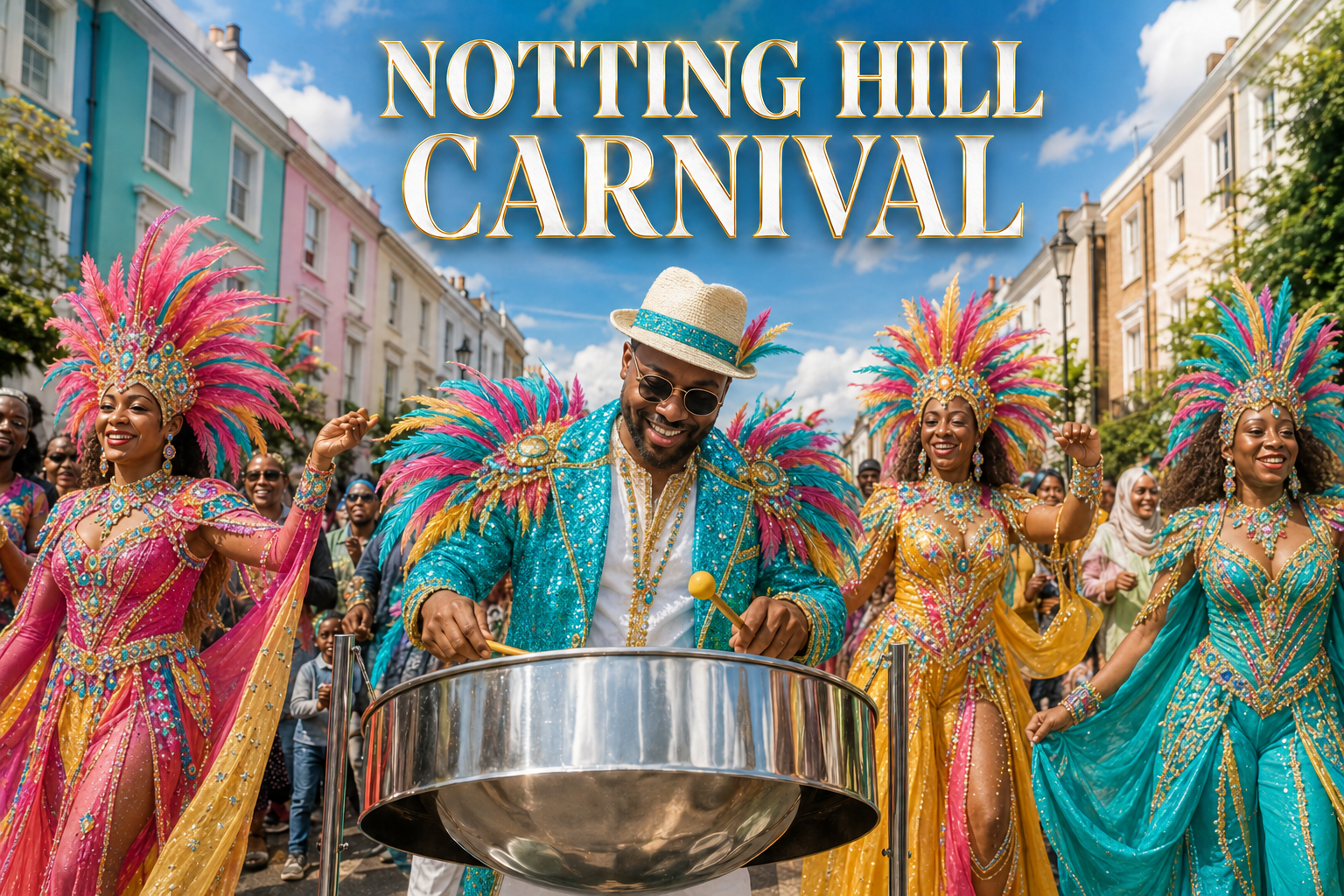
For one extraordinary August Bank Holiday weekend, west London changes character. Steel orchestras fill the air with melody, sound systems turn streets into dance floors and jerk seasoning drifts between colourful masquerade bands. This is Notting Hill Carnival: a community-led celebration of Caribbean culture with a six-decade history.
Carnival is not contained inside a park or behind a festival gate. It moves through residential streets across Notting Hill, Ladbroke Grove and Westbourne Park, with parade bands, sounds and food stalls unfolding at once.
This guide explains the event’s origins, introduces its musical and visual traditions, outlines the confirmed 2026 programme and offers practical advice for a respectful day out.
Notting Hill Carnival 2026 at a Glance
The 2026 celebration marks the Diamond Jubilee of the first outdoor Carnival held in 1966. The street parades remain free, while Panorama and grandstand seating require tickets.
| Date | Main attraction | Admission |
|---|---|---|
| Saturday bank holiday in August | UK National Panorama and Junior Panorama steelband competitions | Ticket required |
| Sunday bank holiday in Augustt | J’ouvert, Families and Children’s Day, Dutty Mas, stages and sound systems | Street events are free |
| Monday bank holiday in August | Adults Day parade, judging, live stages and sound systems | Street events are free |
The official Notting Hill Carnival website publishes programme changes, maps, band announcements and tickets. Check it shortly before travelling because operational details may be revised as the weekend approaches.
What Is Notting Hill Carnival?
Notting Hill Carnival is an annual celebration created and sustained by London’s Caribbean communities. It takes the expressive arts of carnival—music, costume, movement, storytelling and collective participation—and places them in the streets of the capital.
It is often called Europe’s largest street festival, yet “festival” describes only part of its purpose. Carnival is also a cultural inheritance, a public declaration of belonging and an arena in which generations of artists can develop and display their work. Masqueraders do not simply put on costumes; they embody themes developed by their bands. Steel orchestras do not provide incidental background music; they represent a remarkable Trinidadian musical tradition. Sound systems are not oversized stereos; they are creative institutions with individual identities, specialist crews and loyal communities.
Visitors are welcome to watch, listen, dance and eat, but the experience becomes much richer when they understand what they are joining. Carnival is joyful because it carries history, not because it has forgotten it.

From Caribbean Resistance to a London Institution
The story begins in post-war Britain, where Caribbean people encountered racism in employment, housing and everyday life. Violent attacks in Notting Hill during 1958 exposed the hostility facing the community.
Trinidadian journalist and activist Claudia Jones used culture as a force for solidarity. On 30 January 1959, she helped organise a Caribbean carnival inside St Pancras Town Hall. Music, dance and cabaret showcased West Indian talent. Jones, founder of the West Indian Gazette, is widely honoured as a mother of Caribbean carnival in Britain.
The outdoor story developed through local activist Rhaune Laslett, who invited Trinidadian musician Russell Henderson’s steelband to a multicultural community event. When the players moved through the streets, residents followed and turned the gathering into a procession.
The official Carnival history dates the first recognised outdoor event to 1966. In subsequent years, Caribbean residents, performers and organisers shaped it into a larger annual celebration. Leslie Palmer MBE broadened participation during the 1970s and helped bring static sound systems into the Carnival footprint in 1973. Live stages, new bands and changing musical styles followed.
The event reflects Claudia Jones’s cultural resistance, Laslett’s organising, Henderson’s mobile steelband and countless less-recorded contributions. The 2026 anniversary celebrates that collective legacy.
Why Carnival Still Matters
Notting Hill Carnival places Black British and Caribbean creativity at the centre of London’s public life. For the Windrush generation and its descendants, it offers a visible connection between ancestral traditions and contemporary British identity. For young participants, it provides opportunities to learn music, costume construction, choreography, event production and teamwork.
Its influence extends beyond one weekend. Mas camps build costumes, pan players rehearse arrangements, calypsonians develop songs and sound-system crews maintain equipment. Traders, volunteers and neighbourhood organisations prepare as well.
Carnival supports artistic knowledge, small businesses and social networks. The parade is its public expression; year-round work makes it possible.
Mas: The Art Moving Through the Streets
“Mas” is short for masquerade. Each band interprets a concept through costume, movement and music. Designers use feathers, crystals, fabric, paint, wire and sculpted components to create pieces ranging from T-shirts to towering presentations.
Themes may explore nature, mythology, history, politics or Caribbean heritage. Each visual section supports a larger idea that performers animate on the road and before judges.
Sunday’s children’s mas passes skills between generations, while Monday’s adult bands usually deliver the largest displays.
Dutty Mas, sometimes called Fun Mas, offers a contrasting experience. Participants use paint, powder and other messy materials while dancing behind mobile music. Anyone standing nearby should wear washable clothes and accept that keeping perfectly clean may be unrealistic.
Never touch a costume: it may be fragile, heavy or carefully balanced. Give masqueraders room and request permission for close portraits.

Steelpan: The Sound That Led the First Procession
Steelpan originated in Trinidad and Tobago, where musicians developed tuned playing surfaces from metal containers. Experimentation produced the only family of acoustic instruments invented during the twentieth century.
A steel orchestra has several voices: tenor pans carry melody, double and triple instruments add harmony, cello and guitar pans occupy the middle range, and bass pans provide depth.
Russell Henderson’s mobile musicians gave the emerging street celebration its first musical identity. The Carnival steelband guide explains their importance.
The 2026 UK National Panorama and Junior Panorama take place at Emslie Horniman’s Pleasance Park on Saturday 29 August, officially listed from 4pm until midnight. The competition reveals the scale and precision of large steelbands. Buy tickets through the Carnival website.
Sound Systems: One Street, One Musical Identity
Notting Hill Carnival is exceptional for its static sound systems. The tradition grew from Jamaica, where selectors, MCs, engineers and speaker builders created mobile centres of musical culture.
A sound system is both technical setup and creative collective. Records, mixing style, speaker design and audience relationship create its identity. Styles range from roots reggae and dub to dancehall, soca, rare groove, soul and house.
The mood can change within a few streets, from deep dub to energetic dancing. Equipment is extremely loud, making earplugs sensible and children’s hearing protection important.
Official sound systems are scheduled from noon until 7pm on both Sunday and Monday in 2026. Their fixed locations are shown on the Carnival map when it is released.
Calypso and Soca: Storytelling Meets Road Energy
Calypso and soca are related but distinct. Calypso uses narrative, humour, double meaning and social commentary. A singer can turn politics, gossip or human behaviour into a memorable song.
Soca emerged later, drawing from calypso while prioritising rhythm and participation. Percussion, bass and repeated instructions invite the road crowd to move together.
“Chipping” is a small forward dance step used with a band. “Wining” describes circular movement through the waist and hips. Both respond to rhythm without requiring formal choreography.
Reggae, dub and dancehall add another strand, while London contributes soul, jungle, house, Afrobeats and hip-hop. The soundtrack remains Caribbean-rooted without being frozen in time.
A Day-by-Day Guide to Carnival Weekend
Saturday: Hear the Steel Orchestras Compete
This ticketed competition gives steelbands one venue in which to present prepared arrangements. It rewards specialist listeners while revealing pan’s range to newcomers.
Sunday: Dawn Tradition and Young Masqueraders
J’ouvert runs from 6am to 9am near Canal Way Roundabout. Its name derives from jour ouvert, French Creole for daybreak. Participants celebrate with rhythm, paint and powder before the formal parade.
The 10am opening ceremony is held at the Mas Judging Point on Great Western Road. Children’s mas follows, alongside Dutty Mas, stages and sound systems. Sunday suits families better but remains crowded and loud.
Monday: The Carnival Climax
Adults Day begins at 10.30am and showcases the main costume bands. It produces the weekend’s densest combination of visual presentation, road music and crowds, so arrive early.
The Powis Square stage and sound systems run from noon to 7pm. At 3pm, a 72-second silence remembers the 72 people who died in the Grenfell Tower fire, plus departed community members and Carnival pioneers. Observe it quietly.
How the Parade Route and Judging Zone Work
The parade operates on a managed circuit through the W10 and W11 areas. Floats and bands move within an organised lane, while spectators watch from adjoining pavements and designated viewing spaces. Progress can appear slow because each group contains performers, music vehicles, costume sections and support personnel who must travel safely as one unit.
The route is not the only place to see Carnival. Static sound systems remain in fixed streets, food traders occupy approved pitches and live stages run their own programmes. Decide whether your priority is following the visual parade or exploring the wider music map; attempting to see everything creates unnecessary walking.
At the Judging Zone on Great Western Road, bands present themselves for assessment and make a concentrated performance. Ticketed Grandstand seating offers a defined view of this area. Elsewhere, public viewing remains free but depends on available pavement space.
The street map can change between editions. Download the official 2026 version when published, then note parade access points, toilets, welfare facilities and sound-system locations. An old map may contain streets or services that no longer apply.
Flavours to Look For
Food links Carnival with family recipes and regional Caribbean identities. Organisers describe more than 300 stalls.
Jerk chicken comes with rice and peas, salad or festival bread. Trinidadian roti may wrap curried meat, chickpeas or vegetables. Guyanese pepperpot, patties, plantain, corn, fried dumplings and Caribbean sweets broaden the choice.
Vegan and vegetarian provision has expanded. Ask about ingredients if you have allergies. Queues peak around lunch and card connectivity can fail, so carry modest backup cash.
Planning Your Journey in 2026
Driving is impractical. Roads close, buses divert, parking is restricted and public-hire bicycles and scooters stop operating within the event zone.
TfL’s 2026 guidance recommends the Tube or Elizabeth line to Paddington followed by the signed walking route.
Ladbroke Grove is closed all day. Notting Hill Gate allows no entry from 11am to 6pm, when Circle and District trains do not stop. Westbourne Park allows no entry from 11am. Other stations use closures or exit-only periods.
Plan the return separately because an arrival station may close later. Save live information, allow for walking and expect queues.

Where to Stay When Visiting London
Accommodation inside W10 and W11 becomes expensive and may be affected by road closures, noise or restricted vehicle access. The organisers recommend considering areas outside the immediate footprint and travelling by public transport.
Choose a hotel according to the route home, not simply its distance from Notting Hill on a standard map. A property near Paddington or another well-connected station may be more useful than a geographically closer room reached through closed streets. Confirm late check-in arrangements, study the night journey and allow enough energy for the walk back after a long day.
What to Pack for the Day
Choose a small zipped bag and carry only what you will use:
- A charged mobile phone and power bank
- Water, sunscreen and a hat for warm conditions
- A lightweight waterproof if rain is forecast
- Comfortable closed shoes
- Earplugs or child-appropriate hearing protection
- Essential medication, tissues and hand sanitiser
- A bank card plus limited emergency cash
- The event map saved for offline use
Avoid expensive jewellery, open footwear and oversized bags. Carnival involves hours of standing, walking and dancing, so comfort has a direct effect on how long you can enjoy it.
Preparing for Heat, Rain and Changing Weather
Late-August London can deliver strong sunshine, sudden rain or both within a few hours. Check the Met Office forecast on the morning of attendance and pack for the conditions actually expected.
In hot weather, apply sunscreen before arriving, cover your head and drink water regularly. Alcohol can make dehydration worse, while tightly packed streets may feel warmer than the recorded temperature. Seek shade or a welfare point if you become dizzy, confused or unusually weak.
For rain, use a lightweight waterproof rather than an umbrella, which takes up space and can obstruct other people’s view. Quick-drying clothes and shoes that remain comfortable when wet are more valuable than a bulky spare outfit.
Navigating Crowds Safely
Agree on a precise meeting landmark and backup point before entering busy streets. Mobile networks may slow under heavy demand.
Follow pedestrian flow. If a street feels too dense, move calmly towards open space instead of forcing against the crowd. Hydrate and take quiet breaks.
The safety page lists welfare points at Powis Square, Emslie Horniman’s Pleasance Gardens, Shrewsbury Gardens and Venture Community Centre. Uniformed teams help with separation, distress or illness. Call 999 when emergency assistance is not already visible.
Taking Children to Notting Hill Carnival
Sunday is family day, but preparation matters. Arrive early, use hearing protection and keep pushchairs away from speaker stacks and tight crowds.
Photograph each child’s outfit, secure a contact number on younger children and identify official stewards. Plan toilets, food and rest before discomfort begins.
A shorter visit covering the children’s procession and lunch may be more enjoyable than staying until closing.
Accessibility Considerations
Public-road surfaces, kerbs, crowds and distances vary. The accessibility guide says most toilet locations include an accessible unit and links to TfL’s accessible Journey Planner.
Paddington offers step-free or staff-assisted options, including level Elizabeth line access. Allow for distance and slow pavements, download toilet details and identify rest points.
Photography and Filming Without Becoming an Obstruction
Carnival offers extraordinary images, but the best photograph is never worth blocking a moving band or stepping into an operational lane. Shoot from a stable pavement position, keep equipment compact and respond immediately when stewards ask people to move.
Wide street scenes can capture scale without intruding on individuals. For close portraits, make eye contact and obtain agreement first. Apply particular care around children and anyone receiving welfare or medical assistance. Avoid publishing an embarrassing image simply because it was taken in public.
Drones are prohibited at Notting Hill Carnival. Leave aerial equipment at home and enjoy the perspective available from street level or authorised Grandstand seating.
Tickets, Spending and Participation
Sunday and Monday have no general admission charge. Panorama, Judging Zone Grandstand seats and organised afterparties require tickets.
Spectators may not enter the operational parade lane. To play mas, join an authorised band and buy its costume package. Musicians should approach participating organisations months ahead.
Volunteering roles may involve stewarding or information support and require training. New floats are at capacity, making an existing organisation the realistic route into the procession.
When the Street Programme Finishes
The end of the public music programme does not mean transport immediately returns to normal. Crowds leave at similar times, station controls remain active and the walk out can take longer than the journey in.
London hosts many Carnival afterparties, but they are separate events with their own tickets, age rules and admission policies. Buy from recognised promoters, check the venue location and avoid plans that depend on crossing west London in minutes. If you are not attending an afterparty, leaving before the final rush may produce a calmer journey home.
How to Be a Respectful Carnival Visitor
Treat performers as artists. Request close portraits, never touch costumes, keep emergency routes clear and respect physical boundaries while dancing.
The footprint is also residential. Use toilets, bin waste, protect gardens, follow stewards and show patience to licensed traders.
Recognise Carnival as Caribbean cultural space. Learn its terms and appreciate the skill behind its presentation; respect enables everyone to share the joy.
Bringing Carnival Inspiration to Your Own Celebration
A Caribbean-themed wedding, school event or party should begin with music and hospitality rather than clichés. Live steelpan welcomes guests; a Caribbean DJ develops the evening through calypso, reggae and soca.
Stage the experience: live pan for arrivals, relaxed selections during conversation and faster music for dancing. Use knowledgeable caterers and give performers suitable power, shelter and access.
Public events require licences, noise control, insurance, food hygiene, security and emergency planning. Private hosts should also use a schedule and notify neighbours.

Choose Steelasophical for Your Own Carnival Event
Steelasophical Steel Band DJ provides live steelpan and DJ entertainment tailored to the occasion.
Led by Gary Trotman, Steelasophical performs at weddings, parties, schools, corporate functions and community events across the UK. Pan can welcome arrivals or enliven a reception, while the DJ option carries the occasion into dancing without changing supplier.
Alongside calypso, soca and reggae, the repertoire draws on pop, soul, jazz, Motown and R&B. Familiar melodies retain an unmistakable Caribbean character on pan.
Notting Hill Carnival’s community and meaning are unique. Steelasophical instead brings professional musicianship, thoughtful presentation and genuine appreciation of Caribbean music to your guests.
To discuss availability and suitable entertainment options,
visit steelband.co.uk,
Use the online enquiry form, email Gary@Steelband.co.uk
or call 07540 307890.
Steelasophical Steel Band DJ—“We bring the Caribbean to you.”
A Final Word Before You Go
Listen to how a steel orchestra balances melody and bass. Notice how costume sections interpret one theme. Compare the character of different sound systems, try a less-familiar dish and remember those who built this London institution.
Practical shoes, a clear travel plan and cultural respect leave you free to experience Carnival’s artistry, collective memory and streets moving to one rhythm.