Virtual Steelpan

Steelpan Sounds at Your Fingertips: Exploring the World of Virtual Steel Drums

The steelpan, with its vibrant melodies and infectious rhythms, transports you to sun-drenched Caribbean shores. But what if you can’t physically get to a tropical paradise? Fear not, music lovers, because the magic of the steelpan is now accessible through the wonders of virtual instruments!

Gone are the days when experiencing the steelpan required attending a live performance or shelling out for a hefty instrument. Virtual steel drums, readily available online and as apps, open up a world of possibilities for both the curious and the steelpan enthusiast alike.

The Rise of the Virtual Steelpan:

The concept of virtual instruments isn’t new, but applying it to the steelpan presented a unique challenge. Unlike a piano or guitar, the steelpan’s layout and playing technique are more complex. However, technological advancements have allowed developers to create realistic simulations that capture the essence of the instrument.

These virtual steel drums come in various forms:

  • Online Platforms: Websites like Virtual Piano https://virtualpiano.net/virtual-steelpan/ offer virtual steelpans with a simplified layout, perfect for beginners. Click on the designated areas to recreate basic melodies and explore the instrument’s range.
  • Mobile Apps: Several mobile apps, some free and some with premium features, offer a more immersive experience. These apps often utilize touchscreens, allowing users to simulate the hitting of the pan with their fingers, providing a more tactile experience. Some apps even offer features like recording and playback, allowing you to capture your musical creations.
  • Advanced Software: For seasoned musicians or those seeking a highly realistic experience, there are professional-grade virtual instrument software suites like Kontakt or Native Instruments Battery. These programs offer high-quality steelpan sample libraries, allowing for detailed control over dynamics, articulation, and even pan selection.

Beyond the Basics:

Virtual steel drums offer more than just replicating the sound of the instrument. Many platforms incorporate features that enhance the learning experience:

  • Interactive Tutorials: Some apps include built-in tutorials that guide users through basic scales, rhythms, and even popular steelpan melodies. This is an excellent resource for beginners who want to learn the fundamentals of playing.
  • Customizable Layouts: Several virtual steelpans allow users to modify the layout to match their preferred playing style or specific pan type. This can be particularly helpful for transitioning from a virtual environment to a real steelpan in the future.
  • Looping and Backing Tracks: Some apps offer pre-recorded backing tracks in popular Caribbean styles like calypso and soca. Users can practice their skills by jamming along with these tracks, fostering a sense of playing in a band.

Benefits of Virtual Steel Drums:

While nothing can replicate the experience of playing a real steelpan, virtual steel drums offer several advantages:

  • Accessibility: They are readily available and often free or relatively inexpensive to access. This makes them a great entry point for anyone curious about the instrument, particularly those who might not have access to a physical steelpan.
  • Portability: You can carry the virtual steelpan experience in your pocket with mobile apps. Practice melodies while commuting or waiting in line, making it a convenient way to fit steelpan learning into your busy schedule.
  • Experimentation: Virtual steel drums allow you to experiment with different sounds and techniques without worrying about damaging the instrument. This is a great way to develop your musical ear and explore the instrument’s possibilities before investing in a physical steelpan.

The Future of Virtual Steel Drums:

As technology advances, we can expect even more sophisticated virtual steel drums to emerge. Here are some exciting possibilities:

  • Augmented Reality (AR): Imagine using AR technology to project a virtual steelpan onto a real surface and playing it with your hands. This technology could create a more immersive and realistic steelpan experience.
  • Advanced Sample Libraries: Sample libraries that capture the nuances of different pan types and playing techniques could create an even more authentic virtual steelpan sound.
  • Educational Tools: Virtual steel drums could be integrated into online music education programs, offering a fun and engaging way to learn about the history and culture of the steelpan.

Conclusion:

Virtual steel drums are not a replacement for the real thing, but they offer a valuable tool for learning, exploring, and enjoying the captivating sounds of the Caribbean. Whether you’re a curious beginner or a seasoned musician looking for a convenient practice tool, virtual steel drums offer a gateway to the vibrant world of the steelpan, right at your fingertips. So, grab your virtual mallet and dive into the world of steelpan sounds! You might just discover your new musical passion.

Beyond the Clicks: Embracing the Nuances of Virtual Steel Drums

The blog post explored the exciting world of virtual steel drums, highlighting their accessibility and potential for learning. But let’s delve deeper and explore some additional aspects to consider when venturing into this digital realm.

The Art of Simulation:

While virtual steel drums offer a realistic soundscape, it’s important to acknowledge the limitations. The true steelpan experience involves a complex interplay between the player, the instrument’s physical properties, and the environment. Here’s what you might miss in the virtual world:

The Tactile Experience: Virtual steel drums can’t replicate the feel of the mallets striking the pan’s surface. The subtle variations in weight, texture, and rebound of real mallets contribute significantly to a player’s control and expression.
The Pan’s Resonance: A real steelpan vibrates with each note, creating a rich and dynamic sound. Virtual simulations can capture this through high-quality samples, but they might not fully replicate the full spectrum of resonance a physical pan offers.
Playing Techniques: Advanced steelpan techniques like “dead strokes” or “rolling” are challenging to replicate convincingly in a virtual environment.

Finding the Right Fit:

When choosing a virtual steelpan, consider your goals and skill level:

Beginners: Opt for beginner-friendly platforms with simplified layouts and interactive tutorials. Focus on learning basic scales, rhythms, and familiarizing yourself with the instrument’s range.
Intermediate Players: Look for apps with customizable layouts and features like looping and backing tracks. These tools can help you refine your technique and explore playing melodies with accompaniment.
Advanced Players: Explore professional-grade software with high-quality sample libraries. These programs allow for detailed control over sound and articulation, offering a more realistic experience closer to a physical pan.
Beyond the App:

Virtual steel drums can be a springboard for further exploration:

Online communities: Connect with other steelpan enthusiasts online through forums and social media groups. Share experiences, learning tips, and even virtual jam sessions with fellow players.
Live Performances: When possible, attend live steelpan performances. Seeing real players and feeling the energy of the music firsthand can be incredibly inspirational.
The Real Deal: If you’re truly smitten by the steelpan, consider taking lessons or renting a pan to explore the physical instrument. The combined experience of virtual and physical steelpan playing can create a well-rounded learning journey.
A Bridge to the Caribbean Spirit:

Virtual steel drums are not just digital instruments; they are gateways to the vibrant culture of the Caribbean. As you explore these virtual pans, delve deeper into the rich history of the steelpan, its role in Caribbean music, and the vibrant steelpan communities worldwide.

In conclusion, virtual steel drums offer a valuable and accessible entry point into the world of this captivating instrument. Embrace their strengths, acknowledge their limitations, and use them as a stepping stone towards a deeper appreciation for the steelpan and its cultural significance. So, explore, experiment, and let the virtual steel drums guide you on a musical journey to the sun-drenched shores of the Caribbean!

virtual steelpan
Virtual Steepan keyboard to play online

Virtual PanKeyboard

Virtual Keyboard Pan

Play the Steel Pan on Keyboards
Play with your mouse.

virtual-steelpan

VIRTUAL STEELPAN

Play steelpan online using Virtual Piano

Virtual Steelpan is a musical instrument you can play online.

Pan-e-Pedia

Amost every layout of Pan

Your chance to tham all

collect: Aurélie Helmlinger

panepedia
e-pan steelasophical tty
e-pan steelasophical
e-pan steelasophical t

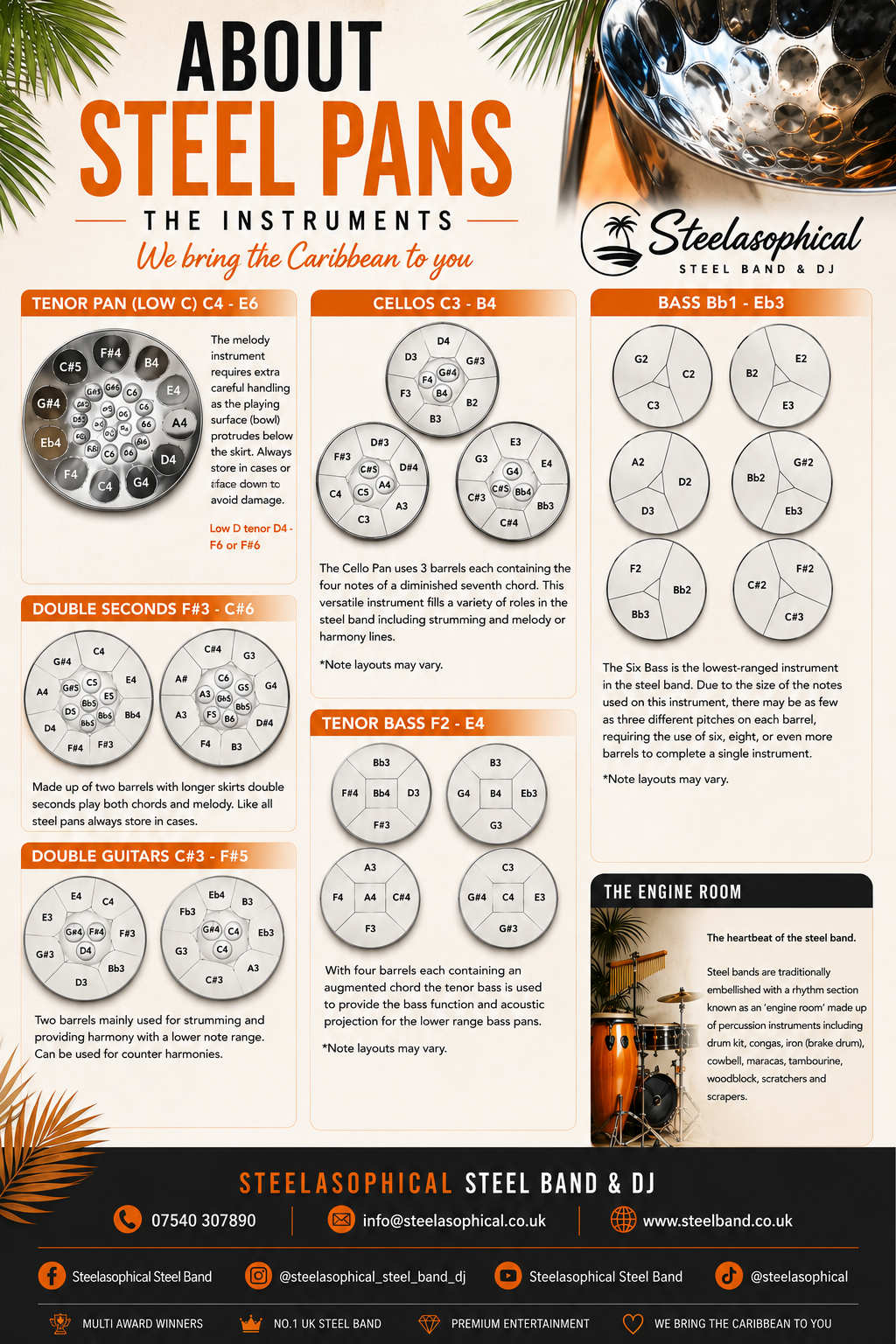
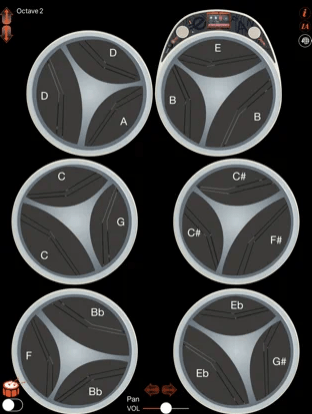
This app possesses some features of the E-Pan; the World’s 1st Electronic Synthesized Steelpan. It is as the name implies; the BEST steelpan app on the market. Not only can you play different styles of steelpan (Tenor, Double Seconds, Double Guitar and Six Bass), but it is a teaching tool.

This app has an In App available for users to acquire a feature called “Steelpan Professor” through the use of MIDI files allowing them to learn any song available on the web.

It also has a feature that works with iOS Core MIDI System. For example, when you connect your tablet or smart phone to a keyboard or electronic steelpan, you can play your instrument and the exact notes will be mirrored on your tablet or smart phone with the sound coming from your tablet or smart phone.

The #1 Steelpan App GOLD enables users to play the steelpan in the conventional way without having to relearn another method to master a new instrument.

• This #1 Steelpan App GOLD has an In-App feature called “Steelpan Professor: which is a teaching tool for people to learn to play the steelpan.

• Once you have acquired the “Steelpan Professor” the history making arrangements comes FREE.

• It allows you to use any MIDI file available on the web to learn to play any song available.

• It allows you to change octaves.

• It has note display feature.

• It delivers consistent sound and tonal quality.

• The #1 Steelpan App GOLD provides access to the sounds of just about every musical instrument which is built-in to the app.

• Users can also choose any particular instrument range as the #1 Steelpan App GOLD will be able to play the complete range from the highest tenor (soprano) to the lowest (bass).

• With the use of a lightening connector you can connect your tablet or smart phone to a MIDI controller, keyboard or electronic steelpan (such as the E-Pan). Playing the controller will control this app lighting up the corresponding note.

• This #1 Steelpan App GOLD produces one “pan sound”.

• #1 Steelpan App GOLD will facilitate play-along to accompany your favourite songs (karaoke-style) by using the Steelpan Professor.

• It will help you learn how to read music.

• It will help you to teach in the classroom digitally.

• It will help you to create tutorials digitally when hooked up to a controller.

Steelasophical Steel Band Music Hire

The E-Pan enables musician to play in the conventional way without having to relearn another method to master the new instrument, also eliminating the need for studied stage positioning and maintaining proper intonation.

E-Pan version 3

  • Touch Screen Display. 
  • Note display feature. 
  • 6 different steelpan tones including one from the 1940’s. 
  • The freedom of setting the user’s own note layout. 
  • It allows the player to upload any steelpan tone they desire via USB port.
  • It also allows the player to upload any other orchestral tone they desire via USB port.
  • It comes with a pitch bend. 
  • User can now upgrade software via USB. 
  • It comes with bluetooth capabilities.
  • No need for re-tuning, rusting and premature replacement. 
  • The E-Pan is durable, compact and light-weight to facilitate ease of transportation. 
  • It delivers consistent sound and tonal quality. 
  • The E-Pan is easier for stage set up and positioning than regular steel drums. 
  • The E-Pan provides access to the sounds of just about every musical instrument which is built-in to the instrument. 
  • Jacks for routing input/output signals to amplifiers and sound systems. *,
  • Users can also choose any particular instrument range as each E-Pan will be able to play the complete range from the highest tenor (soprano) to the lowest (bass). 
  • Top lip of instrument will have a control console with a panel that will entail; display window, selection of buttons for left/right volume controls etc. *,**,***
  • The E-Pan comes with MIDI IN OUT AND THRU ports making it possible to interface the instrument with other electronic or digital instruments and sound modules. 
  • This version 3 of the E-Pan produces “pan sounds” from tuner to tuner of choice
  • Instrument design will facilitate play-along to accompany your favourite songs (karaoke-style) by using the Auxiliary In port. 
  • The E-Pan comes with a two year warranty. 
  • The E-Pan comes with a universal power supply 110-240 ( you do not need to buy a transformer). 
  • The E-Pan comes with a user’s manual. 
  • The E-Pan does not come with an E-Pan stand. You would need to purchase an E-Pan collapsible stand separately which comes with an E-Pan adaptor. An E-Pan stand can be found under accessories
  • Now for the first time all steel pan players can enjoy digital applications. 

– Score their own music

– Learn how to read music

– Teach in the classroom digitally

– Create tutorials digitally

– And lots, lots more ….

  • NAPE, Inc. now offers several E-Pan versions of instruments in the steelpan family such as Tenor, Double Tenor, Double Seconds and Double Guitar. ***

Steel pans (steel drums)

Were created on the Caribbean island of Trinidad in the 1930s, but steel pan history can be traced back to the enslaved Africans who were brought to the islands during the 1700s.

They carried with them elements of their African culture including the playing of hand drums. These drums became the main percussion instruments in the annual Trinidadian carnival festivities.

In 1877, the ruling British government banned the playing of drums in an effort to suppress aspects of Carnival which were considered offensive. Bamboo stamping tubes were used to replace the hand drums as they produced sounds comparable to the hand drum when they were pounded on the ground.

These tubes were played in ensembles called tamboo-bamboo bands.

The steel pan is the national instrument of Trinidad and Tobago. It is the only musical instrument invented in the twentieth century. Created in the 1930’s, the steel pan owes its genesis to the carnival festivals of that era. It emerged as the product of the energy of the people directed towards cultural self-expression. The steelpan therefore became a cultural vehicle forged from the historical and social conditions prevailing at that time. Its development was moulded by the ethnic influences of our heritage.

HISTORICAL DEVELOPMENT
Carnival celebrations in the late 1800’s were marked by disturbances which prompted the authorities to prohibit the unlicensed playing of all percussion, string and wood-wind instruments by way of legal ordinance. This led to the development of the Tamboo-Bamboo as a musical instrument. The Tamboo-Bamboo was made from bamboo cut to various lengths and its sound was produced by stamping onto the ground. Carnival celebrations in the five decades from 1884 to the late 1930s witnessed the growing rhythms of Tamboo-Bamboo musical ensembles in street processions with accompanying brass and string instrumental bands.

Several problems with the bamboo material, including its tendency to splinter easily, resulted in experimentation with other materials such as metal containers, to produce various sound effects. These experiments resulted in the discovery of the steel drum since it proved to be more durable than other material and capable of greater tonal versatility.

This drum, originally used to store petroleum, evolved into the steel pan by making cross-sections cut into the 55-gallon metal container. Through further experimentation, percussive sounds of various pitches were produced by indenting and tempering the concave metal surface. The steel drum therefore was used in the creation of what is known today as the steel pan, and although there have been several competing claims to its invention, it is generally accepted that the steel pan was first made around 1939 in Trinidad and Tobago.

Carnival of 1940 witnessed the first public appearance of the steel pan and it has since evolved through the ingenious innovations of various contributors. These innovations have resulted in instruments of different tonal ranges which now comprise the musical ensemble of the modern steelband.

The steelpan has risen from the deprived urban tenements of Port-of-Spain where it was forged, to acceptance and promotion by the international community. What has brought this instrument forward onto the world stage was the devotion, talent and industry of its early followers. This is a significant achievement in the face of the financial obstacles and disdain by society for the thuggery and violence once associated with it.

Making a Steel Pan (Steel Drum) from a Metal Drum

There are ten steps in this process.

  1. Sinking
  2. Marking
  3. Counter-sinking
  4. Grooving
  5. Setting/Backing
  6. Cutting
  7. Burning
  8. Tuning
  9. Applying a Protective Finish, tune and blend

‘We bring the Caribbean to you’

Steelasophical

Steel drum band & Percussion

Caribbean Mobile Dj

Vocal Entertainer

Lighting Hire

PA Hire

Email

Virtual steelpan London

Virtual steelpan UK

Steelasophical Virtual

Musical steelpan 

Virtual steelpan 

Virtual steel pan 

Virtual steelpan band 

Virtual steelpans 

Virtual steelband 

Virtual steel band drums pan 

Virtual steelpan Online

The repertoire of the steelband is extensive. Steelbands in Trinidad have a tradition of re-interpreting the current year’s calypsos for carnival performance; rarely will a calypso from a previous year be heard at carnival or the Panorama music competition. Bands that perform all year round (both in Trinidad and in the so-called ‘pan diaspora’) have long prided themselves on being able to perform many types of music, particularly Latin and jazz numbers, film music and other popular tunes. Pannists also have a tradition of performing classical music which dates back to 1946, both in calypso tempo (known as “The Bomb”) and straight (generally in concert or music festival contexts). In these contexts, accuracy and faithfulness to the original are highly prized. While many American and British audiences demand to hear Harry Belafonte songs on pan, these are generally inauthentic to the Trinidadian tradition.

For many years now there have been attempts to use the steelpan in various contexts other than those with which it is stereotypically associated. The first known use of steelband in a theatrical performance (outside of Trinidad and Tobago) was in Harold Arlen’s 1954 Broadway musical House of Flowers, in which Enid Mosier‘s Trinidad Steel Band performed in several songs. British composer Daphne Oram was the first composer to electronically manipulate the sound of the steelpan after recording a band (probably Russell Henderson‘s Steelband) in 1960. The first use of pan in a commercial pop record was by The Hollies in 1967 with “Carrie Anne” Loggins and Messina feature steel drums on the song “Vahevala” from their 1971 album Sittin’ In.

An international festival, the World Steelband Music Festival, has been held intermittently in Trinidad since 1964, where steelbands perform a test piece (sometimes specially composed, or a selected calypso); a piece of choice (very often a “classic” or European art-music work); and calypso of choice, in a concert-style venue. Panorama, the largest steelband contest in the world, occurs during Carnival celebrations in Trinidad.

Steelpans were introduced to the genre of Jazz Fusion by players such as Dave Samuels and Othello Molineaux in the 1980s, and Jonathan Scales in the 2000s. The sound of the steelpans adds a pleasant and accessible sound to an otherwise complex musical style. They are featured in the early fusion album Morning Dance by Spyro Gyra.

Nick Jonas‘ 2016 single “Close” features the steelpan as the musical instrument.

Jumbie Jam Steelpan

PanBrassOrama

PanBrassOrama is a concept album arranged, programmed and performed by Gary Trotman. A midi concept album fusion of Panorama and a Soca Brass Band. A 3 years project completed in 1998, with most songs are tributes to the collaboration of Jit Samaroo, Lord Kitchener and Amoco Renegades