Skip to content

Black History Month Caribbean Music
: Celebrating Rhythm, Resistance and Caribbean Heritage
Black History Month Caribbean music celebrations offer far more than an enjoyable soundtrack. They create opportunities to explore migration, resistance, invention, identity and the remarkable contribution of Caribbean people to modern Britain. From the ringing notes of Trinidad and Tobago’s steelpan to Jamaican reggae basslines, Barbadian tuk rhythms, Dominican merengue, Haitian kompa and the exhilarating energy of soca, Caribbean music carries history in motion. Every melody can open a conversation, while every rhythm can connect generations.
In the United Kingdom, Black History Month takes place each October. The month encourages schools, businesses, councils, charities and local communities to recognise Black achievement and examine histories that have too often been marginalised. The 2026 theme, “Honouring Our Communities,” makes Caribbean music especially relevant. Music has helped Caribbean communities preserve memory, confront discrimination, build businesses, create gathering places and enrich British culture. It belongs within serious historical learning as well as joyful celebration.
This guide explores the African roots, island traditions and British journey of Caribbean music. It also explains how to plan a respectful Black History Month event in which entertainment supports education instead of replacing it. Whether you are organising a school workshop, corporate reception, council programme, university event, community festival or private celebration, the goal should be the same: to hear the humanity behind the music and honour the people who carried it forward.
Why Caribbean Music Belongs at the Heart of Black History Month
Caribbean history is Black history, although the region is culturally and ethnically diverse. The Caribbean was profoundly shaped by European colonisation, the forced transportation of Africans through the transatlantic slave trade, Indigenous survival, Asian indentureship and continuing patterns of migration. Enslaved Africans were deliberately separated from languages, families and institutions, yet they retained and reshaped knowledge through rhythm, movement, spirituality, storytelling and communal performance.
Music became a living archive. A drum pattern could summon a gathering, accompany worship, satirise authority, transmit news or strengthen people during labour. Call and response allowed a leader and community to create together. Improvisation made room for individuality inside collective expression. Polyrhythm layered several rhythmic ideas simultaneously, reflecting musical principles carried from different parts of Africa and transformed under Caribbean conditions.
That history makes a Caribbean performance appropriate for Black History Month, but only when its context is acknowledged. The music should not be presented as an anonymous “tropical” mood. Audiences deserve to know where a style developed, which communities created it and what its lyrics or performance traditions communicate. Context turns pleasant background sound into cultural recognition.
African Roots and Caribbean Transformation
There is no single Caribbean sound. The archipelago contains English, French, Spanish, Dutch and Creole-speaking societies, each shaped by distinct histories. Nevertheless, many traditions share features linked to West and Central African musical cultures: repeated rhythmic cycles, call and response, improvisation, percussion, dancing and the inseparability of performer and audience.
This is an important Black History Month lesson: oppressed communities are never only victims. Caribbean music reveals people imagining, building, joking, worshipping, protesting, competing and celebrating despite severe restrictions. It allows history to include Black agency as well as injustice.
Calypso: News, Wit and Social Commentary
Calypso is strongly associated with Trinidad and Tobago, where singers known as calypsonians developed a powerful tradition of lyrical storytelling and commentary. Songs could address politics, scandal, romance, local characters, international events and everyday hardship. Clever double meanings allowed performers to criticise powerful figures while entertaining an audience.
The calypsonian was sometimes compared to a newspaper editor or oral historian. A memorable chorus could carry news beyond formal institutions, especially among people excluded from political power. Tents became important performance spaces in the Carnival season, while competitions rewarded lyrical invention, melody, delivery and topical relevance.
Artists such as Atilla the Hun, Roaring Lion, Mighty Sparrow, Calypso Rose and Lord Kitchener brought distinctive voices to the form. Lord Kitchener’s journey to Britain made him especially significant to the Windrush story. Newsreel footage of his 1948 arrival aboard HMT Empire Windrush includes his performance of “London Is the Place for Me,” a song that captures hope while gaining poignancy from the discrimination Caribbean migrants later faced.
For Black History Month, calypso can introduce themes that a conventional lecture might struggle to animate. Students can examine how humour makes protest accessible, how lyrics record public opinion and how performers respond to changing political circumstances. An event host can briefly explain a song’s origin before it is performed, helping listeners appreciate both its infectious rhythm and its social intelligence.
Steelpan: Innovation Forged in Trinidad and Tobago
The steelpan is the national instrument of Trinidad and Tobago and one of the twentieth century’s great acoustic inventions. Its development is connected to African drumming traditions, Carnival, tamboo bamboo ensembles and experiments with metal percussion. During the 1930s and 1940s, musicians discovered that carefully shaped areas of discarded metal containers could produce different pitches. Tuners and players gradually refined the instruments into families capable of carrying melody, harmony, bass and intricate orchestral arrangements.
This achievement deserves to be described accurately. A steelpan is not simply an oil drum hit with sticks. The playing surface is sunk, grooved and tuned so that each note vibrates with a defined pitch. Building a high-quality instrument demands specialist knowledge of metal, acoustics and musical layout. Performing requires touch, coordination, dynamic control and an understanding of the pan’s distinctive resonance.
Steelbands also created institutions. Pan yards became places of rehearsal, mentorship, neighbourhood identity and competition. Panorama encouraged arrangers to transform popular calypsos and soca songs into extended works of extraordinary complexity. What colonial society once dismissed as noise developed into an orchestral tradition recognised across the world.
The instrument holds a special place in British Caribbean history. Official Notting Hill Carnival records explain that steelpan supplied the first sounds of the outdoor Carnival when Russell Henderson and fellow musicians joined Rhaune Laslett’s children’s street fair in the mid-1960s. Today, British steelbands keep that inheritance alive through rehearsals, competitions, education and Carnival performance.
A live steelpan performance therefore makes a compelling centrepiece for Black History Month. Its sound is bright and welcoming, but its story also demonstrates invention, resourcefulness and community organisation. When the historical explanation accompanies the performance, audiences encounter an instrument of achievement rather than a decorative symbol of sunshine.
From Mento to Ska, Rocksteady and Reggae
Jamaica’s musical history provides another vivid example of rapid creative development. Mento, an earlier popular folk form, combined African-derived rhythms with European instruments and local storytelling. In the years surrounding independence in 1962, ska accelerated the pulse with prominent offbeat guitar or piano, energetic horns and influences from Jamaican mento, rhythm and blues, jazz and other sources.
Rocksteady slowed the tempo during the mid-1960s. Its spacious grooves allowed basslines and vocal harmonies to command greater attention. By the late 1960s, reggae had emerged, developing multiple styles and becoming an international voice for Jamaican experience. Producers, studio musicians, singers and sound-system operators all played decisive roles.
Reggae cannot be reduced to relaxation. Its catalogue contains spiritual meditation, romance, dance music, historical reflection and forceful political criticism. Roots reggae often drew upon Rastafari, African identity, anti-colonial thought and demands for justice. Bob Marley achieved unparalleled global recognition, but a Black History Month programme should also introduce artists such as Peter Tosh, Bunny Wailer, Burning Spear, Culture, Marcia Griffiths, Dennis Brown and countless session musicians whose work shaped the sound.
The genre’s worldwide success changed how Black voices travelled. Jamaican artists spoke from a small postcolonial nation yet reached listeners across Africa, Europe, the Americas and beyond. Reggae became a language of solidarity partly because its themes of dignity, inequality and liberation crossed borders. Its influence on punk, pop, hip-hop and electronic dance music shows how Caribbean creativity transformed global culture.
Dub, Sound Systems and the Art of Reinvention
Jamaican sound-system culture brought recorded music into public spaces through powerful mobile equipment, selectors and deejays. Operators competed through record selection, exclusive recordings, sonic impact and the ability to excite a crowd. This ecosystem created employment, promoted new music and encouraged technical experimentation.
Dub developed when producers and engineers treated the mixing desk as an instrument. They removed or rearranged vocals, emphasised bass and drums, and added echo, reverb and other effects. Figures such as King Tubby and Lee “Scratch” Perry demonstrated that a recording did not need to remain fixed. It could be dismantled and rebuilt into a new work.
The influence is enormous. Remix culture, electronic production, club DJ practice, jungle, drum and bass, garage and many forms of contemporary bass music owe important debts to Jamaican innovation. Toasting over instrumental versions also contributed to practices that developed alongside early hip-hop in New York, particularly through Caribbean migrants including Jamaican-born DJ Kool Herc.
Soca and the Energy of Carnival
Soca grew in Trinidad and Tobago during the 1970s, building upon calypso while emphasising rhythmic drive, dancing and Carnival participation. Lord Shorty, later known as Ras Shorty I, is central to accounts of its development. Over time, soca expanded into multiple approaches, from melodic groovy soca to the faster intensity associated with power soca.
The genre is designed for movement, but that does not make it historically empty. Carnival itself carries memories of emancipation, masquerade, resistance, satire and the reclaiming of public space. Costumes, music and procession can overturn everyday hierarchies, allowing participants to become characters, commentators and spectacular works of art.
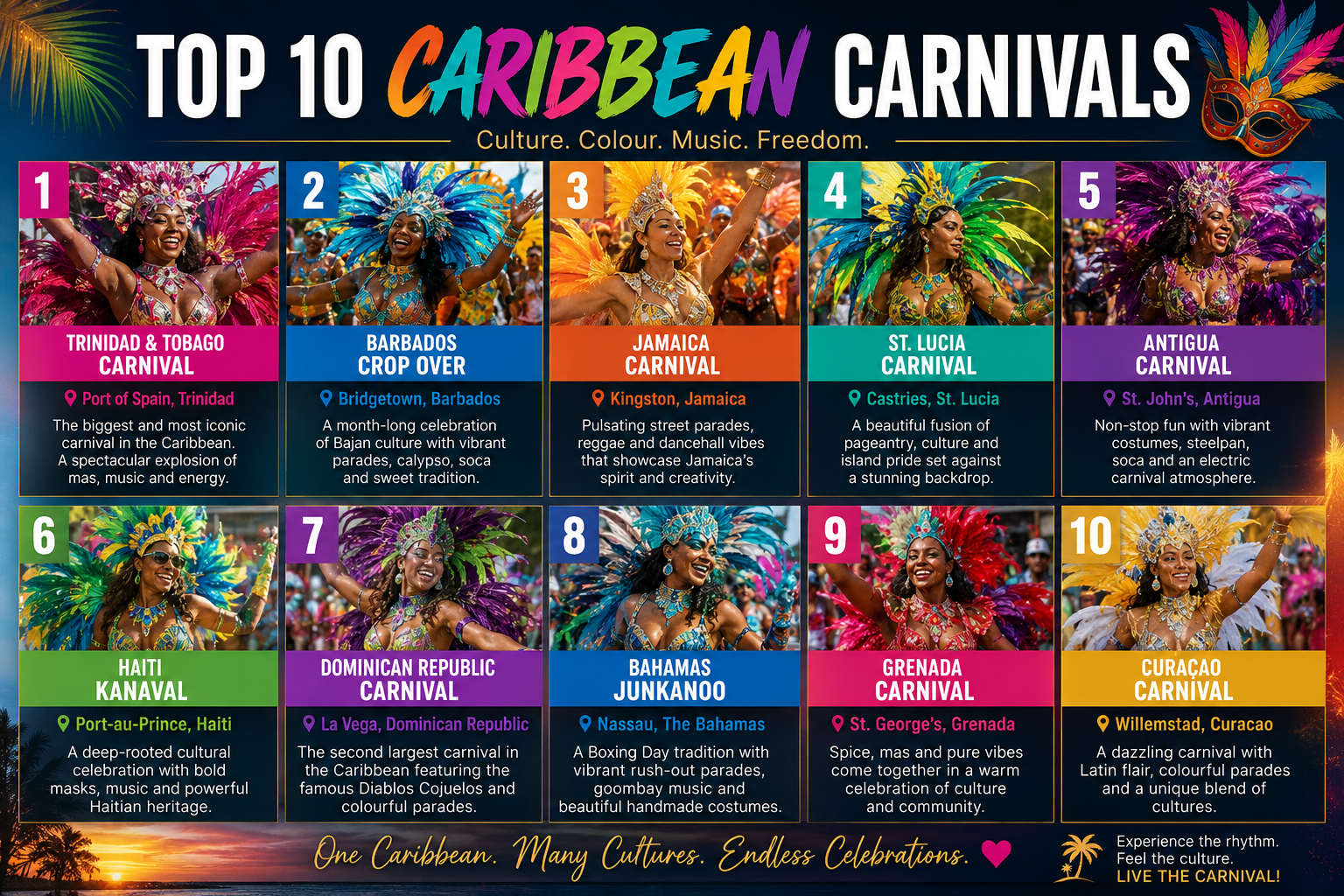
Soca also connects the Caribbean diaspora. New songs travel rapidly between Port of Spain, London, Toronto, New York and other cities. DJs, designers, masquerade bands, promoters and performers sustain a transnational creative economy. The audience is not merely consuming culture imported from an island; diaspora communities continually reinterpret and extend it.
At a Black History Month event, soca can energise an arrival reception or finale. However, organisers should avoid using Carnival imagery without explaining its meaning. A short introduction to mas, J’ouvert, calypso tents or Panorama can help guests understand that Carnival is a complex artistic institution, not simply a street party.
The Wider Caribbean Soundscape
An inclusive programme should look beyond the most commercially familiar English-speaking genres. Haiti’s kompa, developed in the 1950s and associated with Nemours Jean-Baptiste, features a flowing dance pulse and has influenced artists across the French-speaking Caribbean. Rara processions unite music, spirituality and public performance. Zouk, popularised internationally by Guadeloupean and Martinican group Kassav’, helped reshape French Caribbean dance music.
Cuba’s son brought together instrumental, rhythmic and vocal elements that later fed international salsa. Rumba encompasses performance traditions grounded in percussion, song and dance. The Dominican Republic’s merengue became a major national and transnational form, while bachata travelled from marginalised settings to worldwide popularity. Puerto Rico contributed decisively to salsa’s development in dialogue with New York, and later became a major centre of reggaeton.
No single event can represent everything. Respect begins with naming the specific culture being presented rather than labelling every upbeat performance “Caribbean.” Organisers can invite local community members to advise on programming, pronounce names correctly and explain why chosen music matters to them.
Windrush, Migration and the Sound of Black Britain
Caribbean migration to Britain did not begin in 1948, but the arrival of HMT Empire Windrush became a defining public symbol of the post-war era. Thousands of people from Caribbean countries came to help rebuild Britain, working in transport, healthcare, manufacturing, public services and many other fields. They brought records, instruments, faith, food, fashion and cultural knowledge alongside professional skills.
Many encountered racism in housing, employment and social life. Signs refusing accommodation to Black tenants, colour bars and hostility made everyday belonging difficult. Music helped people create spaces of safety and connection. House parties, clubs, churches, record shops, community halls and sound-system dances became places to meet, exchange news and feel at home.
Caribbean music did not remain separate from Britain. Second-generation artists shaped Black British identities that were Caribbean, African, British and local at once. Reggae bands such as Steel Pulse and Aswad addressed racism and urban life. Lovers rock developed in London with a gentler reggae sound and important female voices, including Janet Kay and Carroll Thompson. Poet Linton Kwesi Johnson and producer Dennis Bovell joined dub, poetry and political observation with lasting impact.
These developments challenge the idea that migration involves one culture simply entering another. Caribbean communities changed Britain, and Britain became one of the places where Caribbean musical traditions evolved. Black History Month should celebrate that two-way transformation while recognising the prejudice communities had to overcome.
Notting Hill Carnival and Community Memory
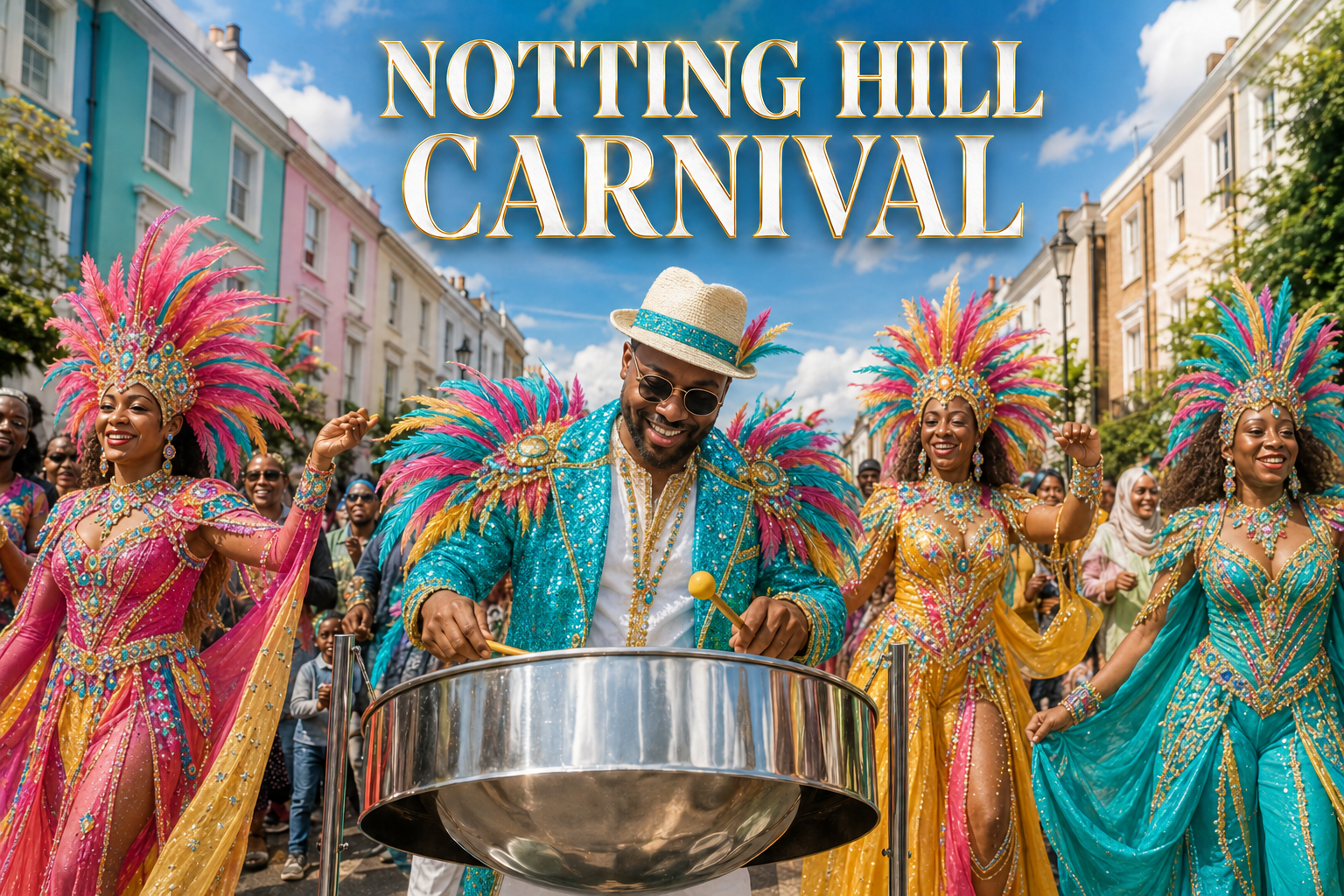
London’s Notting Hill Carnival embodies Caribbean cultural visibility in Britain, but its history deserves careful telling. Claudia Jones, a Trinidad-born journalist and activist, organised an indoor Caribbean carnival in 1959 after racist attacks and community tension. Rhaune Laslett later organised the outdoor children’s street fair in 1966, inviting local West Indian participation. Steelpan musician Russell Henderson and his group helped bring Carnival sound into the streets.
These connected histories show how culture can answer division with collective presence. Over subsequent decades, masquerade bands, steelbands, calypsonians, sound systems, food traders, volunteers and residents built an event of extraordinary scale. Carnival offered Caribbean communities a public stage from which to assert belonging without surrendering heritage.
Its influence reaches far beyond one August weekend. Rehearsals, costume construction, youth education, composition, fundraising and community organising continue throughout the year. The visible parade depends upon largely unseen labour and knowledge passed between generations.
For Black History Month, organisers might screen archival material, invite a pan tutor, study costume design or explore oral histories from Carnival participants. The official Notting Hill Carnival website provides historical and educational resources. Such activities place music within a network of craft, politics and community work.
Planning a Respectful Black History Month Caribbean Music Event
Begin with purpose. Decide what guests should understand, feel and remember. “Celebrate Caribbean culture” is too broad on its own. A sharper theme might explore steelpan innovation, women in reggae, the Windrush generation, music as protest or the Caribbean roots of British club culture.
Next, build your programme with people rather than about them. Hire Black Caribbean musicians, historians, presenters and suppliers. Pay professionals fairly and credit their expertise in promotional materials. If employees or parents are asked to contribute personal stories, make participation voluntary and recognise the emotional labour involved.
Combine performance with interpretation. A musician can introduce an instrument, demonstrate a rhythm and explain the cultural setting of a song. Displays can identify islands, artists and key dates. QR codes can direct guests to interviews, archives and playlists. Food, flags and decorations may add atmosphere, but they should support substantive content rather than replace it.
Avoid stereotypes. The Caribbean is not a single carefree paradise, and Black history is not limited to enslavement. Present struggle honestly, but include invention, family, humour, scholarship, business, love and everyday life. Check that imagery represents the cultures being discussed rather than using generic “exotic” visuals.
Most importantly, invite Caribbean people to speak for themselves. Personal testimony can reveal how a melody travelled through a family, neighbourhood or generation. These lived connections remind audiences that heritage is not an abstract topic; it is carried and shared.
Ideas for Schools and Colleges
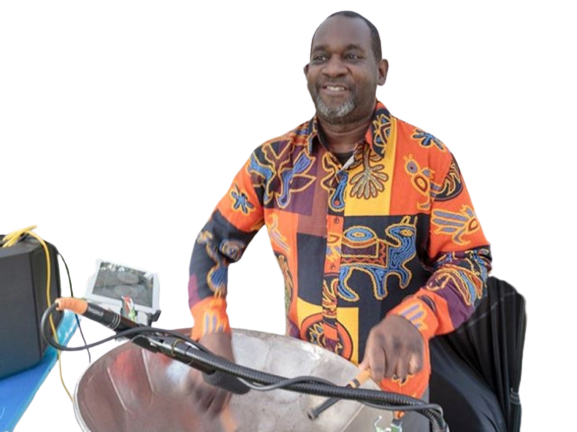
Live steelpan is particularly effective in education because students can see, hear and sometimes try an unfamiliar acoustic instrument. A musician might demonstrate how separate notes are placed on the pan, explain the family of instruments within a steel orchestra and perform contrasting calypso, reggae or popular arrangements.
A strong programme avoids placing all responsibility on one assembly. Form groups can research different islands, the library can display books by Caribbean authors and the canteen can explain dishes with accurate origins. Local elders or musicians can contribute oral histories if properly supported. Students should leave with names, dates and resources, not only photographs of a colourful event.
Ideas for Workplaces, Councils and Community Organisations
Councils and charities can collaborate with libraries, museums, youth groups and Caribbean associations. Programmes might include oral-history recording, steelpan workshops, sound-system discussions, film screenings and performances by emerging artists. Community partnerships should begin early enough for local voices to shape the event rather than merely endorse a finished plan.
Businesses should also examine what happens outside the celebration. Who receives contracts? Whose work is displayed? How are Black employees supported? Music can open the door to conversation, but authenticity depends upon policies and relationships. The most credible Black History Month programme connects culture with measurable inclusion.
Choosing Music That Educates and Entertains
Balance internationally famous performers with overlooked pioneers, women, instrumentalists and British Caribbean artists. Select clean versions where children are present, and check lyrics rather than judging suitability by tempo alone. Ask performers about repertoire well before the event, especially if you want songs linked to a particular island, historical moment or organisational theme.
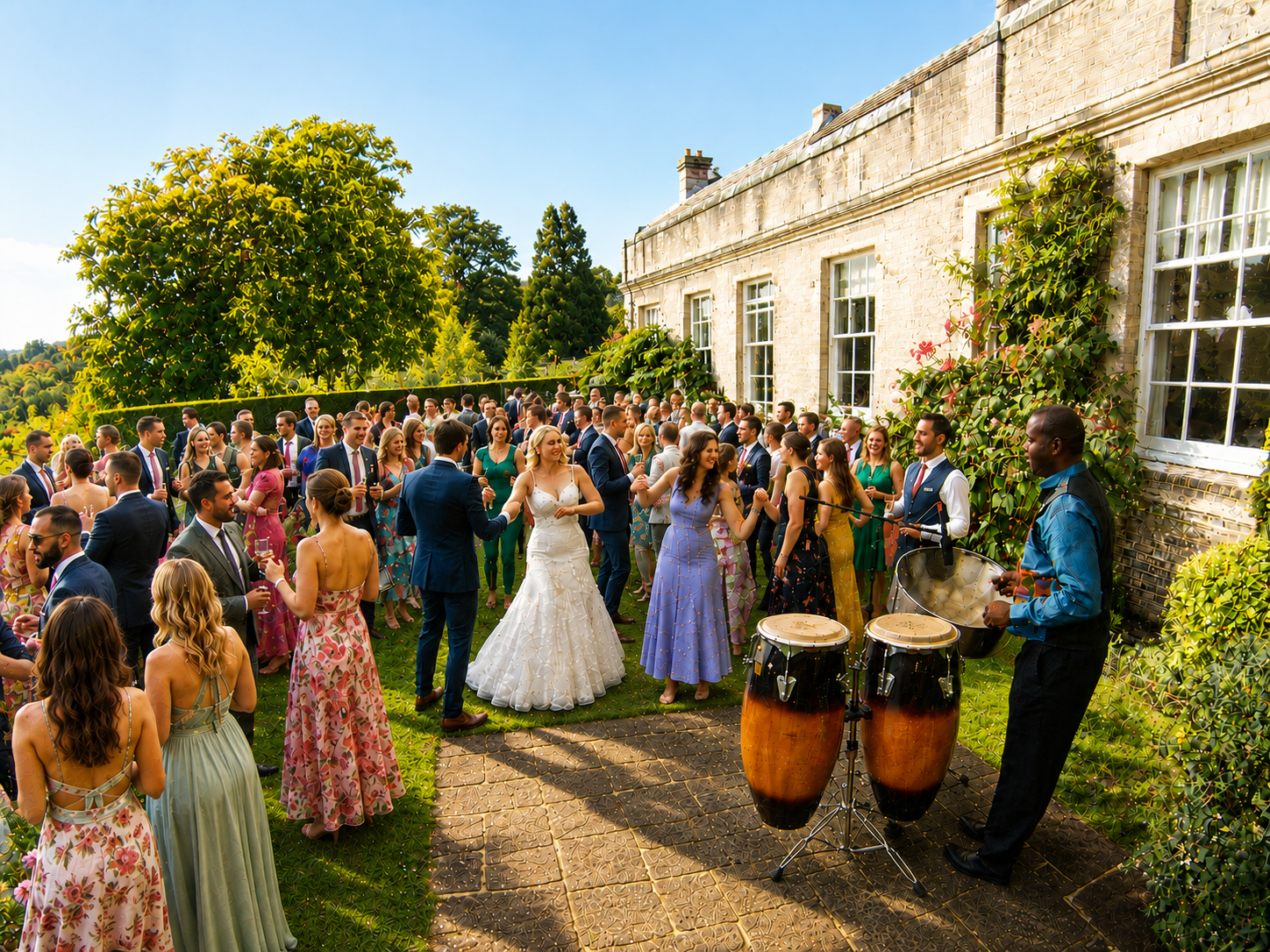
Live music and a DJ can complement each other beautifully. Steelpan creates a memorable visual and acoustic focus, while a DJ can extend the journey across genres that a single instrument or ensemble cannot fully represent. The transition from live performance to recorded music can also demonstrate how Caribbean tradition and technology continually interact.
Book Steelasophical for Black History Month Caribbean Music
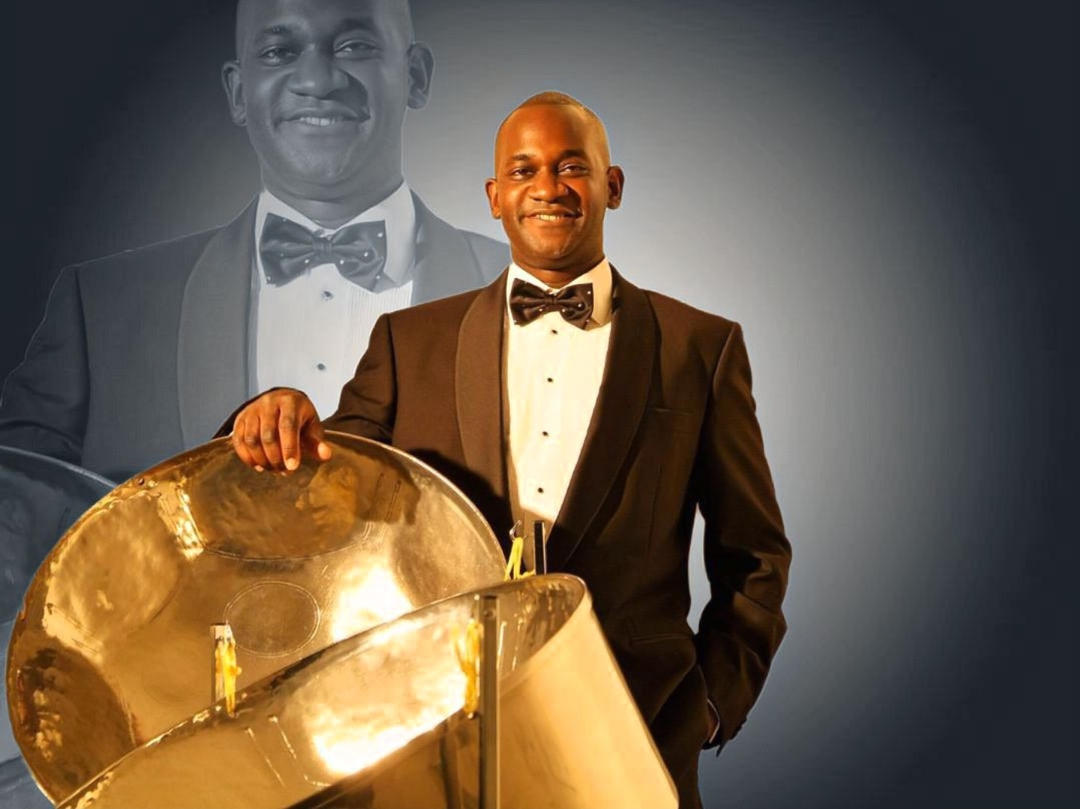
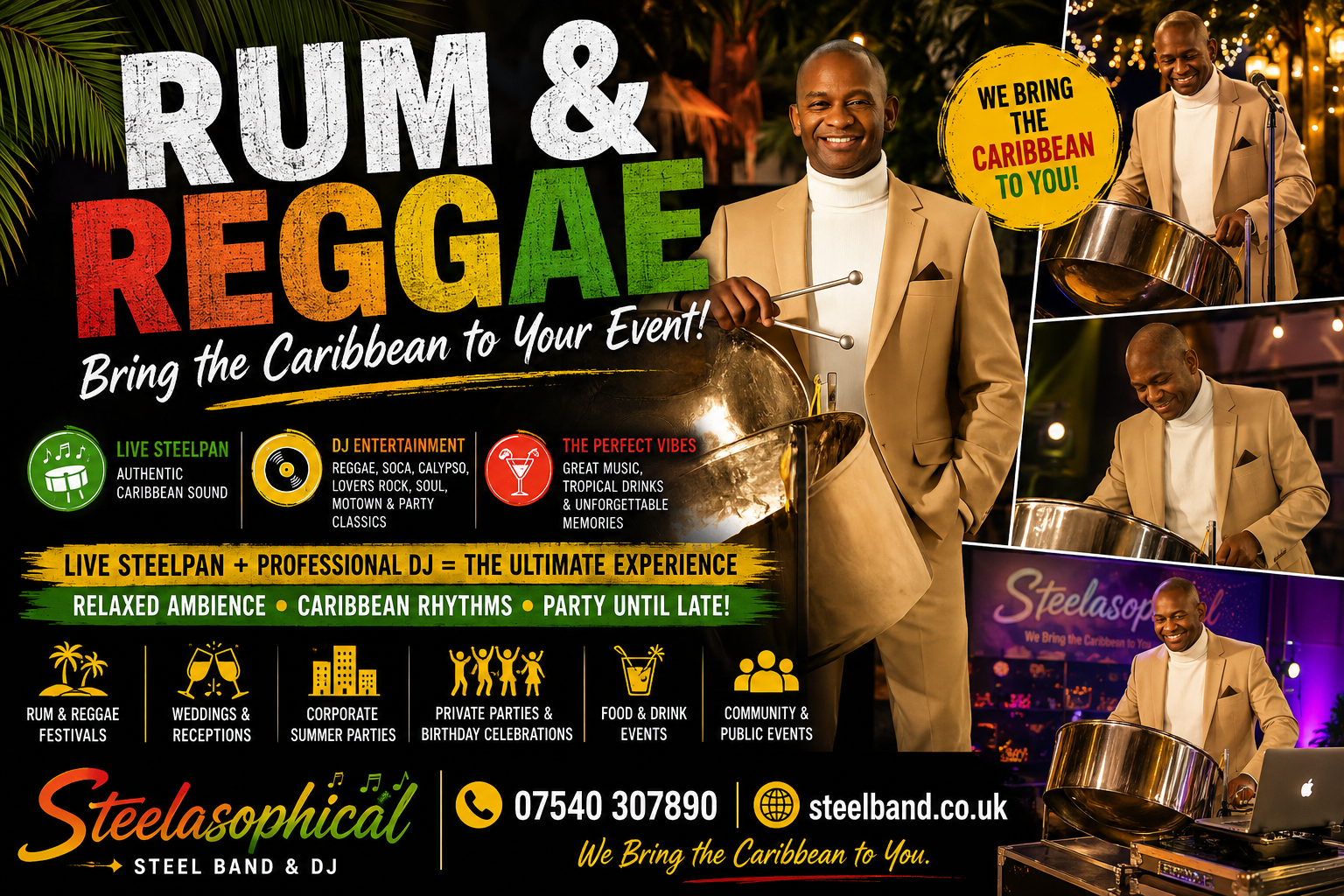
Steelasophical Steel Band DJ brings live Caribbean atmosphere, professional presentation and cultural pride to Black History Month events across the UK. Led by award-winning steelpan musician Gary Trotman, the service can support school celebrations, corporate receptions, council events, universities, community programmes, dinners and private functions.
The solo steelpan option uses carefully prepared backing tracks and professional sound equipment to create a full, rich musical experience without the space requirements of a large band. A duo is available when organisers want greater live interaction and visual impact. Steelasophical can also combine steelpan with DJ entertainment, allowing an event to move naturally from welcoming background music into reggae, soca, soul, calypso and dance-floor favourites.
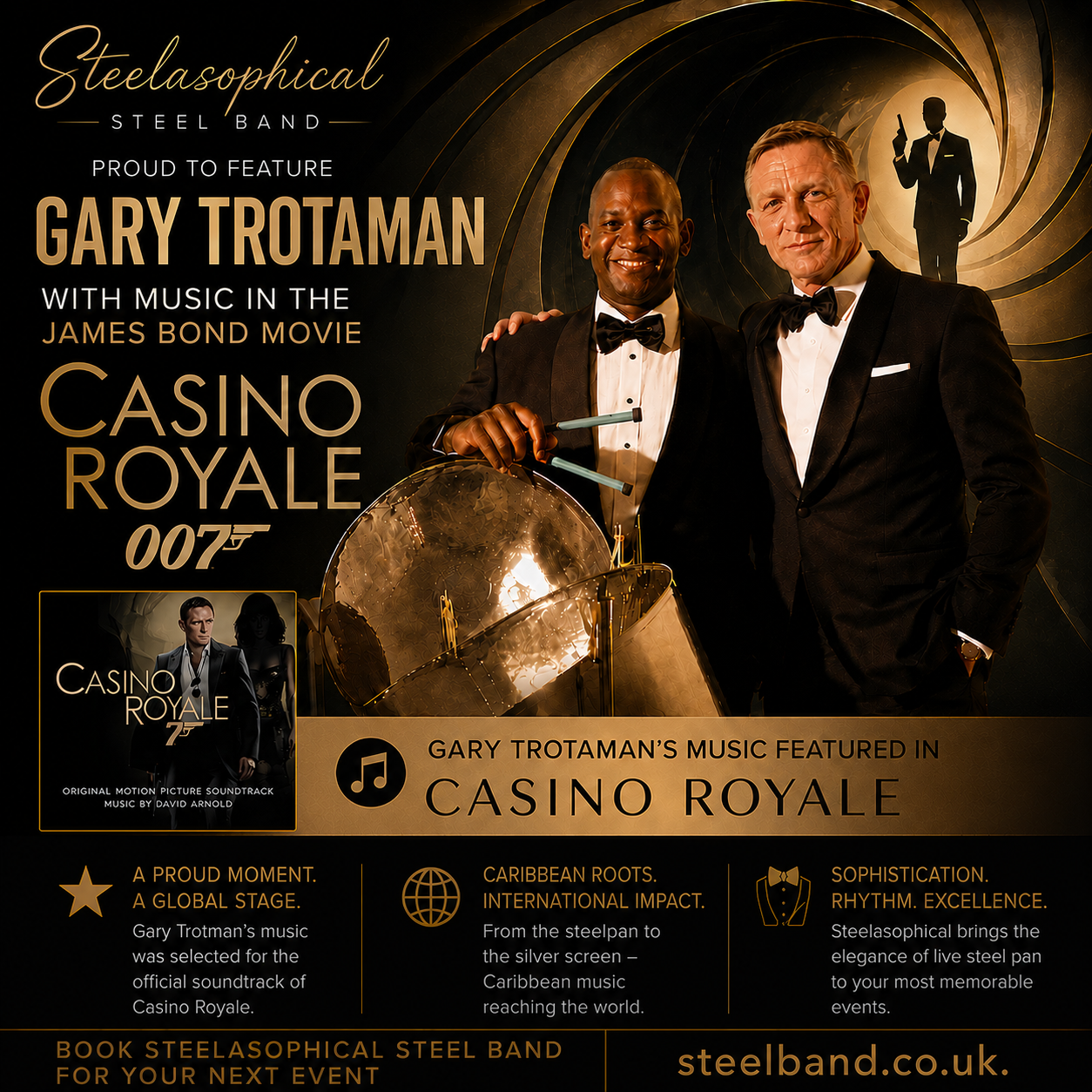
Gary’s work reflects a substantial professional record. Steelasophical has received entertainment industry recognition annually since 2016, and its music has reached listeners in more than 72 countries. A recording of the traditional Jamaican song “Linstead Market” was incorporated within the film Casino Royale; it was not part of the official soundtrack, but it remains a distinctive career achievement. Gary has also appeared on British television, including Come Dine with Me.
Every event is different, so the music, presentation and running order can be shaped around your audience. For availability, packages and a tailored quotation, visit steelband.co.uk and explain your date, venue, timings and event aims. Early booking is recommended for October because Black History Month dates are particularly popular.
Conclusion: A History That Can Be Heard and Felt
Black History Month Caribbean music brings together education and emotion in a uniquely powerful way. Calypso preserves commentary and wit. Steelpan demonstrates Trinidadian and Tobagonian innovation. Reggae carries spirituality, protest and global influence. Dub reveals the studio as a creative instrument. Soca embodies Carnival movement, while kompa, zouk, son, merengue, bachata and many other traditions illuminate the Caribbean’s extraordinary breadth.
In Britain, these sounds tell stories of migration, racism, resilience, enterprise and belonging. They echo through Windrush memories, sound-system dances, lovers rock, community halls, school steelbands and the streets of Notting Hill Carnival. They are not foreign additions to British culture; they are part of how modern Britain sounds.
The best Black History Month event does more than decorate a room and play familiar songs. It names creators, explains origins, pays professionals properly and invites audiences to keep learning. When live performance is joined with thoughtful context, Caribbean music becomes what it has always been: a source of memory, invention, connection and strength.
Choose the music carefully, tell its story truthfully and give guests permission to listen, learn and move. In doing so, your celebration can honour generations who turned struggle into sound and ensured that Caribbean creativity would be heard around the world.