Skip to content


Every Trinidad Road March
Every Trinidad Road March: The Complete Winners List from 1932 to 2026 There are Carnival songs, there are big songs—and then there are Road Marches. A Trinidad and Tobago Road March does not simply play in the background. It takes possession of the street. It becomes the instruction, the pulse and, for a few unforgettable minutes, the shared language of thousands of masqueraders moving as one.
That is why the Road March title matters so deeply. It is not decided by record sales, radio requests or a panel sitting in a quiet theatre. The winning song is the one played most often by the competing masquerade bands as they cross the recognised judging points during Carnival Monday and Tuesday. Every counted play is a practical vote from the road itself.
This updated Steelasophical guide brings together every Trinidad Road March in the accepted official chronology, beginning with King Radio in 1932 and continuing through Machel Montano’s record-breaking 2026 victory. It also explains the years when Carnival did not take place, the disputed results in the 1950s, the rise of soca, the women who changed the competition and the artists who ruled the road.
For Gary Trotman and Steelasophical, this history is more than a list. These songs tell the story of calypso, soca, steelpan and the constantly evolving sound of Trinidad and Tobago. Hear one of the melodies on steelpan and an entire Carnival can come rushing back.
What is the Trinidad Road March?
The Road March is the tune played most frequently at the official judging points along the Carnival parade route. Bands register the music they intend to use, and officials count each eligible play as the bands pass. The tune with the highest total becomes that year’s Road March.
Simple? In principle, yes. In practice, winning demands a special kind of song. A Road March needs an instantly recognisable opening, a chorus masqueraders can answer while moving, and enough rhythmic force to lift a tired band late on Carnival Tuesday.
The language around the title has also changed. The early winning tunes were commonly called “Leggos” or “Breakaways”. Some histories date the formal Road March name to 1946, while others place the fully organised and branded competition in 1962. The safest way to understand the story is this: popular tunes had driven Carnival long before 1932, an accepted annual winners record begins in 1932, and the modern counting system developed over time. The overview published by When Steel Talks provides a useful 1932-to-present chronology.
Every Trinidad Road March winner, 1932–2026
The table below uses the most widely accepted titles and spellings. Early Carnival records are not perfectly uniform. Where credible sources identify parallel competitions or alternative titles, both are shown rather than forcing a false certainty.
| Year | Artist | Winning song or result |
|---|---|---|
| 2026 | Machel Montano | “Encore” |
| 2025 | Machel Montano | “Pardy” |
| 2024 | Mical Teja | “DNA” |
| 2023 | Bunji Garlin | “Hard Fete” |
| 2022 | — | No standard Road March; restricted Carnival activity during the COVID-19 period |
| 2021 | Farmer Nappy | “Backyard Jam” — special online Road March; no street Carnival |
| 2020 | Iwer George and Kes | “Stage Gone Bad” |
| 2019 | Skinny Fabulous, Machel Montano and Bunji Garlin | “Famalay” |
| 2018 | Machel Montano and Superblue | “Soca Kingdom” |
| 2017 | Ultimate Rejects featuring MX Prime | “Full Extreme” |
| 2016 | Machel Montano | “Waiting on the Stage” |
| 2015 | Machel Montano | “Like Ah Boss” |
| 2014 | Machel Montano | “Ministry of Road (MOR)” |
| 2013 | Superblue | “Fantastic Friday” |
| 2012 | Machel Montano | “Pump Yuh Flag” |
| 2011 | Machel Montano | “Advantage” |
| 2010 | JW & Blaze | “Palance” |
| 2009 | Fay-Ann Lyons-Alvarez | “Meet Super Blue” |
| 2008 | Fay-Ann Lyons-Alvarez | “Get On” |
| 2007 | Machel Montano | “Jumbie” |
| 2006 | Machel Montano and Patrice Roberts | “Band of De Year (B.O.D.Y.)” |
| 2005 | Shurwayne Winchester | “Dead or Alive” |
| 2004 | Shurwayne Winchester | “The Band Coming” / “Look De Band Comin’” |
| 2003 | Fay-Ann Lyons | “Display” |
| 2002 | Naya George | “Trinidad” |
| 2001 | Shadow | “Stranger” |
| 2000 | Superblue / Iwer George | Tie: “Pump Up” / “Carnival Come Back Again” |
| 1999 | Sanell Dempster | “De River” |
| 1998 | Wayne Rodriguez | “Footsteps” |
| 1997 | Machel Montano | “Big Truck” |
| 1996 | Nigel Lewis | “Movin’” |
| 1995 | Superblue | “Signal to Lara” |
| 1994 | Preacher | “Jump and Wave” |
| 1993 | Superblue | “Bacchanal Time” |
| 1992 | Superblue | “Jab Jab” |
| 1991 | Superblue | “Get Something and Wave” |
| 1990 | Tambu | “No, No, We Eh Going Home” |
| 1989 | Tambu | “Free Up” |
| 1988 | Tambu | “This Party Is It” |
| 1987 | Mighty Duke | “Is Thunder” |
| 1986 | David Rudder | “Bahia Girl” |
| 1985 | Crazy | “Soucouyant” |
| 1984 | Mighty Sparrow | “Doh Back Back” |
| 1983 | Blue Boy, later known as Superblue | “Rebecca” |
| 1982 | Penguin | “Deputy” |
| 1981 | Blue Boy, later known as Superblue | “Ethel” |
| 1980 | Blue Boy, later known as Superblue | “Soca Baptist” |
| 1979 | Poser | “Ah Tell She (Smoke Ah Watty)” |
| 1978 | Calypso Rose | “Come Leh We Jam (Soca Jam)” |
| 1977 | Calypso Rose | “Give More Tempo” |
| 1976 | Lord Kitchener | “Flag Woman” |
| 1975 | Lord Kitchener | “Tribute to Spree” |
| 1974 | Shadow | “Bass Man” |
| 1973 | Lord Kitchener | “Rain-O-Rama” |
| 1972 | Mighty Sparrow | “Drunk and Disorderly” |
| 1971 | Lord Kitchener | “Mas’ at Madison” / “Madison Square Garden” |
| 1970 | Lord Kitchener | “Margie” |
| 1969 | Mighty Sparrow | “Sa Sa Yea” |
| 1968 | Lord Kitchener | “Miss Tourist” |
| 1967 | Lord Kitchener | “Sixty-Seven” |
| 1966 | Mighty Sparrow | “Obeah Wedding” |
| 1965 | Lord Kitchener | “My Pussin’” |
| 1964 | Lord Kitchener | “Mama, This Is Mas” |
| 1963 | Lord Kitchener | “The Road” |
| 1962 | Lord Blakie | “Maria” |
| 1961 | Mighty Sparrow | “Royal Jail” |
| 1960 | Mighty Sparrow | “Mae Mae” |
| 1959 | Lord Caruso | “Run the Gunslingers” |
| 1958 | Mighty Sparrow | “Pay As You Earn” |
| 1957 | Lord Christo / Nap Hepburn | “Chicken Chest” / “Doctor Nelson” — parallel or disputed results are recorded |
| 1956 | Mighty Sparrow | “Jean and Dinah” |
| 1955 | Obernkirchen Children’s Choir | “The Happy Wanderer” |
| 1954 | Lord Blakie | “Steel Band Clash” |
| 1953 | Vivian Comma / Spit Fire | “Madeline Oye” / “Bow Wow Wow” — two competitions are recorded in some histories |
| 1952 | Spit Fire | “Post, Post Another Letter for Thelma” |
| 1951 | Mighty Terror | “Tiny Davis Blow” |
| 1950 | Mighty Killer | “In a Calabash” |
| 1949 | Lord Wonder | “Ramgoat Baptism” |
| 1948 | Lord Melody | “Canaan Barrow” |
| 1947 | King Pharaoh | “Portuguese Dance (Vishki Vashki Voo)” |
| 1946 | Lord Kitchener | “Jump in the Line” |
| 1945 | — | No official Carnival during the Second World War |
| 1944 | — | No official Carnival during the Second World War |
| 1943 | — | No official Carnival during the Second World War |
| 1942 | — | No official Carnival during the Second World War |
| 1941 | Roaring Lion | “Whoopsin Whoopsin” |
| 1940 | Lord Beginner | “Run Yuh Run” |
| 1939 | King Radio | “Matilda” |
| 1938 | Roaring Lion | “No Nora Darling” |
| 1937 | Roaring Lion | “Netty Netty” |
| 1936 | Roaring Lion | “Advantage Could Never Done” |
| 1935 | Roaring Lion | “Dingolay Oy” |
| 1934 | Railway Douglas | “After Johnny Drink Me Rum” |
| 1933 | King Radio | “Wash Pan Wash” |
| 1932 | King Radio | “Tiger Tom Play Tiger Cat” |
The early Leggo years: 1932–1959
The oldest winners take us back to an age before amplified music trucks, streaming campaigns and carefully timed Carnival releases. Calypso travelled through tents, yards, live performance, word of mouth and early recordings. The tune had to be memorable enough for musicians to pick up and powerful enough for masqueraders to claim.
King Radio opened the accepted record in 1932 with “Tiger Tom Play Tiger Cat” and added two further wins. Roaring Lion took five titles between 1935 and 1941. That era established what Road March would always reward: melody, momentum and language that could pass quickly from singer to street.
Official Carnival was suspended from 1942 to 1945 during the Second World War. Famous calypsoes still emerged in that period—titles such as “Rum and Coca-Cola” became internationally known—but they should not be confused with official Road March winners when no official parade competition took place.
Carnival returned in 1946, and Lord Kitchener began his extraordinary Road March story with “Jump in the Line”. The song later became globally associated with other performers, but its Trinidadian roots and Kitchener connection remain vital. It was the first of eleven Road March victories for the man rightly remembered as the Grandmaster.
Then came one of the strangest results in Carnival history. In 1955, “The Happy Wanderer”, a German song popularised by the Obernkirchen Children’s Choir, became the tune most played by steelbands on the road. It remains the only non-calypso song to take the Trinidad title. Rules were subsequently tightened so that eligible songs had to be sung by Trinidad and Tobago performers.
The following year delivered a defining changing of the guard. Mighty Sparrow’s “Jean and Dinah” won in 1956 and helped announce a bold new voice in calypso. Sparrow would eventually collect eight Road March titles across nearly three decades.
The 1950s also remind us why historical lists should be read with care. Records for 1953 and 1957 vary. Some sources name one winner; others document two competitions or parallel results. Listing Vivian Comma with Spit Fire in 1953, and Lord Christo with Nap Hepburn in 1957, preserves that complexity instead of erasing it.
Kitchener, Sparrow and the golden calypso road
From the early 1960s through the mid-1970s, Lord Kitchener and Mighty Sparrow turned the Road March into a contest between two giants. Blakie won with “Maria” in 1962, but Kitchener followed with three consecutive victories: “The Road”, “Mama, This Is Mas” and “My Pussin’”. Sparrow interrupted him with “Obeah Wedding” in 1966 before Kitchener answered with “Sixty-Seven” and “Miss Tourist”. Sparrow came back again with “Sa Sa Yea” in 1969.
These were not interchangeable party records. They carried character, humour, observation and strong melodic writing. Yet each also possessed the physical quality necessary for the road. Kitchener understood movement exceptionally well. His phrasing seemed to leave space for masqueraders, iron, brass and pan to answer. That understanding produced further wins with “Margie”, “Mas’ at Madison”, “Rain-O-Rama”, “Tribute to Spree” and “Flag Woman”.
Sparrow’s eight-title run stretched from “Jean and Dinah” in 1956 to “Doh Back Back” in 1984. Few careers demonstrate greater adaptability. He could command the calypso tent through lyrical skill and still create the tune that bands wanted at the judging points.
For decades, Kitchener’s eleven wins stood as the great Road March benchmark. It took a modern soca career of remarkable longevity to equal—and eventually pass—it.
Calypso Rose opens the road for women
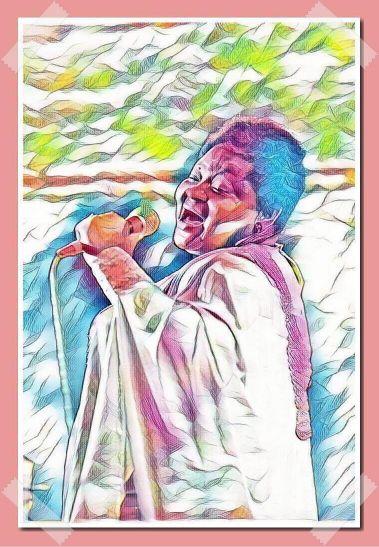
In 1977, Calypso Rose became the first woman to win the official Trinidad and Tobago Road March with “Give More Tempo”. She did not treat the achievement as a one-off. In 1978 she won again with “Come Leh We Jam”, also known as “Soca Jam”. That same season, she became the first woman to win the national Calypso King competition, prompting the more inclusive title Calypso Monarch. NALIS records Rose’s two Road March victories as part of her pioneering career.
Road March had long been overwhelmingly male territory. Rose proved that a woman could create the tune that moved the entire Carnival.
Sanell Dempster became the second female winner with “De River” in 1999. Fay-Ann Lyons then built a unique record of her own, winning with “Display” in 2003, “Get On” in 2008 and “Meet Super Blue” in 2009. Her third victory made her the first woman to win the Road March three times.
Fay-Ann is the daughter of Superblue, but her victories stand on their own. “Meet Super Blue” was an explosive road tune that completed an extraordinary 2009 Carnival season.
When soca took control
The change from calypso-led Road Marches to soca dominance did not happen overnight. Lord Shorty’s experiments in the 1970s helped shape soca, blending calypso with additional rhythmic influences. NALIS describes soca’s development and its eventual command of the Carnival party scene and Road March arena.
The shift becomes unmistakable when reading the winners from 1978 onwards. “Soca Jam”, “Ah Tell She” and “Soca Baptist” pointed to a more rhythm-driven road sound. Blue Boy—later Superblue—then created an astonishing Carnival vocabulary. “Ethel”, “Rebecca”, “Get Something and Wave”, “Jab Jab”, “Bacchanal Time” and “Signal to Lara” all carried his gift for turning a short command into mass movement.
Superblue’s influence is difficult to overstate. When a modern soca singer tells the crowd to wave, jump, move left, get low or follow an instruction, there is a line running back through his work. Across his Blue Boy and Superblue identities, he earned ten Road March titles, including the 2000 tie with Iwer George and the 2018 collaboration “Soca Kingdom” with Machel Montano.
Tambu also owned a remarkable period, winning three years in succession with “This Party Is It”, “Free Up” and “No, No, We Eh Going Home” from 1988 to 1990. David Rudder’s “Bahia Girl” took the 1986 prize during the same Carnival in which he won both Calypso Monarch and Young Kings. It remains one of the most celebrated competitive sweeps in Carnival history.
The modern Road March: bigger productions, the same test
By the late 1990s and 2000s, the sound system had grown larger, production had become more international and soca releases could reach the global Caribbean diaspora almost instantly. The central test, however, stayed the same: could the tune move a band across the stage?
Machel Montano’s first win came in 1997 with “Big Truck”. It was an ideal title for the changing road—heavy, visual and engineered for motion. He followed with collaborative and solo winners across three different decades, including “Band of De Year”, “Jumbie”, “Advantage”, “Pump Yuh Flag”, “Ministry of Road”, “Like Ah Boss” and “Waiting on the Stage”.
Other artists broke through with records that remain essential Carnival markers. Shurwayne Winchester won back-to-back titles in 2004 and 2005. JW & Blaze turned “Palance” into the defining instruction of 2010. Ultimate Rejects and MX Prime captured the national mood with “Full Extreme” in 2017. The song felt less like a release than a public pressure valve: wherever it played, people responded.
“Famalay” brought together Skinny Fabulous, Machel Montano and Bunji Garlin in 2019, making Skinny Fabulous the first foreign soca artist to share a Trinidad Road March win. In 2020, Iwer George and Kes combined on “Stage Gone Bad”.
The pandemic then created a break unlike anything since the war years. There was no street Carnival in 2021, although Farmer Nappy’s “Backyard Jam” won a special online Road March promoted by bmobile and TUCO; NALIS includes that online result. Restricted activities continued in 2022 without the standard Road March. Bunji Garlin’s “Hard Fete” marked the competition’s full-powered return in 2023, followed by Mical Teja’s beautifully rooted “DNA” in 2024.
Machel Montano becomes the record holder
Machel Montano’s “Pardy” won the 2025 Road March and brought him level with Lord Kitchener on eleven titles. One year later, “Encore” did exactly what its name promised: it brought Machel back to the winner’s circle and moved him ahead of the Grandmaster.
“Encore” was counted 171 times across the two-day judging period. Aaron “Voice” St Louis placed second with “Cyah Behave” on 127 plays, while Bunji Garlin’s “Still a Road Man” finished third on 97. The result gave Machel his twelfth title and made him the most successful Road March artist in the recorded history of the competition. The 2026 result and count confirmed a landmark that once appeared almost unreachable.
The achievement is not only about the number twelve. Machel’s first victory arrived in 1997; his record-breaking win came in 2026. That span shows an exceptional ability to hear changes in production, crowd behaviour and Carnival language without losing the fundamental requirements of the road.
The leading totals now stand at Machel Montano with twelve, Lord Kitchener with eleven, Superblue with ten and Mighty Sparrow with eight. Four very different performers, four eras, and one shared talent: understanding how Trinidad wants to move.
Why these songs still matter to steelpan musicians
Road March and steelpan history cannot be separated neatly. Before amplified DJ trucks became dominant, steelbands carried the road tune, giving calypsoes new colour and a rhythmic engine that pushed masqueraders forward.
The 1955 result makes that relationship especially clear. “The Happy Wanderer” won because steelbands repeatedly chose and played it. Later winners including “Sixty-Seven”, “Obeah Wedding”, “Rebecca” and “Tribute to Spree” also became part of the wider pan story through Carnival performance and Panorama association.
For a steelpan entertainer, learning this repertoire is not nostalgia. It teaches what makes Caribbean music communicate: memorable melodies, participatory choruses and rhythms that change the energy of an event.
That principle guides Steelasophical today. Whether Gary Trotman is performing at a wedding, corporate celebration, Caribbean-themed party or Black History Month event, the aim is not to imitate a Carnival truck. It is to understand the same art of connection: choosing the right melody, reading the room and building an atmosphere people feel invited to join.
More than a winners list
Reading every Trinidad Road March in sequence reveals far more than a roll call. It shows the journey from Leggo to Road March, from acoustic calypso to amplified soca, from local oral circulation to global digital release. It records wartime interruption, post-war renewal, the rise of steelpan, women breaking barriers, family legacies, collaboration across islands and the remarkable endurance of Carnival itself.
The road also respects surprise: a German song won in 1955, a tie was declared in 2000, an online title carried the spirit through a pandemic, and a veteran set a record nearly thirty years after his first victory.
Most of all, the list reminds us that Trinidad and Tobago has given the world an extraordinary body of music. These songs were built for two days on the road, but the best of them have travelled for generations.
At Steelasophical Steel Band DJ, we bring that Caribbean spirit to weddings, parties and corporate events across the UK and beyond. Led by award-winning steelpan musician Gary Trotman, Steelasophical combines live steelpan with carefully selected music to create an uplifting, polished and genuinely memorable experience.
If you would like the warmth of steelpan, the energy of soca and a performer who understands the history behind the music, contact Steelasophical to discuss your celebration.
Research note: Early Road March records contain conflicting spellings and, in a small number of years, competing claims. This article compares the Steelasophical archive with the current lists published by When Steel Talks, NALIS and other Caribbean cultural sources. It was updated in August 2026 to include “Encore”, the 2026 winner.