 Skip to content


Curious wedding facts
Curious wedding facts
Curious Wedding Facts: 33 Surprising Stories Behind the British Big Day A British wedding can look wonderfully familiar: smart clothes, a nervous entrance, rings, speeches, cake and an increasingly adventurous dance floor. Yet almost every element carries a story. Some customs grew from law, some from royal fashion and others from the human wish to attract luck.
The most curious wedding facts are not always the tales repeated by a confident uncle after dinner. The bride supposedly stands on the left so the groom can reach his sword. A special vein is said to connect the ring finger to the heart. These explanations are memorable, but history is rarely so tidy. Where evidence is uncertain, it is more honest to call the story folklore.
The United Kingdom has no single wedding rulebook. England and Wales share much of their marriage law, while Scotland and Northern Ireland have their own systems. Traditions vary too, from Welsh lovespoons to Scottish border elopements. Royal influence, changing fashions and modern multicultural Britain make every celebration part of a fascinating patchwork.
Here are 33 curious wedding facts with a distinctly UK flavour, covering the dress, ceremony, cake, confetti and Saturday-night celebration.

Curious wedding facts
Curious wedding facts about dresses, flowers and good luck
1. British brides did not always wear white
Before the nineteenth century, most women married in their best dress. It might be blue, pink, brown, patterned or even black. A garment that could be worn again was sensible when fabric was expensive and wardrobes were small. Buying a dazzling white dress for one day would have seemed wildly impractical.
The Victoria and Albert Museum records that coloured bridal clothing remained common after white became fashionable. Rural styles changed slowly, and useful fabrics made economic sense. A red suit or floral gown may look modern today, but choosing colour places a bride in a very old tradition.
2. Queen Victoria popularised white, but she did not invent it
Queen Victoria’s 1840 marriage to Prince Albert is often called the birth of the white wedding dress. It was not. Brides had worn white before her, but few could influence newspapers, fashion plates and public imagination.
Victoria chose white satin, orange blossom and handmade Honiton lace rather than a crimson robe of state. White displayed the lace beautifully and supported makers threatened by machine production. Spitalfields silk also promoted English industry. As reports circulated, white became associated with romance, status and bridal aspiration. Victoria did not create the custom; she gave it a powerful advertisement.
3. A royal wedding dress helped two English industries
Victoria’s dress carried an economic message. The Royal Collection Trust explains that she commissioned lace from Honiton in Devon and silk from Spitalfields in East London, bringing attention to craftspeople facing difficult times.
She later wore the lace at family occasions, including the weddings of her eldest daughter in 1858 and her grandson, the future George V, in 1893. Reuse may now be praised as sustainable, but Victoria had already shown how a wedding textile could become a family heirloom rather than remain sealed in a box.
4. “Something old” has a longer ending
Most people know “something old, something new, something borrowed, something blue”, but the English rhyme continues: “and a silver sixpence in her shoe”. Old represented continuity, new the future, borrowed shared happiness and blue loyalty. The coin stood for prosperity.
The custom also shows how wedding clothes circulated through families. The V&A notes that eighteenth- and nineteenth-century dresses were commonly altered and reworn. “Borrowed” was not necessarily a tiny charm: lace, jewellery or part of the outfit might have genuine family history and practical value.
5. Royal bouquets contain a living link to Queen Victoria
Myrtle has appeared in royal wedding bouquets carried by Queen Elizabeth II, Diana, Catherine and Meghan. The tradition connects to a plant at Osborne on the Isle of Wight, grown from a sprig presented to Queen Victoria in 1845 by Prince Albert’s grandmother.
English Heritage says myrtle represented love and romance in the Victorian language of flowers. Osborne cuttings created a botanical thread between generations of royal brides. Amid tiaras, carriages and cameras, a modest green sprig carries remarkable family continuity.
6. Orange blossom was a message, not just a decoration
Victorian flowers operated like a secret vocabulary. Orange blossom represented purity, eternal love and fertility, making it a natural bridal choice. Queen Victoria wore it around her white satin train and helped make it part of the popular bridal image.
Artificial blossom was useful because fresh flowers were seasonal and delicate, while wax versions could be preserved. A modern bride may choose flowers for colour, scent or a family memory. Her Victorian counterpart could be making a symbolic statement that guests believed they knew how to read.
7. Horseshoes are luckier when they point upwards, according to tradition
Horseshoes have long appeared on British wedding cards and bridal charms. Iron was treated as protective, while the crescent shape held good fortune. Some insist a horseshoe must face upwards so luck does not “fall out”. Others say pointing downwards lets luck pour over the couple. Folklore happily supports opposite instructions.
8. Welsh lovespoons were romantic demonstrations of skill
A Welsh lovespoon was carved, ideally from one piece of close-grained wood, as a token of affection. Hearts, wheels, chains and cages displayed devotion and craftsmanship. It was not chiefly for eating; an elaborate spoon demonstrated patience and ability.
Amgueddfa Cymru – Museum Wales notes that historical evidence is limited, although eighteenth- and nineteenth-century examples survive. Today, lovespoons mark weddings and anniversaries. A personalised spoon is distinctly Welsh but carries a universal idea: love is shown through time spent making something meaningful.
Curious facts about British wedding law and ceremonies
9. The banns are a public announcement with medieval roots
At many Church of England weddings, banns are read aloud on three Sundays during the three months before the ceremony, usually consecutively. The announcement states the couple’s intention and lets the community raise a lawful impediment.
Hearing their names from the pulpit can feel charmingly public to couples accustomed to planning apps. Banns are not merely quaint, however; they are legal preliminaries for many church marriages. The Church of England explains when and where they are required.
10. Register-office weddings are younger than many parish churches
Civil marriage in England and Wales arrived through the Marriage Act 1836, with registration beginning in 1837. The reform enabled non-religious ceremonies in register offices and allowed Roman Catholics and Protestant Nonconformists to marry in their own registered places of worship.
The state could now formally record marriage outside the established church. Incidentally, the official term is “register office”, although “registry office” is heard so often that correcting it at a wedding is best avoided. Good manners should defeat pedantry, particularly near the cake.
11. Gretna Green became famous because English law stopped at the border
The 1753 Marriage Act required most marriages in England and Wales to occur in an Anglican church or chapel and imposed parental-consent rules for people under 21. Scotland was outside it, so couples crossed the border and married under different rules.
Nearby Gretna Green became synonymous with elopement. Blacksmiths were styled “anvil priests”, making the anvil a symbol of joined lives. UK Parliament’s history confirms that couples used Scotland to evade the restrictions. Runaway carriages are now nostalgia, but Gretna’s reputation endures.
12. The minimum age is not the same throughout the UK
Since 27 February 2023, a person must be 18 to marry or enter a civil partnership in England and Wales; parental consent cannot lower the age. Scotland and Northern Ireland retain 16 as the minimum, although procedures differ.
“UK wedding law” can therefore mislead. Separate legal systems have different rules on notices, celebrants, locations and documents. Any romantic cross-border plan deserves official legal checking, not advice from somebody’s cousin in a social-media comment.
13. Outdoor civil weddings became permanently legal at approved venues
For years, couples in England and Wales could enjoy an outdoor blessing, but the binding civil ceremony generally had to occur inside an approved permanent structure. Temporary changes allowed outdoor proceedings at approved premises in 2021; the flexibility became permanent in 2022.
The freedom is not unlimited: the outdoor area must be linked to approved premises and meet relevant conditions. Still, lawns and gardens can host the legal ceremony, not merely photographs afterwards. British couples gained this choice while remaining subject to British weather.
14. Mothers only recently appeared routinely on marriage records
For generations, marriage registration in England and Wales named the couple’s fathers but omitted their mothers, reflecting nineteenth-century assumptions about family and authority. From 4 May 2021, a new system allowed both mothers’ and fathers’ details on the marriage entry.
The administrative change carried symbolic weight. Family structures and women’s legal position had transformed, while the form had not. The Government called it the system’s biggest change since 1837. Sometimes social history is visible in lace; sometimes in a box on a form.
15. Two witnesses turn guests into part of the legal record
A legally recognised marriage normally requires two witnesses to observe the ceremony and sign the documentation. They need not deliver a speech, organise the stag weekend or wear matching clothes. They simply witness what happened.
Couples often choose parents, siblings or friends, but the role can include grandparents or adult children. The signatures may help descendants tracing family history. Long after flowers fade, two familiar names remain beside the couple’s, quietly recording who stood close that day.
16. Church wedding words are not entirely a creative-writing exercise
Couples can personalise readings, hymns, prayers and music, but legally significant declarations and vows in a Church of England marriage follow approved forms. The Church identifies three versions. Delivery, setting and emotion can still make familiar words intensely personal.
A film quotation cannot replace every formal element. Couples may exchange personal promises separately, perhaps during the reception or in morning letters. The ceremony establishes the marriage; private words say what will not fit into a formal sentence before a congregation.
17. A legal wedding and a wedding celebration are not always the same event
Some couples complete a small legal ceremony and celebrate later. Other cultural or religious ceremonies carry profound meaning but need an additional civil process to create a legally recognised marriage. The pandemic made this distinction especially visible when paperwork and parties separated.
Neither part is second-rate. One establishes legal status; another may unite community, music, food and meaningful rituals. In multicultural Britain, a wedding can contain several traditions without treating any as decoration. The most meaningful ceremony may not generate the certificate.
Curious wedding facts about rings, language and popular myths
18. The “vein of love” is romantic anatomy, not medical anatomy
Britons commonly wear the wedding ring on the fourth finger of the left hand. A popular explanation claims ancient Romans identified a “vena amoris”, or vein of love, running straight to the heart. Human circulation provides no exclusive finger-to-heart vein, and historians question the neat Roman origin.
The myth survives because it gives an established custom a poetic explanation. Weddings thrive on symbolism. Just know the difference between metaphor and anatomy, especially within hearing distance of a cardiologist.
19. Wedding rings have not always been plain gold bands
British rings have varied by period, class and community. Medieval and Renaissance examples carried religious images, clasped hands or inscriptions. Posy rings, popular from the late medieval period, bore short messages inside or around the band. Their name relates to “poesy”, a short verse or sentiment.
Modern engraving continues an old impulse. A date, lyric or private joke turns jewellery into a message worn against the skin. Platinum and diamonds command shop windows, but a sentence hidden inside a simple band may carry greater value.
20. “Tying the knot” has several possible histories
Handfasting binds a couple’s hands with cord or ribbon, making an irresistible explanation for “tying the knot”. Knots have represented union across many cultures, and handfasting has historical British associations. However, the exact linguistic route to the modern phrase remains unsettled.
Contemporary couples embrace handfasting, particularly in humanist, pagan, outdoor and Scottish celebrations. The ritual works because everyone understands it at a glance: two separate lives are joined without either disappearing.
21. The bride-on-the-left sword story is probably folklore
You may have heard that a bride stands to the groom’s left so his sword-wielding right hand remains free to fight rivals. It is lively, but reliable evidence for this as the universal origin is elusive.
Church layout, convention and practical choreography offer less cinematic explanations. Modern couples can stand wherever the venue and camera angles allow. Same-sex couples make the gendered tale still less useful. Today’s wedding sword is more likely part of a military guard of honour than emergency aisle equipment.
22. The “best man helped capture the bride” story is doubtful too
Another tale says the best man was originally the strongest swordsman, recruited to abduct the bride and fight her family. Bride capture has existed, but the tidy claim that today’s best man descends directly from a kidnapping assistant is weakly established.
The role developed through customs around attendants, witnesses and support. Current duties are more peaceful: protect the rings, steady nerves and give an affectionate speech without creating an unauthorised documentary. A good best man needs neither sword nor getaway horse.
23. “Giving away” the bride reflects older ideas of authority
A father accompanying a bride can be deeply emotional. Historically, though, “giving away” belongs to a world where women had far less legal and economic independence and marriage often linked property, inheritance and alliances.
Modern ceremonies adapt it. Both parents may walk, the couple may enter together, or the celebrant may ask who supports the marriage. Tradition is not a museum exhibit. It can be kept for love, rewritten for equality or omitted without weakening the entrance.
Curious facts about the wedding feast
24. A wedding breakfast does not have to contain toast and marmalade
The “wedding breakfast” is the main meal after a British ceremony, even at four in the afternoon. The phrase is commonly explained as the newlyweds’ first shared meal; historically, it could also follow fasting before a religious service.
Today it may be a three-course dinner, Caribbean banquet, afternoon tea or barbecue. Guests sometimes expect bacon and eggs. A breakfast-themed feast could be brilliant, but the label describes the meal’s place in the day, not compulsory cereal.
25. Wedding cake began as something denser and less decorative
British wedding cakes developed from customs involving bread, buns, pies and fruit cake. Sugar, dried fruit and alcohol signalled expense and generosity while ensuring keeping quality. White icing later suggested refinement because processed sugar was costly. A towering cake displayed craftsmanship and the family’s ability to host.
Couples now choose sponge, brownies, macarons or doughnuts, yet fruit cake suits tradition. It can be prepared early, transported confidently and saved without becoming a scientific experiment. Its density is historical engineering.
26. Saving the top tier once anticipated another family occasion
Couples traditionally kept the fruit cake’s top tier for their first child’s christening, once expected within a year. Saving it for the first anniversary became a more flexible custom. Fruit cake’s long life made either plan possible with careful storage.
The custom reveals past assumptions about marriage and parenthood. Modern families form in many sequences, and couples may prefer every crumb fresh. Keeping some for an anniversary is sentimental, but nobody is morally defeated if the freezer produces an unidentifiable parcel later.
27. Confetti takes its name from sweets
“Confetti” comes from Italian confectionery, particularly sugared almonds thrown at celebrations. Paper substitutes created colour without the bruising potential of hard sweets. Britons have showered newlyweds with rice, petals and paper shapes.
Venues often restrict what can be thrown. Biodegradable paper or petals may be welcome, while plastic, metallic pieces and rice can be difficult to clear, harmful or slippery. Ask first. A photograph lasts a second; plastic hearts should not remain in flowerbeds for a decade.
28. The cake cutting is a performance as well as dessert service
Cutting the cake gives the couple a shared action and photographers a reliable cue. Older accounts place the bride at the centre of distributing cake; larger, tougher iced cakes encouraged the groom’s help. Joined hands became a small symbol of cooperation.
Catering staff take over, giving guests neat slices.
What modern British weddings reveal
29. Saturday is still king, but it is not the only sensible choice
The latest final ONS figures for England and Wales show that 41.9% of marriages in 2023 occurred on Saturday. Saturday 2 September was most popular, with 3,227 marriages.
Many guests need no leave, and Sunday offers recovery time. Yet Friday and midweek weddings can unlock availability, supplier choice and value. Saturday is conventional, not compulsory. A brilliant atmosphere does not check the calendar.
30. Christmas Day weddings are exceptionally rare
The ONS records just one marriage on Christmas Day and one on Boxing Day in England and Wales during 2023. August hosted 14.3% of that year’s marriages. Holidays and long daylight help explain summer’s appeal, although no British planner should promise sunshine.
A winter wedding offers candlelight, dramatic clothing and celebration in darker months. Statistics reveal popularity, not quality. A date matters because it suits the couple and their people, not because strangers chose it too.
31. Couples are marrying later than earlier generations
In 2023, median ages for opposite-sex marriage in England and Wales were 34.8 for men and 33.0 for women. For same-sex marriages, they were 37.4 for men and 34.0 for women.
Later marriage changes weddings. Couples may have homes, children, careers and firm opinions. Gifts shift from household basics towards experiences or charity donations. The ceremony becomes less a doorway into adulthood and more a celebration of a life already being built.
32. Same-sex marriage is a recent chapter in a very old institution
Same-sex couples first married legally in England and Wales on 29 March 2014. Scotland followed that year, while Northern Ireland’s first same-sex marriages occurred in 2020. Those dates are striking beside medieval churches and centuries-old customs.
Traditions evolve even when presented as timeless. Same-sex couples have adopted familiar elements while exposing unnecessarily gendered assumptions. Who enters first, proposes or speaks? The liberating answer is that the couple decides.
33. The facts guests remember are usually feelings
After months choosing colours, chairs and printed details, couples can be surprised by what guests remember. It is rarely the napkin fold. People remember a warm welcome, an audible ceremony, timely food and music that drew them into the celebration.
Tradition gives a day structure; atmosphere gives it life. A steel drummer welcoming guests, a song connecting generations or a packed dance floor becomes the story repeated for years. The best wedding makes every choice feel unmistakably like the couple.
The wonderfully unfinished story of the British wedding
British weddings are living history. A white dress carries a queen’s influence; a register-office signature recalls political reform; myrtle links a bouquet to an Isle of Wight garden; and a lovespoon preserves Welsh craft. The ring-finger vein is poetic, while sword-wielding attendants belong to folklore.
Couples do not begin with an empty page. They inherit words, objects and family habits, then decide what to keep. One may love banns, fruit cake and speeches; another may prefer a garden, bright clothing, street food and immediate music. Both continue the same story.
Use tradition as possibilities, not obligations. Ask where a custom came from. Keep it if meaningful, adapt it if it nearly fits, and release it if it feels like theatre for somebody else.
Most importantly, consider how the day will feel. Guests admire flowers and photograph cake, but music changes a room’s emotional temperature. From drinks reception to evening party, the right soundtrack turns arrangements into celebration. Steelasophical brings live steel-pan warmth, personality and polished entertainment to UK weddings: not to replace tradition, but to make it joyfully alive.
Key sources and further reading - Office for National Statistics: Marriages and civil partnerships in England and Wales, 2023
- UK Parliament: The law of marriage
- Church of England: Reading of banns
- GOV.UK: Legal age of marriage in England and Wales rises to 18
- GOV.UK: Outdoor civil weddings made permanent
- V&A: The Victoria connection
- English Heritage: The history of Osborne myrtle in royal weddings
- Museum Wales: Welsh lovespoons
- Scottish Government: Marriage and civil partnership guide
-
nidirect: Guidance on marriage procedures in Northern Ireland


“Tying the knot” is one of the most familiar ways to describe getting married. The phrase creates an immediate picture of two separate lives being joined, secured and strengthened by a shared commitment. It sounds ancient, romantic and wonderfully simple, but its precise origin is less certain than many wedding guides suggest.
The expression is often connected with handfasting, a ceremony in which a couple’s hands are gently bound together using ribbon, cord or fabric. Handfasting has genuine historical associations with Britain and other parts of Europe, although customs differed between places and periods. Modern handfasting ceremonies are especially popular at Scottish, pagan, humanist, woodland and outdoor weddings. Couples may choose colours representing qualities such as love, trust, friendship, courage or family.
However, historians cannot confidently prove that handfasting directly created the English phrase “tying the knot”. Knots have represented unity, promises and binding agreements in many cultures for centuries. The expression may therefore have developed from a wider collection of ideas rather than one particular wedding ritual.
That uncertainty does not diminish its charm. A knot is an excellent symbol for marriage because two strands remain recognisable while becoming part of something stronger. It also reminds us that a successful relationship needs care. Pull in opposing directions without understanding and the knot can tighten; work together and it provides security.
For a modern wedding, handfasting can add a beautiful visual moment to the ceremony. The cord might incorporate family fabric, Caribbean colours, tartan, lace or ribbon chosen by children and loved ones. The completed knot can then be framed or kept with the wedding photographs.
Whether used literally during the ceremony or simply as an affectionate expression, “tying the knot” captures what a wedding celebrates: two people choosing to connect their stories and move forward together with shared purpose.
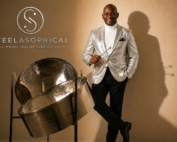
Find a Steel Drum Wedding Band Near Me
By G a r y Trotman|2026-08-12T10:15:00+01:00August 12th, 2026|Steelasophical|Comments Off on Find a Steel Drum Wedding Band Near Me
Find a Steel Drum Wedding Band Near Me : The Complete Guide to Hiring Steelasophical for Your Wedding You have chosen your venue. The date is in the diary. The guest list is taking shape. Now you are thinking about one of the most important ingredients of an unforgettable wedding: The music. Perhaps you have found yourself searching Google for: “Find a steel drum wedding band [...]

Steel Bands For Hire
By G a r y Trotman|2026-08-18T10:41:38+01:00August 10th, 2026|Steelasophical|Comments Off on Steel Bands For Hire
Steel Bands For Hire : The Complete Guide to Hiring a Steel Band for Your Wedding, Party or Event If you are searching for steel bands for hire, chances are you want something more memorable than ordinary background music. You want atmosphere. You want energy. You want guests smiling before the celebrations have even properly begun. And you want entertainment that instantly makes your wedding, party, [...]
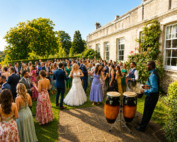
Wedding Steel Band
By G a r y Trotman|2026-08-10T02:31:28+01:00August 10th, 2026|Steelasophical|Comments Off on Wedding Steel Band
Wedding Steel Band Wedding Steel Band: The Ultimate Guide to Caribbean Wedding Entertainment Your wedding deserves a soundtrack that feels every bit as special as the day itself. For couples searching for entertainment that is joyful, elegant, memorable and refreshingly different, a wedding steel band can completely transform the atmosphere. From the first guests arriving for the ceremony to cocktails on the lawn, photographs, dinner and even [...]

Top 10 Caribbean Carnivals
By G a r y Trotman|2026-08-09T14:31:56+01:00August 9th, 2026|Steelasophical|Comments Off on Top 10 Caribbean Carnivals
Top 10 Caribbean Carnivals Dates, Culture, Costs & Travel Tips Executive summary Caribbean Carnival is not one event replicated across different islands. It is a family of celebrations shaped by emancipation, colonial history, African and European traditions, local music, masquerade, satire, religion, migration and tourism. Trinidad and Tobago remains the benchmark for sheer Carnival infrastructure and international influence; Barbados’ Crop Over is the Caribbean’s great summer harvest [...]

The Real Cost of Playing for Free
By G a r y Trotman|2026-08-08T00:55:21+01:00August 8th, 2026|Steelasophical|Comments Off on The Real Cost of Playing for Free
The Real Cost of Playing for Free There is a phrase that almost every professional musician has heard at some point: “We don’t have a budget, but it will be great exposure.” Sometimes the request is made with the best intentions. A venue, charity, wedding supplier, community event or business may genuinely believe that asking a musician to perform for free costs the musician nothing. After all, [...]
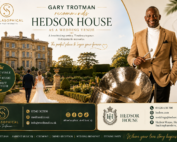
Steelasophical Steel Band Weddings at Hedsor House
By G a r y Trotman|2026-08-13T10:38:11+01:00July 31st, 2026|Steelasophical|Comments Off on Steelasophical Steel Band Weddings at Hedsor House
Steelasophical Steel Band Weddings at Hedsor House Few wedding venues in the United Kingdom capture romance quite like Hedsor House. Set within 100 acres of spectacular Buckinghamshire parkland overlooking the Thames Valley, this magnificent Georgian mansion has become one of Britain's most sought-after luxury wedding venues. Its exclusive-use approach, elegant interiors, grand staircase and breathtaking gardens create an unforgettable backdrop for couples seeking a [...]

Award-Winning Steel Pan Entertainment
By G a r y Trotman|2026-07-27T12:50:11+01:00July 27th, 2026|Steelasophical|Comments Off on Award-Winning Steel Pan Entertainment
Award-Winning Steel Pan Entertainment When it comes to premium steel pan entertainment in the United Kingdom, few names command the respect and recognition of Gary Trotman, founder and Creative Director of Steelasophical Steel Band DJ. Combining world-class musicianship with impeccable professionalism, Gary has built a reputation for delivering unforgettable performances that transform weddings, corporate events, luxury parties and festivals into truly memorable occasions. One of the UK's [...]
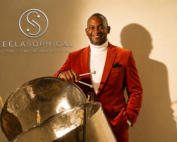

Steelasophical for Your Wedding, Corporate Special Celebration
By G a r y Trotman|2026-06-26T16:34:22+01:00June 26th, 2026|Steelasophical|Comments Off on Steelasophical for Your Wedding, Corporate Special Celebration
Steelasophical for Your Wedding, Corporate Special Celebration When you want unforgettable entertainment that creates a vibrant atmosphere from the very first note, Steelasophical Steel Band is the perfect choice. As one of the UK's most celebrated steel bands, Steelasophical has been delighting audiences for years by bringing authentic Caribbean sounds to weddings, corporate events, private parties and festivals across the country. We [...]
Why Brides Choose Steelasophical for your Wedding
By G a r y Trotman|2026-06-09T12:56:36+01:00June 9th, 2026|Steelasophical|Comments Off on Why Brides Choose Steelasophical for your Wedding
Why Brides Choose Steelasophical for your Wedding Why Brides Choose Steelasophical for Their Wedding Drinks Reception Your wedding drinks reception is more than just the time between the ceremony and wedding breakfast—it is the moment when your guests relax, mingle, celebrate, and begin creating memories that will last a lifetime. The atmosphere you create during [...]