 Skip to content

Questions to Ask Before Hiring a Wedding Band
Choosing the right wedding band is about far more than finding musicians who can play your favourite songs. Your band will help shape the atmosphere, guide the energy of the celebration and create some of the moments your guests remember most. The wrong choice can bring awkward gaps, unsuitable music, technical problems or unexpected charges. The right band will make the day feel effortless.
Before paying a deposit, you need to understand exactly what you are booking. Two bands may appear similar online but offer very different levels of experience, service and reliability. One may simply perform two evening sets; another may provide ceremony music, drinks-reception entertainment, announcements, background music, professional sound equipment and careful coordination with your venue.
Use the following questions to compare wedding bands properly, protect your budget and find performers who suit your personalities, venue and plans.
1. Are You Available on Our Wedding Date?
Begin with the obvious question. Popular wedding musicians can be booked many months—or occasionally years—in advance, particularly for summer Saturdays and bank-holiday weekends. Confirm your full date, venue and approximate performance times when making the initial enquiry.
Do not assume a date is reserved because you have received a quotation. Ask how long the quotation remains valid and what is required to secure the booking. Most professional bands will only confirm the date after receiving a signed agreement and booking fee.
2. How Much Wedding Experience Do You Have?
A talented pub or festival band is not automatically an accomplished wedding band. Weddings have a distinctive rhythm, many moving parts and little room for error. Musicians must understand ceremonies, speeches, photographs, room turnarounds, venue restrictions and the importance of adapting when timings change.
Ask how frequently the band performs at weddings and whether it has worked at celebrations similar to yours. An experienced wedding act will know how to communicate with planners, registrars, caterers, photographers and venue coordinators without creating extra work for you.
3. Can We See Genuine Live Performance Videos?
Promotional photographs and studio recordings are useful, but they do not show how a band sounds in front of real guests. Ask for recent, unedited live footage recorded at weddings or comparable events. Listen for musical quality, confident vocals, balanced sound and natural audience engagement.
Notice the wider presentation too. Are the musicians smartly dressed? Is the equipment tidy? Do they look enthusiastic? Does the performance suit the elegant, relaxed or energetic atmosphere you want?
4. Who Will Actually Perform at Our Wedding?
This question is essential when booking through a large agency or a band with a rotating membership. Establish whether the people shown in the publicity will attend your wedding. Professional deputising is common within the events industry because musicians can become ill or face unavoidable emergencies, but the policy should be transparent.
Ask whether substitute musicians are rehearsed, appropriately experienced and selected to maintain the advertised standard. If a particular vocalist, steel drummer or bandleader is central to your decision, have that requirement included in the contract where possible.
5. What Is Included in the Quoted Price?
Never compare quotations by headline price alone. Request an itemised explanation of what each package includes. Check the number and length of live sets, arrival time, finish time, sound system, lighting, travel, setup, background music and any DJ or microphone service.
Ask whether VAT, parking, congestion charges, accommodation, meals or late-night fees apply. Confirm whether moving equipment between different parts of the venue costs extra. A clear quotation should enable you to understand the complete investment before you book.
6. How Long Do You Perform, and How Are Sets Structured?
Wedding bands often offer two 60-minute sets, three 40-minute sets or another combination. Ask how the live time will be divided and how the suggested schedule fits your reception.
Longer is not always better. Two focused, high-energy performances can work more effectively than several hours of music that becomes repetitive or exhausting. For a drinks reception or wedding breakfast, shorter live sections mixed with well-chosen recorded music can maintain a comfortable atmosphere.
7. Can You Cover More Than One Part of the Wedding?
Using one versatile supplier throughout the day can create continuity and reduce administration. Ask whether the act can provide music for guests arriving, the ceremony entrance, signing of the register, the couple’s exit, drinks reception, wedding breakfast, evening guest arrival and party.
A flexible act might change style as the day progresses: romantic melodies for the ceremony, upbeat Caribbean music during drinks, relaxed soul or jazz over dinner and energetic dance music later. Some bands also offer a DJ service, announcements or a wireless microphone for speeches.
8. How Large and Varied Is Your Repertoire?
Request a current repertoire list rather than relying on a handful of songs featured online. A capable wedding band should be able to serve different generations and balance your tastes with music that welcomes the whole guest list.
Consider whether you want pop, soul, Motown, reggae, calypso, jazz, R&B, rock, Latin, gospel, traditional Caribbean music or current chart favourites. A broad repertoire is especially valuable during an all-day booking, when the atmosphere needs to evolve.
9. Can We Choose the Songs?
Find out how much control you will have over the set list. Many bands invite couples to identify favourites, dislikes and a small “do not play” list. This usually creates better results than attempting to dictate every song in order.
Your musicians know which pieces work well with their particular line-up, so give them room to build pace and respond to guests. However, your non-negotiable preferences should always be respected.
10. Will You Learn a Special Song?
If you want a particular ceremony entrance, first dance or family tribute, ask whether the band can learn it. Confirm whether the request is included, subject to an arrangement fee or dependent on the song being suitable for the act.
Not every piece translates naturally to every instrument or line-up. A professional musician should be honest about what will sound convincing and may suggest an adapted version. Ask to approve the arrangement or hear a rehearsal recording if the song is particularly important.
11. Can You Perform Our First Dance Live?
A live first dance can feel intimate and unforgettable, but the practical details matter. Confirm the exact artist, title and version because songs frequently have several recordings with different tempos and structures.
Ask whether the band can reproduce your preferred length. If you have practised choreography, even a small change in tempo or an extra instrumental section could cause confusion. In that situation, playing the original recording may be safer, followed immediately by the live band inviting guests onto the dance floor.
Discuss how the first dance will be introduced and who will cue the photographer. A confident bandleader or DJ can prevent an important moment from beginning before key guests are ready.
12. What Space, Power and Access Do You Need?
Send the musicians the venue’s performance-area dimensions and ask for a stage or floor-space requirement. A solo performer may need only a compact area, while a larger band requires room for instruments, speakers, stands and safe movement.
Confirm the number and position of power sockets. Ask whether equipment must be protected from rain, direct sunlight, unstable ground or extreme temperatures. Outdoor performances should always have a suitable covered alternative; a decorative parasol is rarely sufficient protection for people, instruments and electrical equipment.
13. Are There Sound Limiters or Noise Restrictions?
Many wedding venues operate under noise conditions or use electronic sound limiters. Ask your venue for its exact decibel limit, curfew and rules concerning amplified music. Then give this information to the band before signing the contract.
A sound limiter may cut the electrical supply if the volume exceeds a set level, potentially interrupting the performance and risking equipment. Experienced musicians can often adapt with careful speaker placement, electronic drums, smaller amplifiers or a more acoustic line-up, but they must know the restrictions in advance.
14. What Equipment Do You Provide?
Confirm whether the band supplies a professional PA system, mixing equipment, microphones, stands, cables and lighting. Ask whether the system covers only the performance area or can also serve a larger room, separate ceremony space or outdoor gathering.
If you need a microphone for speeches, establish whether it is wired or wireless, when it will be available and who will manage it. Speech microphones should be tested before guests sit down, not passed around for the first time during the best man’s introduction.
15. Do You Hold Public Liability Insurance and Relevant Safety Documents?
Most established venues require entertainers to provide evidence of public liability insurance. They may also request portable appliance testing records for electrical equipment, a risk assessment or method statement. Ask the band what documentation it holds and whether it can send certificates directly to your venue.
These documents do not prove musical quality, but they indicate that the supplier understands professional event standards. A refusal to discuss safety or venue compliance should be treated seriously.
16. What Happens If a Musician Is Ill or an Emergency Occurs?
Even reliable professionals can face illness, transport disruption or a family emergency. What matters is whether the band has a realistic contingency plan. Ask about deputy musicians, alternative line-ups, backup transport and spare equipment.
Find out what happens if the bandleader or featured performer is unavailable. Will you be informed immediately? Can the act supply an equivalent replacement? Would you be entitled to a partial or full refund if the contracted service cannot be delivered?
17. What Are Your Cancellation, Overtime and Delay Terms?
Read these terms before paying anything. Ask what portion of the payment is non-refundable, when the balance is due and what charges apply if you cancel at different stages. Wedding insurance may provide protection in certain circumstances, but cover varies, so review your own policy.
Confirm the overtime rate in case you decide to extend the celebration. Establish whether overtime is possible at all, who is authorised to approve it and whether the venue’s music curfew still applies.
18. How Will You Coordinate the Day?
Ask who will be your primary contact before and during the wedding. A named bandleader or event coordinator makes communication easier than sending messages through several people.
Find out when the final planning conversation takes place and what information will be confirmed. This should normally include arrival, setup, dress code, set times, announcements, song requests, supplier contacts, parking and payment status.
19. Can We Read Recent Reviews and Speak to Previous Clients?
Look beyond the testimonials selected for a band’s own website. Read recent reviews across independent platforms and pay attention to repeated themes. Comments about communication, punctuality, flexibility and professionalism are just as valuable as praise for musical ability.
Consider how the supplier responds to criticism. A calm, constructive response can reveal more than a page of perfect ratings. Be cautious if reviews appear generic, arrive in suspicious clusters or describe an act different from the one being offered.
20. Do You Provide Recorded Music or a DJ Service?
Ask what guests will hear before the first set, during breaks and after the live performance. Silence can drain the atmosphere surprisingly quickly. A basic playlist service may be sufficient for background music, while an evening party may benefit from a DJ who reads the dance floor, takes requests and makes announcements.
Clarify the difference between “DJ service” and “playlist music.” Does a person actively mix and select tracks, or will a prepared playlist simply run through the band’s system? Neither option is inherently wrong, but they provide different experiences and should be priced accordingly.
21. What Will You Wear?
Clothing affects how naturally performers fit into your photographs and overall wedding design. Ask whether the band offers formal, smart-casual, colourful Caribbean or themed attire. If you have a specific colour palette, share it as guidance rather than expecting musicians to purchase entirely new outfits.
Make practical expectations clear. A black-tie evening reception, relaxed garden party and beach-inspired celebration call for different presentation. Professional performers should arrive clean, coordinated and appropriately dressed while still wearing clothing that permits safe, energetic performance.
If the wedding has religious or cultural dress expectations, discuss them respectfully in advance.
22. Is Everything Confirmed in a Written Contract?
Never rely solely on messages, telephone conversations or a social-media profile. Your contract should identify both parties and record the date, venue, services, personnel or line-up, performance times, total price, payment schedule and essential technical requirements.
It should also cover cancellation, postponement, illness, substitution, delays, force majeure, overtime and any client responsibilities. Read every clause and ask for clarification where the wording is unclear. Keep the signed agreement, invoices and payment receipts together.
Red Flags to Watch for Before Booking
Take a step back if a prospective band is reluctant to answer basic questions, pressures you to transfer money immediately or will not provide written terms. Other warning signs include inconsistent pricing, no genuine live footage, poor communication, unexplained changes of personnel and an inability to supply venue documents.
Be careful with quotations that seem dramatically lower than every comparable option. The price may exclude travel, equipment, setup time or recorded music. It may also reflect limited wedding experience. Equally, a premium price should be supported by evidence: excellent performance, dependable service, strong reviews, professional presentation and clear inclusions.
Trust is important. You should feel that the band listens carefully, understands your priorities and communicates without creating pressure.
A Quick Wedding Band Checklist
Before confirming your booking, make sure you have:
- Checked availability for the complete date and required times.
- Watched genuine live performance footage.
- Confirmed the performers and size of the line-up.
- Reviewed the repertoire, requests and special-song policy.
- Received a complete quotation with all likely charges.
- Agreed the set lengths and music provided during breaks.
- Checked venue access, space, power and sound restrictions.
- Confirmed equipment, insurance and safety documentation.
- Understood illness, cancellation, postponement and overtime terms.
- Received and signed a detailed contract.
Choosing a Band That Fits Your Wedding
The best wedding band is not necessarily the largest, loudest or cheapest. It is the act that understands the experience you want to create and has the skill, organisation and personality to deliver it.
Imagine your day from the guests’ arrival to the final dance. Do you want gentle music welcoming everyone into the ceremony? A sunny Caribbean atmosphere during drinks? Sophisticated background entertainment over dinner? A packed dance floor in the evening? Once you define those moments, you can judge each supplier by how convincingly it can bring them to life.
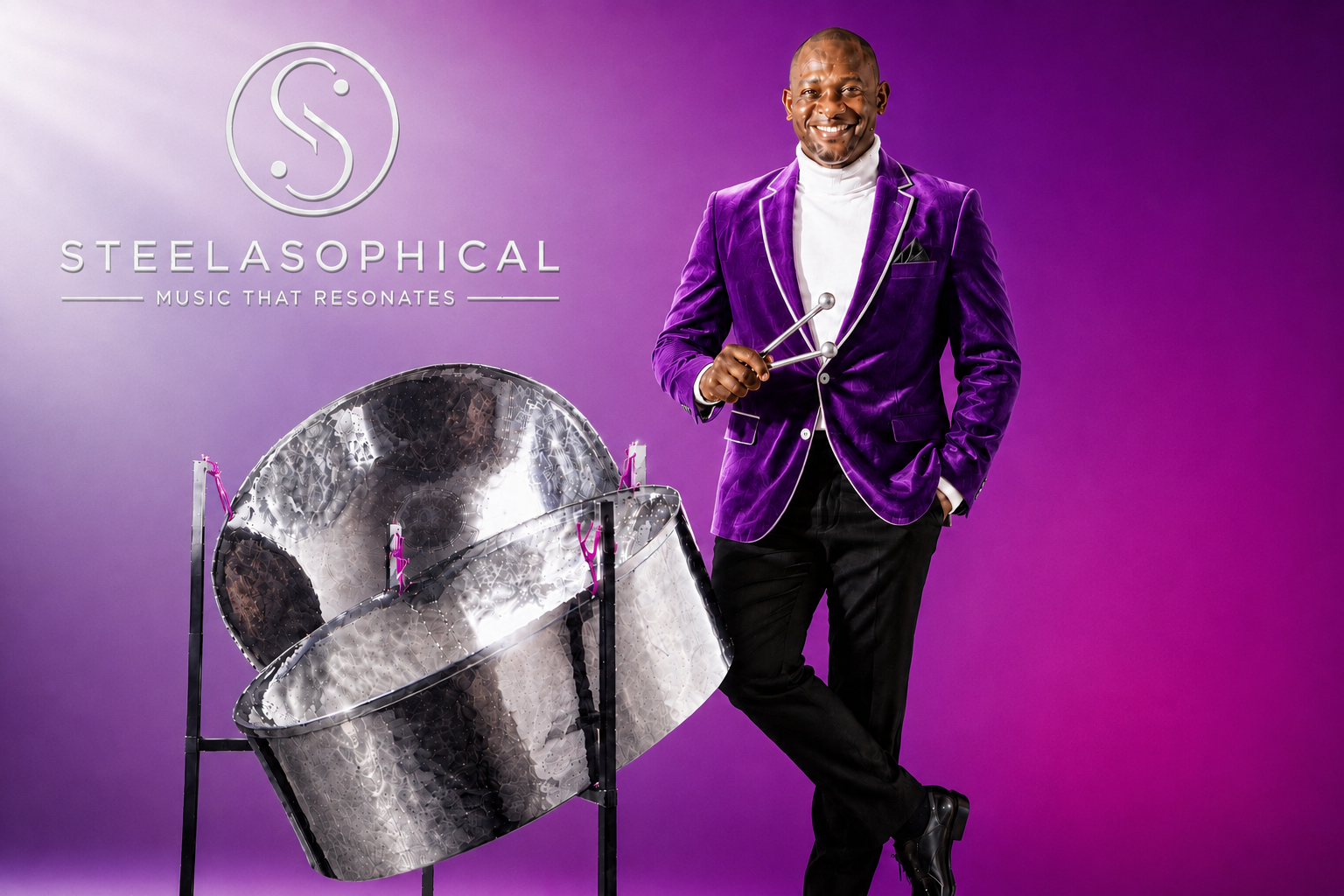
Steelasophical offers flexible live steel-drum entertainment for weddings, including solo and duo options and music suited to ceremonies, drinks receptions, wedding breakfasts and evening celebrations. The service combines the warmth of live performance with professional planning, polished presentation and a broad repertoire. Couples seeking a complete musical journey can also discuss combined steel-band and DJ options.
Visit steelband.co.uk to explore Steelasophical wedding entertainment and request a tailored quotation.
Final Thoughts
Your wedding musicians will influence the mood of the celebration more than almost any decorative detail. Give the decision the care it deserves. Ask direct questions, compare complete packages, verify the practical arrangements and put every important promise in writing.
A professional band will welcome thoughtful questions because clear expectations help it deliver an exceptional performance. Once you are satisfied with the music, service, safeguards and personal connection, you can book with confidence—and look forward to a wedding soundtrack that feels unmistakably yours.
