 Skip to content

Ultimate Guide Steel Drum for Beginners
Ultimate Guide to Steel Drum for Beginners
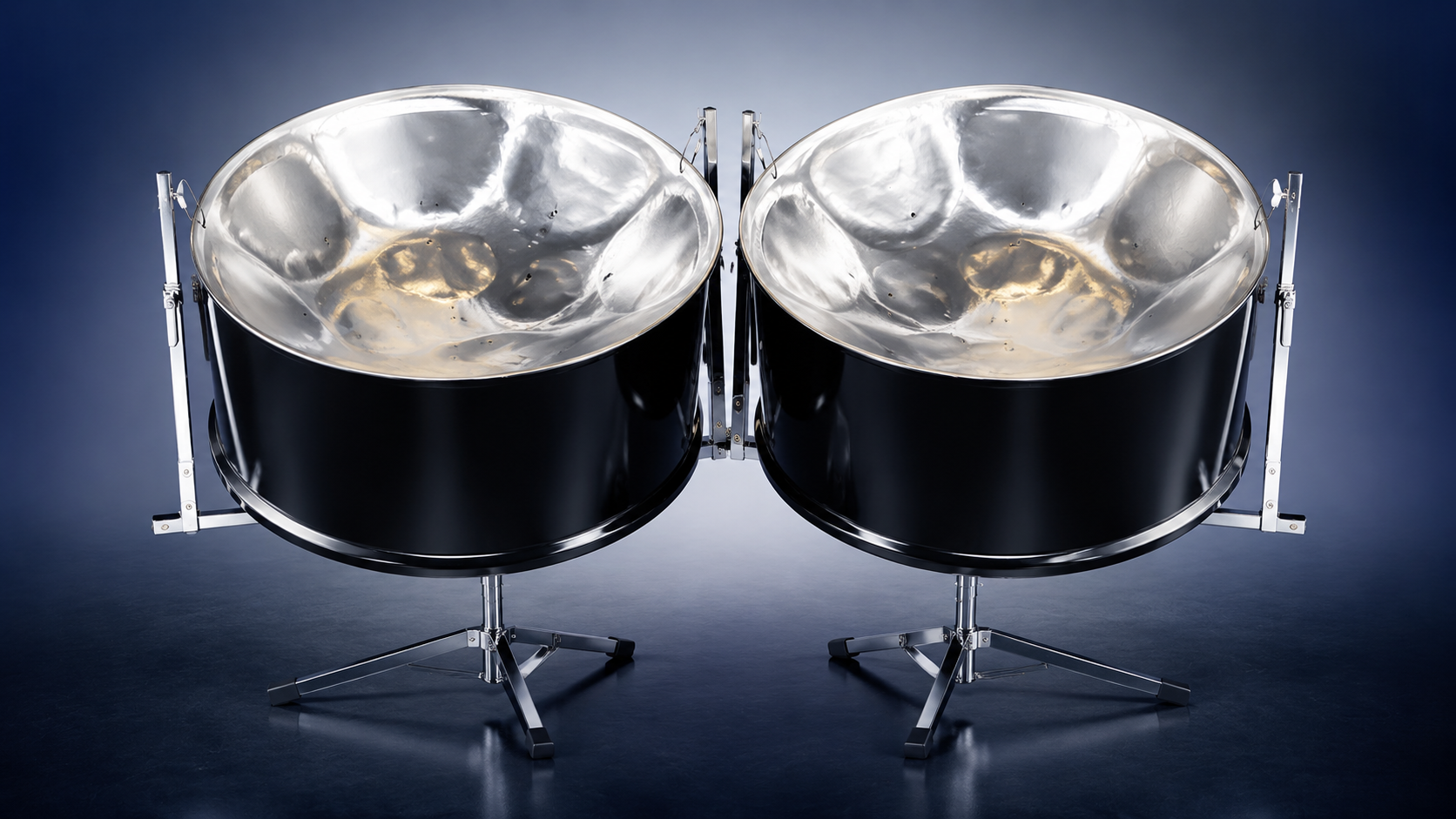
There is something unforgettable about hearing a steel drum for the first time. Its bright notes may suggest sunshine and celebration, yet the instrument can also whisper through a ballad, carry a jazz melody, drive a calypso or transform a classical piece.
The shiny playing surface can look mysterious because it has no keys, strings or obvious scale running from left to right. Do not let that put you off. This guide takes you from your first look at a steelpan to your first tune, covering the instrument’s history, choosing a pan, stick technique, practical exercises, common mistakes and a realistic four-week plan.
Is It a Steel Drum, Steel Pan or Steelpan?
All three terms are understood, but they are not quite interchangeable. “Steel drum” is the familiar search term, while steelpan, steel pan or simply pan is normally preferred by players. A player may be called a pannist or pan musician.
Technically, pan is not a drum in the same sense as a snare drum. A conventional drum produces sound through a stretched membrane. A steelpan produces pitched notes when its shaped metal surface vibrates, making it a tuned percussion instrument in the idiophone family. Trinidad and Tobago’s Ministry of Foreign and CARICOM Affairs describes it as a definite-pitch percussion instrument with a playing surface divided into individually tuned note areas.
Using “steel drum” is not a terrible mistake. However, using the word “pan” shows respect for the musicians, builders, tuners and communities responsible for its development.
A Short History Every Beginner Should Know
Steelpan was created in Trinidad and Tobago, developing during the 1930s and 1940s from the islands’ Carnival traditions. Tamboo bamboo bands made rhythm by striking lengths of bamboo; musicians later experimented with biscuit tins, paint tins and other metal containers. Through trial, skill and imagination, they discovered that shaped areas could produce recognisable pitches.
Innovators refined the sinking, grooving, hammering and tuning process until pans could play complete chromatic music. What began with a handful of notes became a full family of melody, harmony and bass instruments. Pan grew from community, resistance, Carnival and extraordinary craftsmanship—not from a factory attempt to imitate a “tropical” sound.
Today it is legally recognised as the national musical instrument of Trinidad and Tobago. The United Nations proclaimed 11 August as World Steelpan Day in 2023. Beginners need not become historians before playing, but respect starts with giving Trinidad and Tobago proper credit.
How a Steelpan Produces Music
A traditional pan begins as a steel barrel, although some makers use steel produced specifically for instruments. Its surface is sunk into a bowl, then individual note fields are marked, shaped and tuned. The outer “skirt” is cut to suit the range before a protective finish is applied.
When a rubber-tipped stick strikes a note, the metal vibrates. A tuner carefully controls the fundamental pitch and important overtones, creating pan’s clear, ringing character.
Larger note fields generally create lower pitches and smaller fields create higher ones. Many lead pans use a layout related to the circle of fifths, but patterns vary. Always use the note chart for your instrument rather than assuming every pan is identical.
Meet the Steelpan Family
A steel orchestra contains several voices, much like a string orchestra. Different bands use different combinations, but the family commonly includes the following.
Lead or tenor pan
Despite the name “tenor”, this is the high, melody-playing voice. It is usually one pan and the most practical choice for an independent beginner. Descriptions such as C lead, low C tenor and D tenor refer to range and layout, so check before buying.
Double tenor and double second
These use two pans and can play melody, countermelody or harmony. Double seconds are particularly important for chordal accompaniment, although two playing surfaces demand more movement.
Guitar and cello pans
Arranged as two, three or four pans, these provide lower harmony and rhythmic chord patterns. They are rewarding but require more room at home.
Bass pans
Bass players stand among four, six or more full-length barrels, each containing a few large, low notes. The sound is thrilling, but cost, transport and space make bass an unusual first purchase.
For most buyers, a well-made lead pan is the sensible starting point. In a school or community band, your teacher may place you elsewhere. Every section matters because the music only works when the voices fit together.
Choosing Your First Steel Drum
Buying a pan is more like choosing a handmade acoustic instrument than ordering a toy. Two shiny pans can look similar while sounding very different.
Choose chromatic rather than novelty tuning. A chromatic pan contains the sharps and flats needed for different keys. Cheap “tropical drums” may offer only a few notes, becoming frustrating once you want to learn complete songs.
Ask who built and tuned it. A reputable seller should explain its maker, tuner, note range and available aftercare.
Listen to every note. Look for clear, even tone at a comfortable volume. Watch for dull, buzzing or dramatically uneven notes. Pitch, tone and sustain all matter.
Check what is included. You need a stable stand, suitable sticks, a cover and ideally a fitted case. A low price may exclude these essentials.
Think about portability. Check that the stand adjusts comfortably and the pan fits through your home and into your vehicle.
Take an experienced player or request a video demonstration. For a used pan, ask about tuning, dents, drops and rust. It is no bargain if major work is immediately required.
Setting Up Correctly
Place the stand on a flat surface with room to move your arms. Hang the pan securely from the correct points. It should swing freely rather than press against the frame, which can interfere with vibration.
Set the playing surface around waist level, adjusting for your body and stand. You should see the notes without bending your neck sharply or lifting your shoulders. Keep your feet comfortably apart and knees unlocked.
Do not lean on the pan or hunch over it. Free elbows and relaxed wrists help you move accurately and avoid tension.
Use the maker’s diagram to identify C, D, E, F and G. Removable markers can help initially, but avoid adhesives that could damage the finish. Remove visual aids gradually as you learn the layout.

Ultimate Guide Steel Drum for Beginners
How to Hold Pan Sticks
Pan sticks have rubber tips selected for the instrument’s register. The wrong pair may produce poor tone or unnecessary force, so follow the maker’s recommendation.
Hold each stick gently between thumb and first finger, with the others supporting it. Keep it secure but loose enough to rebound. Leave a little stick behind your hand, with palms roughly down and wrists neutral.
Imagine holding a small bird: secure, never squeezed. A clenched grip restricts rebound and creates fatigue.
Let the tip touch the note and rebound immediately, using a light wrist stroke rather than a blow from the shoulder. If the tone is harsh or choked, check your grip and striking point before hitting harder.
Producing a Clean, Beautiful Note
The first skill is not speed. It is tone.
Strike near the centre of a medium-sized note and allow the stick to rebound. Repeat with each hand. Can both create the same volume and quality?
Experiment carefully: compare a strike near the groove with one in the centre, and a held-down stick with a free rebound. Hearing the difference teaches you what the pan needs.
Avoid attacking the metal. Heavy playing sounds ugly and may disturb tuning. If a performance needs more volume, amplification is safer than trying to overpower the room.
Once single notes sound clean, alternate right and left hands slowly:
R L R L | R L R L
Keep every stroke even. Start at a tempo you control; speed grows from relaxed repetition.
Your First Five Beginner Exercises
Start a metronome around 60 beats per minute. Practise each exercise briefly, relax your shoulders and repeat.
1. One-note alternation
Play four slow beats on one note with alternating hands, then eight at twice the speed. Keep the sound and rebound equal.
2. Find-and-play
Mix C, D, E, F and G. Say a note, find it silently, then strike it once. Accuracy builds your mental map.
3. Five-note ladder
Play C–D–E–F–G, then return. Alternate hands and keep the notes evenly spaced.
4. Copy a rhythm
On one note, play “walk, walk, running, walk”: two crotchets, two quavers and one crotchet. Repeat elsewhere. You can practise rhythm before knowing many pitches.
5. Two-note movement
Alternate between two notes from your first tune. Look at the destination before moving and use the shortest comfortable path.
Ten focused minutes beats half an hour of careless banging. Stop if you feel pain and check your posture, grip or practice length.
Learning Your First Song
Choose a melody you can sing. Familiarity helps your ears spot mistakes. Good choices have a small range, repeated phrases and steady rhythm, such as “Ode to Joy”, “When the Saints Go Marching In” or a simple Caribbean folk melody.
Do not attempt the entire song immediately. Use this process:
- Sing the first phrase.
- Clap its rhythm.
- Find the notes slowly.
- Play them without a steady beat.
- Add a slow pulse.
- Repeat until the phrase feels comfortable.
- Learn the next phrase and join the two together.
This “chunking” method prevents you stumbling through the whole piece. Isolate any troublesome two- or three-note transition.
Learn by ear and from notation where possible. One strengthens listening; the other opens a larger repertoire.
Understanding Rolls
A pan note cannot be held like a bowed violin note. Players sustain it with a roll: rapid alternating strokes.
Alternate right and left, increasing speed with a loose grip until the attacks blend. Keep the sticks low and volume even. A roll that collapses usually indicates tension.
Add crescendos and diminuendos only after mastering a steady roll. Use rolls when a phrase needs sustain, not on every note.
Rhythm, Feel and Playing with Others
Correct notes are only part of pan playing. Caribbean music depends on pulse, groove and interaction, so listen to calypso, soca, reggae and steel orchestras.
In an ensemble, watch the director and listen across the band. Your part gains power alongside bass, harmony and the “engine room” percussion. Lock into the shared pulse.
Backing tracks teach you to recover after losing your place. Begin slowly and record yourself occasionally; playback exposes uneven rhythm and hesitant movement.
A Realistic Four-Week Practice Plan
You do not need hours every day. Fifteen to twenty focused minutes, five days a week, can establish strong foundations.
Week one: Learn posture, grip and five note locations. Produce an even tone with each hand and practise slow alternation.
Week two: Play a five-note scale pattern, copy three simple rhythms and learn the first half of an easy melody.
Week three: Complete the melody, introduce slow rolls and play along with a metronome or gentle backing track.
Week four: Memorise the piece, record one complete performance and identify one technical goal for the following month.
A twenty-minute session could include three minutes of single notes, five of patterns, eight on repertoire and four of free play. Explore and remember why you wanted to learn.
Record the date, tempo and one observation in a diary. “G to C still rushed” is more useful than “practised for twenty minutes”.
Common Beginner Mistakes
Hitting too hard: Let the stick rebound and the pan resonate.
Gripping too tightly: Tension slows movement. Pause and shake out your fingers.
Playing fast too soon: Slow down until you are accurate; repeated mistakes become habits.
Looking only at the current note: Train your eyes to move towards the next destination slightly before your hands.
Using unsuitable sticks: Bass, cello and lead sticks are not necessarily interchangeable. Match the tip and weight to the pan.
Ignoring the weaker hand: Give both hands equal attention. Deliberately start some patterns with the left.
Not listening: Judge tone, timing and musical shape—not just the note location.
Leaving it unprotected: The tuned surface is sensitive, despite being steel.
Caring for Your Steelpan
Keep the pan dry and wipe away moisture with a clean, soft cloth after playing. Rain, condensation, perspiration and salty coastal air can encourage corrosion. Store the instrument in a dry place, preferably with a cover or fitted case.
Avoid prolonged direct sunlight and sudden temperature extremes. Heat changes the tension in the metal and can temporarily affect pitch. Never place objects inside the bowl or allow guests to strike the pan unsupervised. Do not rest a frontline pan on its playing surface, and secure it carefully during transport.
Inspect rubber tips for wear. If the shaft begins to show through, replace the tips or sticks before the exposed material scratches the finish or creates a harsh impact.
Tuning is not a do-it-yourself job. A professional pan tuner uses specialist hammering techniques to restore pitch, tone and overtones. If a note suddenly buzzes, sounds flat or loses its character, stop striking it repeatedly and ask a qualified tuner for advice.
Do You Need Lessons?
You can discover a great deal through careful self-directed practice, particularly if you already play another instrument. A good teacher, however, can correct an awkward grip or inefficient movement before it becomes habitual. Lessons also provide structured repertoire, cultural context and the motivation of regular goals.
Look for local steelbands, community arts organisations, schools, music services and Caribbean cultural groups. Joining a band offers something an online video cannot fully reproduce: the feeling of your part interlocking with an entire steel orchestra.
When choosing a teacher, ask whether they teach your type and layout of pan, whether lessons include technique and music reading, and whether you will have opportunities to play with others. The best teacher is not merely the fastest performer. Patience, clear explanations and the ability to listen are just as important.
Frequently Asked Questions About Steel Drum for Beginners
Is steelpan difficult to learn?
Most beginners can produce a pleasant sound and play a short tune quite quickly. Developing fluent movement, rhythmic control, rolls, dynamics and a large repertoire takes sustained practice. The instrument is accessible at the beginning but offers a lifetime of musical depth.
Do I need to read music?
No. Many players begin by watching, listening and copying. Music reading is nevertheless valuable, particularly in an ensemble, so it is worth learning gradually alongside your practical playing.
Can children learn steelpan?
Yes. Pan can be excellent for rhythm, coordination, listening, confidence and teamwork. The stand must be adjusted safely, sticks should suit the instrument and teaching should be age-appropriate. Supervision is important because enthusiastic heavy striking can damage a pan.
Am I too old to start?
No. Adults often bring patience, listening experience and a clear personal reason for learning. Begin slowly, use comfortable posture and practise consistently rather than cramming.
Can I learn on a small eight-note instrument?
You can learn basic rhythm and simple tunes, but a limited instrument will restrict your repertoire. If your goal is serious musical development, choose a properly tuned chromatic lead pan or obtain regular access to one.
How long should I practise?
Fifteen focused minutes most days is a strong beginning. Increase the time gradually as your concentration and physical comfort develop. Quality, regularity and clear goals matter more than one long weekly session.
Can a steelpan go out of tune?
Yes. Heavy striking, impacts, poor handling, corrosion and extreme conditions can affect tuning. Ordinary careful playing should not frighten you, but repairs and tuning should be left to a trained professional.
Is a handpan the same instrument?
No. Both are made from tuned steel, but a handpan is a different, much later instrument normally played with the hands. Caribbean steelpan is played with rubber-tipped sticks and has its own history, construction, layouts and performance culture.
Your Steelpan Journey Starts with One Note
The best way to begin is not to wait until you know everything. Find a good instrument or local class, learn where one note lives and make that note sing. Add a second note, then a rhythm, then a phrase. Before long, the unfamiliar silver surface becomes a musical map.
As you progress, keep listening to the culture that created the instrument. Explore the great steel orchestras of Trinidad and Tobago, watch Panorama performances, support skilled builders and tuners, and learn from experienced pannists. Technique will make you more accurate, but listening and respect will make you a better musician.
Steelasophical brings that living sound to weddings, parties, corporate occasions and cultural events across the UK. Led by Gary Trotman, the award-winning steel band and DJ service shows just how versatile pan can be, moving naturally from Caribbean classics to reggae, soul, jazz, pop, Motown and elegant background music. To hear the instrument in a professional setting or discuss live steelpan entertainment, visit steelband.co.uk.
Your first performance may be one melody played for a friend. It may eventually lead to a community band, a stage or your own event. Every pannist begins in the same place: two sticks, a circle of notes and the excitement of discovering what happens next.

Ultimate Guide Steel Drum for Beginners
Authoritative Further Reading
- National Instrument of Trinidad and Tobago – Ministry of Foreign and CARICOM Affairs
- Steelband history – National Library and Information System Authority of Trinidad and Tobago
- Celebrating Trinidadian Steelband Music – Smithsonian Folkways
- Tamboo Bamboo and the development of steelpan – Smithsonian Folklife