 Skip to content


Gay Marriage Law UK Steelasophical Advice
Gay Marriage Law UK Steelasophical Advice land mark date in history was the 29 March 2014, this was when the UK law changed to give same sex couples the right to get married in England and in Wales.
Linzi Bull and Emily Grosvenor-Taylor, from prestigious London law firm Harbottle & Lewis, explain who can get married or enter a civil partnership in the UK, and what the legal requirements are for foreign nationals wishing to come to the UK to enter a same sex marriage, and what protocols must be followed.
Gay Marriage Law UK: Steelasophical Advice for Planning an Inclusive Wedding Marriage should be about two people choosing one another and celebrating that commitment in a way that feels honest, joyful and personal. For same-sex couples in the United Kingdom, the law now provides the right to marry in every part of the country. However, the rules governing notice, venues, celebrants and religious ceremonies are not identical across England and Wales, Scotland and Northern Ireland.
This guide explains the essentials of gay marriage law in the UK and offers Steelasophical advice for creating a wedding with unforgettable music. “Same-sex marriage” is the term generally used in legislation and official guidance, while “gay marriage law UK” remains a common search phrase. Whichever wording you use, the heart of the subject is marriage equality.
The legal information below is general guidance, correct to August 2026, rather than advice about an individual case. Registration procedures and fees can change, so always confirm your arrangements with the register office, approved celebrant or religious organisation responsible for your ceremony.
Is Gay Marriage Legal in the UK?
Yes. Same-sex couples can legally marry throughout the United Kingdom. The change happened at different times because marriage law is devolved.
In England and Wales, the Marriage (Same Sex Couples) Act 2013 made marriage between two people of the same sex lawful. The first marriages under the new law took place in March 2014. Scotland introduced equal marriage through the Marriage and Civil Partnership (Scotland) Act 2014, with the first same-sex marriages taking place in December 2014. Civil same-sex marriage became legal in Northern Ireland in January 2020.
Civil partnerships came first. They were introduced across the UK under the Civil Partnership Act 2004 and became available to same-sex couples in December 2005. Today, both marriage and civil partnership are available to same-sex and opposite-sex couples throughout the UK, although the administrative process and some technical legal effects can differ.
Marriage equality means a same-sex marriage is a legally recognised marriage, not a lesser category or symbolic arrangement. Married couples acquire the legal status of spouses. That status can affect matters such as inheritance, taxation, pensions, next-of-kin decisions and financial arrangements if the relationship ends. Complicated questions involving children, overseas property, earlier partnerships, immigration or pension schemes should be discussed with an appropriately qualified solicitor or adviser.
Same-Sex Marriage in England and Wales
According to the current GOV.UK marriage and civil partnership guidance, a couple can marry or form a civil partnership in England or Wales if both people are at least 18, are not already married or in a civil partnership and are not closely related.
Most couples must give notice at a register office. Giving notice is the formal declaration that you intend to marry or form a civil partnership. You normally need to choose the final ceremony venue first because its details form part of the notice. The ceremony must then take place within 12 months of giving notice. Immigration status can affect where notice is given, which documents are needed and whether a longer referral period applies, so couples involving a person from outside the UK or Ireland should check the official guidance early.
A civil marriage can take place at a register office or at a venue approved by the local council, such as a hotel, country house or licensed barn. At least two witnesses must attend. The registrar will explain the required legal wording and the limits that apply to ceremony content. Music, readings and personal promises may usually be included, subject to approval and the rule that a civil ceremony must not contain religious material.
Religious Weddings in England and Wales
Same-sex couples may marry in a religious building when the religious organisation has chosen to conduct same-sex marriages and the building has been registered for that purpose. The minister or other authorised person must also be willing and legally able to conduct the ceremony. The government publishes an updated list of places of worship registered for marriage, including premises registered for same-sex marriages.
The legal position for Anglican churches is different. As of August 2026, a same-sex couple cannot legally marry according to the rites of the Church of England or the Church in Wales. The Church of England’s own wedding guidance confirms its current position. Some churches may offer approved prayers or services for couples who are already married, but those are distinct from the legal marriage ceremony. Speak directly to the relevant church about what is available.
Same-Sex Marriage in Scotland
Same-sex marriage has been available in Scotland since 16 December 2014. Couples can choose a civil ceremony conducted by a registrar or a religious or belief ceremony conducted by an authorised celebrant. Scotland’s recognition of belief bodies means humanist and other belief ceremonies can form the legal marriage when the celebrant has the necessary authority.
Couples must submit marriage notice forms and supporting documents to the registrar for the district where the ceremony will take place. National Records of Scotland recommends making arrangements early and checking that a chosen religious or belief celebrant is authorised. Its current marriage and civil partnership arrangements explain the process.
A Scottish marriage ceremony requires both partners, the celebrant and two witnesses. National Records of Scotland states that there are no legally prescribed “marriage vows”, but the ceremony must contain the necessary declarations. For a same-sex couple, each person must declare that they accept the other in marriage, and the celebrant must declare that the couple are married.
Religious and belief bodies and their celebrants are not automatically required to solemnise same-sex marriages. They must be authorised for that category of ceremony. Confirm the position before paying deposits or making travel plans.
Same-Sex Marriage in Northern Ireland
Same-sex civil marriage became lawful in Northern Ireland on 13 January 2020. Couples may choose a civil ceremony or, where an authorised officiant and participating religious or belief body are available, a religious or belief ceremony.
The Northern Ireland government marriage guidance explains the qualifying conditions and documentation. Each person must submit a marriage notice form to the registrar in the district where the marriage will take place. Notices should normally arrive about eight weeks before the wedding, or around ten weeks beforehand if either partner has previously been married or in a civil partnership. A civil ceremony can take place in a registrar’s office or an approved place, and two witnesses are required.
Marriage or Civil Partnership?
Same-sex couples now have a genuine choice between marriage and civil partnership. Both create a legally recognised relationship and bring substantial rights and responsibilities. They are formed differently: marriage includes prescribed legal declarations during a ceremony, whereas a civil partnership is formed through the required registration and signing process. Couples may still add a celebration or personalised ceremony around that legal act.
The right option depends on personal, cultural, legal and emotional preferences. Some couples have always wanted to call one another husband, wife or spouse. Others prefer the language and history of civil partnership. Couples who formed civil partnerships before equal marriage may be able to convert them, but conversion rules and procedures differ among the UK nations and have changed over time. Check the relevant government service before making plans.
Neither choice needs to dictate the scale or style of the celebration. A simple legal registration can be followed by a vibrant reception, while a large wedding may centre on either status. Your relationship should shape the day—not other people’s assumptions.
Equality and Wedding Suppliers
In England, Scotland and Wales, sexual orientation is a protected characteristic under the Equality Act 2010. The Equality and Human Rights Commission explains that a person must not be treated differently in a situation covered by the Act because they are gay, lesbian, bisexual or heterosexual, because someone assumes their orientation, or because they are associated with someone of a particular orientation.
This protection is relevant to businesses providing goods and services, including much of the wedding industry. Religious organisations and ministers have specific statutory protections concerning whether they conduct same-sex marriages, so their position is not the same as that of an ordinary commercial supplier.
A professional wedding business should make every couple feel respected from the first enquiry. Forms should not assume that every wedding has one bride and one groom. Consultations should use the couple’s chosen names, titles and pronouns. Packages, prices and service standards should be applied consistently.
If you believe a supplier has unlawfully discriminated against you, keep written evidence and obtain advice from an appropriate equality or legal service. A blog cannot determine whether conduct is unlawful because the facts and applicable law matter.
Steelasophical Advice for Choosing Inclusive Suppliers
- Have you worked at same-sex weddings before?
- How will you introduce us during the ceremony and reception?
- Can your documents use “partner”, “spouse” or “couple” instead of fixed bride-and-groom labels?
- Will every member of your team receive our names, pronunciations, titles and pronouns?
- Can you adapt traditional moments such as entrances, speeches and dances to our preferences?
- How do you respond if a guest or subcontractor behaves disrespectfully?
- Are your prices and conditions the same for every couple receiving the same service?
Listen to the tone as well as the answer. You deserve enthusiastic competence, not reluctant tolerance. A supplier does not need to make your sexuality the theme of the wedding; they need to understand your vision and deliver it with respect.
Make the Ceremony Sound Like You
For the ceremony, think in four musical chapters. First comes guest arrival: relaxed melodies establish the atmosphere while people greet one another and take their seats. Second is the entrance. A couple may enter separately, together, with parents, with friends or without an escort. There is no requirement to copy a conventional bridal procession.
Third comes the signing or registration moment, for which gentle live music prevents an awkward silence while photographs and legal formalities are completed. Fourth is the exit: the newly married couple leads everyone into the celebration with a tune that feels triumphant and unmistakably theirs.
Discuss every musical cue with the registrar, celebrant and venue. Legal officials control the timing of the ceremony, and civil ceremonies may restrict religious material. Send song titles early so approval does not become a last-minute worry.
Plan Traditions Without Gender Assumptions
An equal marriage does not require a traditional wedding structure, nor does it require rejecting tradition. Keep the customs that mean something and redesign the rest.
Either partner can propose, walk down the aisle, give a speech, wear a suit, wear a dress, change outfits, carry flowers or take the lead in the first dance. Both partners can be escorted. Neither needs to be “given away”. Wedding parties can be mixed and called attendants, wedding crew, best people or any name that suits the group.
Tell the master of ceremonies or DJ exactly how you want to be announced. “Please welcome the newlyweds”, “Mr and Mr”, “Mrs and Mrs”, surnames, first names or simply “the happy couple” are all possible. If one or both partners change their name, do not let anyone announce a shared surname unless it has been confirmed.
Build a Wedding Soundtrack With Meaning
There is no universal “gay wedding playlist”. The most powerful music reflects the couple’s life together. Start with songs connected to your first meeting, travels, family, culture and private jokes. Then consider the emotional job of each part of the day.
Steelasophical can shape live steelpan music around a ceremony, drinks reception and wedding breakfast, followed where required by a wider DJ celebration. The palette can move through calypso, reggae, soul, Motown, jazz, R&B, pop, ballads and contemporary favourites. A familiar love song played on steelpan often sounds fresh while retaining the melody guests recognise.
During the drinks reception, music should energise without overwhelming conversation. Guests are meeting, photographs are being taken and the couple may briefly disappear with the photographer. A polished live set connects those moving parts and stops the atmosphere from falling flat.
At the wedding breakfast, ambient music can continue the mood and support entrances, speeches or special dedications. Later, the DJ portion can bring generations and friendship groups together. Ask guests for requests in advance, but retain a “do not play” list so the final soundtrack still belongs to you.
A Practical Planning Timeline
As soon as you choose the UK nation and approximate date, check the official marriage rules. Contact the register office or intended celebrant before assuming that a venue booking alone secures the legal ceremony. Confirm eligibility, notice deadlines, documents, immigration requirements, witnesses and the authorised person who will register the marriage.
Next, secure the venue and key suppliers. Read contracts carefully for payment schedules, cancellation terms, timings, power requirements and what happens if a supplier becomes unavailable. Tell the entertainment provider whether music will be indoors, outdoors or across several spaces. Steelpan may look effortless, but good sound, safe positioning and smooth transitions depend on practical preparation.
Around three to six months before the day, refine the running order, announcements and principal songs. Confirm pronunciations and the language used for each partner. Ask who will cue the entrances and who will tell the musician when the signing is complete.
Frequently Asked Questions
Can we include live music in a civil ceremony?
Usually, yes, provided the registrar approves the selections and they comply with ceremony rules. In England and Wales, civil ceremonies cannot include religious content. Check every important piece in advance rather than relying on a general venue playlist.
Do we have to use “bride” and “groom”?
No. Use the words that fit you: bride, groom, partner, spouse, newlywed or your names. Tell suppliers before they prepare scripts, signage or introductions.
Is a civil partnership the same as a marriage?
They are separate legal relationships with many similar rights and responsibilities. Their formation, terminology and some technical effects differ. Take legal advice if the distinction could affect pensions, inheritance, parenthood, immigration or international recognition.
Can Steelasophical play more than Caribbean music?
Yes. The steelpan has a distinctive Caribbean voice, but its repertoire can embrace pop, soul, Motown, jazz, reggae, R&B, ballads and carefully selected contemporary songs. The aim is to create a soundtrack that represents the couple.
Why Choose Steelasophical for Your Same-Sex Wedding?
Steelasophical believes that professional wedding entertainment begins with listening. Every couple should receive the same care, clarity and enthusiasm while enjoying the freedom to make the celebration their own.
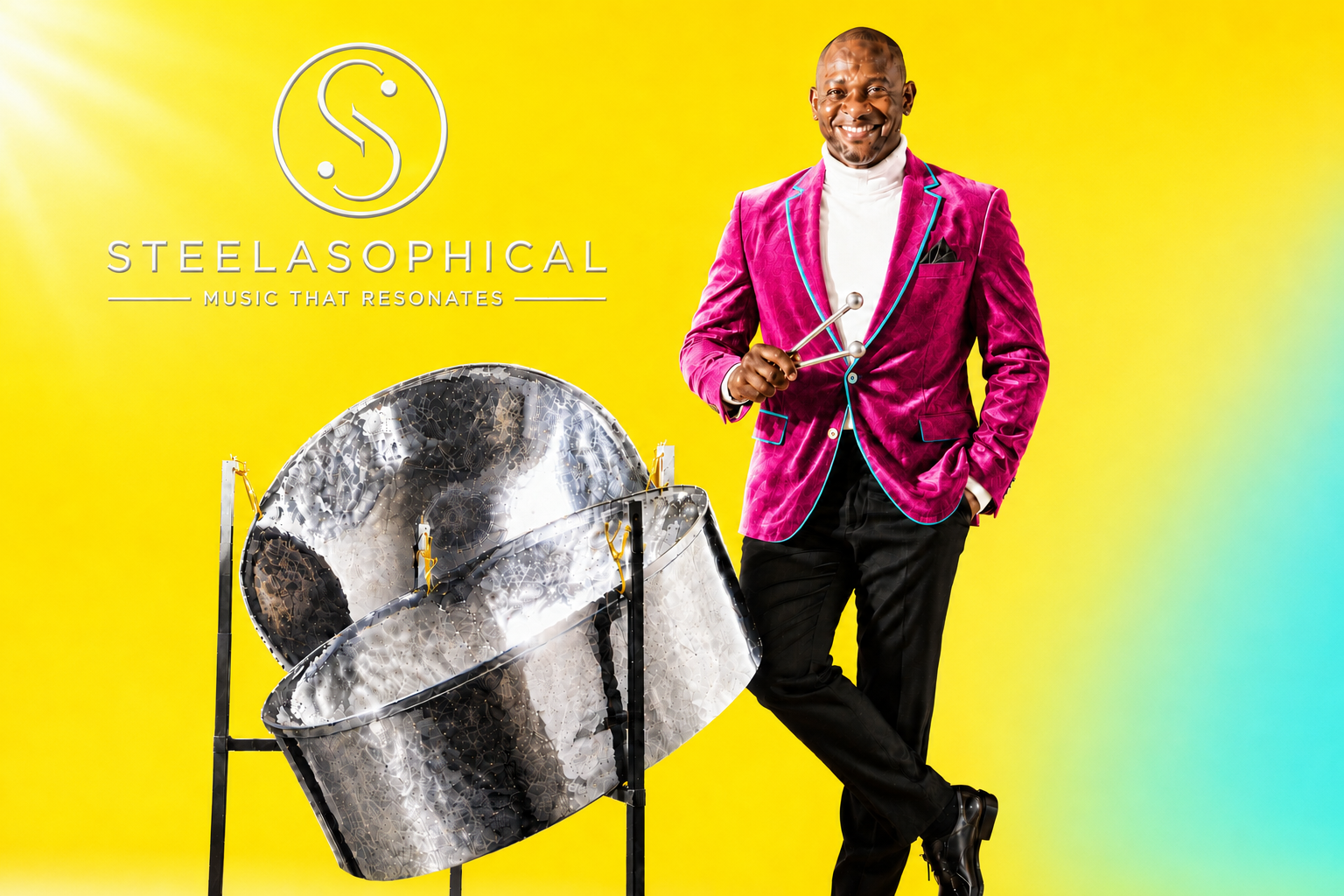
Gary Trotman can provide live steelpan for guest arrival, entrances, the signing, the newlyweds’ exit, drinks reception and wedding breakfast. A combined Steelasophical Steel Band DJ service can then carry the energy into the evening. This continuity helps the day feel connected rather than divided into unrelated supplier slots.
The service is designed around polished presentation, dependable communication and a premium musical experience. It works especially well for couples who want elegance with personality: uplifting Caribbean colour, sophisticated background music and a broad party repertoire, all planned around the venue and guests.
Celebrate the Marriage,
Not a Template
The progress of gay marriage law in the UK gives same-sex couples legal recognition across all four nations. Yet equality on paper is only the beginning of a wonderful wedding. The day becomes meaningful through the choices that follow: the people invited, the words spoken, the traditions reclaimed, the suppliers trusted and the music that surrounds every memory.
Start with the correct legal process for your location. Choose professionals who respect your relationship without stereotypes. Approve the ceremony music early, personalise the language and build a running order that gives joy enough space to breathe.
If you would like live steelpan music, a Steelasophical Steel Band DJ package or an inclusive soundtrack designed around your ceremony and reception, visit steelband.co.uk or contact @Steelasophical_steel_band_dj. Steelasophical brings premium Caribbean-inspired entertainment to weddings throughout the UK—because every love story deserves to sound extraordinary.
Legal information checked against official sources in August 2026. Laws, fees and administrative procedures may change. Confirm current requirements with the relevant registration authority and obtain professional legal advice where necessary.