 Skip to content

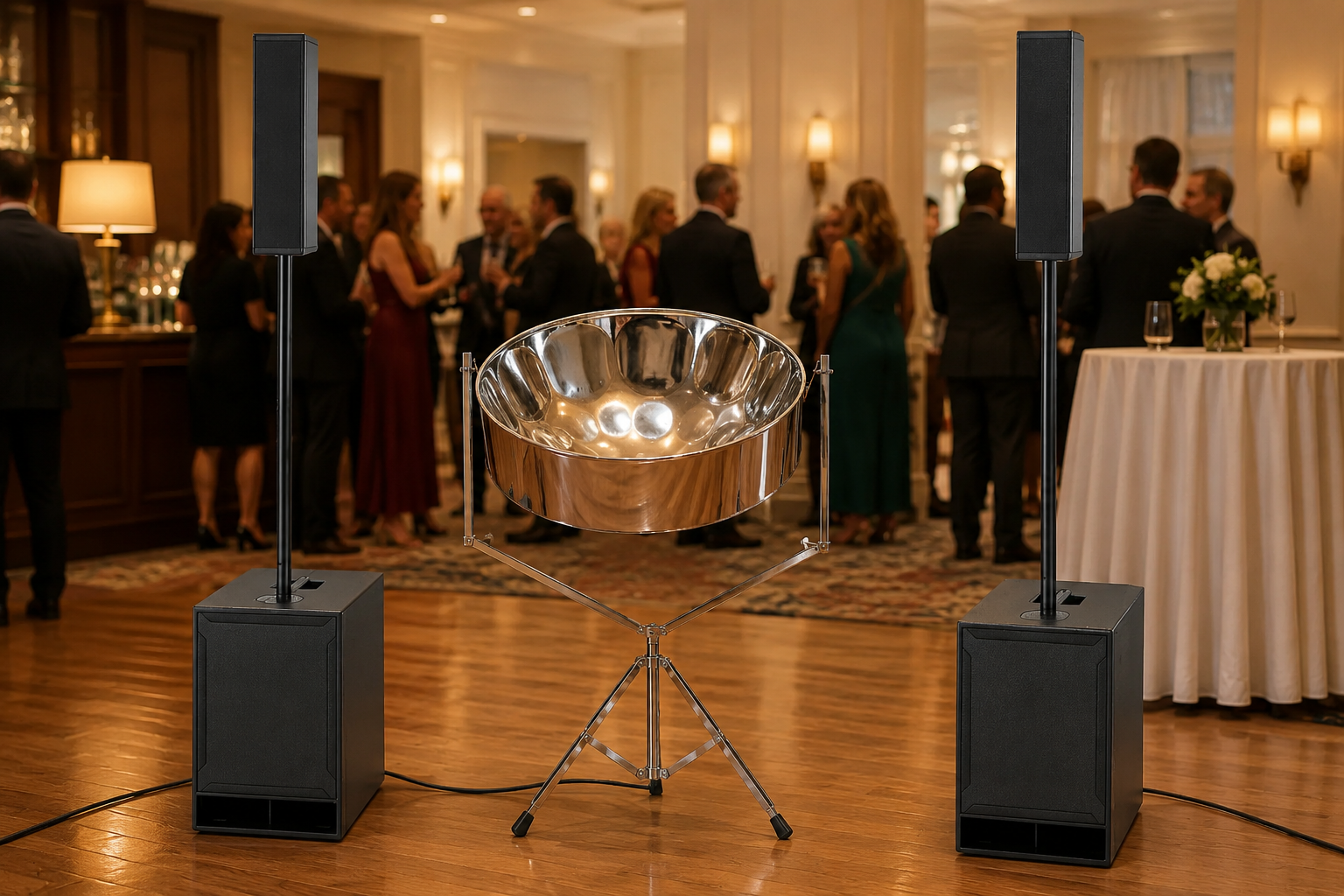
The Box Miniray Array PA System: Small Footprint, Surprisingly Grown-Up Sound
Arrive at a function with a PA that looks small enough for hand luggage and guests may wonder whether the music will reach the third row. The Box Miniray Array PA System was designed to answer that doubt with a firm, bass-assisted “yes”.
Sold through Thomann under its “the box” house brand, the Miniray belonged to an earlier generation of compact column systems. One powered subwoofer drove two lightweight satellites, creating a tidy stereo PA for rehearsal rooms, acoustic performers, mobile entertainers and small stages.
The Miniray is no longer visible in Thomann’s current complete PA-system catalogue, so this is not a review of a shiny new product that can simply be dropped into an online basket. It is a researched guide to a legacy system that still appears in rehearsal rooms, equipment stores and second-hand adverts. If you own one, are considering a used example or simply want to know why these compact systems became popular, the Miniray remains an interesting little machine.
What exactly is the Box Miniray?
The Miniray is a powered 2.1 PA: one active subwoofer, two passive satellite tops and the amplification needed to run the complete system. According to the official Thomann Miniray manual, the subwoofer amplifier was rated at 400 watts RMS, while the two satellites were rated at 200 watts RMS each. On paper, that gives an 800-watt RMS system across the three enclosures, although wattage should never be treated as a direct substitute for measured loudness, coverage or sound quality.
The subwoofer contains a 12-inch neodymium driver. Each tall, narrow satellite contains four 3.5-inch neodymium full-range drivers behind a protective perforated grille. The satellites cover the mid and high frequencies while the sub supplies the weight beneath them. Period listings quoted a 90-degree horizontal by 20-degree vertical dispersion pattern for the tops. In plain English, the sound was designed to spread broadly across a room while remaining more tightly controlled from floor to ceiling.
That shape is why people call the Miniray a line array. Technically, the phrase deserves care. Electro-Voice’s explanation of line arrays notes that true line-array behaviour depends on loudspeaker elements combining in a deliberately controlled way; a vertical row of drivers is not enough. It is fairest to call the Miniray a compact column or line-source-style PA, not a miniature flown arena array.
The key specifications at a glance
The original complete-system documentation gives the following figures:
| Component | Verified specification |
| System format | One active subwoofer and two passive satellite tops |
| Subwoofer | 12-inch neodymium driver; 400 W RMS / 800 W peak |
| Satellites | Four 3.5-inch neodymium full-range drivers per top; 2 x 200 W RMS / 2 x 400 W peak |
| Frequency range | Sub: 48-140 Hz; satellites: 140 Hz-19 kHz |
| Quoted sound pressure | Sub: 96 dB sensitivity / 122 dB maximum; satellites: 98 dB / 121 dB maximum |
| Satellite impedance | 4 ohms |
| Quoted top coverage | 90 degrees horizontal x 20 degrees vertical |
| Subwoofer dimensions and weight | 345 x 490 x 470 mm; 19 kg |
| Satellite dimensions and weight | 115 x 485 x 150 mm; 3 kg each |
Source: Thomann Miniray system manual (2015)
The figures explain the appeal. The loudspeakers weigh about 25 kg before poles and cables, but the parts travel separately. The 19 kg sub is a meaningful lift; the 3 kg satellites are almost comically manageable beside conventional wooden tops.
A clever design for mobile work
The amplifier, inputs and controls sit on a recessed rear panel, helping protect them in transit. The sub has one top handle near its centre of gravity. An independent AMAZONA test by musician and sound engineer Axel Ritt praised the portability but wished for two side handles. Anyone carrying 19 kg through a hotel kitchen will understand.
The satellites use moulded housings rather than bulky timber cabinets. Their NL4 speaker connectors are recessed and angled, reducing the likelihood of a cable being sharply bent where it enters the box. Standard pole sockets allow the tops to be raised above the audience. This matters enormously: a compact speaker aimed into a row of coats, shoulders and elaborate wedding hats will lose clarity and reach, however encouraging the brochure looks.
Package contents varied. The 2015 independent review stated that only the mains lead accompanied the tested system, while Steelasophical’s earlier Miniray system page described a later bundle containing NL4 speaker leads, an XLR link cable and adjustable poles. If buying used, never assume that “complete” means complete. Ask for a photograph showing the sub, both satellites, two suitable speaker cables, mains lead, poles or stands and any protective covers.
Inputs, outputs and useful controls
The Miniray’s rear panel is old-school in a reassuring way. It accepts stereo signals through balanced XLR/quarter-inch combination sockets and unbalanced RCA inputs. Balanced XLR line outputs allow the incoming signal to be passed onwards, while two NL4 outputs feed the satellites. A dedicated output can connect another active bass cabinet, enabling the system to gain more low-frequency headroom when the job demands it.
The manual documents separate Main Level and Sub Level controls, a 0/180-degree sub phase switch, status LEDs and a High Shelf control. The LEDs show power, incoming signal, limiting and protection status. If the Limit light is constantly protesting, the correct technical response is not to place black tape over it. Reduce the level. Distortion is a warning that the amplifier or loudspeakers are being driven beyond a sensible operating range.
There is a small documentation wrinkle worth knowing. The official manual labels a High Shelf control, while the independent review describes the same control area as including crossover-frequency adjustment. This may reflect a revision, translation or panel difference. Follow the labels and manual for the exact unit in front of you rather than assuming that every Miniray was identical.
There is no Bluetooth, app-controlled DSP, automatic feedback suppression or built-in multi-channel mixer. A performer already using a mixer may prefer that simple signal path, but a used Miniray should be judged as a loudspeaker system, not a modern all-in-one hub.
How did it sound?
The AMAZONA listening test described punchy, responsive bass and a generally balanced satellite sound. The reviewer heard a slightly sharp upper end with some material but praised the useful reach when the tops were mounted high enough.
That combination makes sense. Four small drivers per side provide more radiating area than a single tiny speaker and help project vocals, melodies and speech. The 12-inch sub removes the burden of producing bass from those small cones. Properly balanced, the result can sound much larger than the cabinets look.
Compact systems still obey physics. The handover between the sub and small drivers can expose a lower-midrange weakness. Push hard and the top may become aggressive; demand sustained club bass and one 12-inch driver will run out of authority. The Miniray sounds grown-up, but it is not a touring system.

the box Miniray Array PA System
Ritt’s conclusion was positive: he considered it suitable for small stages and audiences of roughly 100, particularly for speech and acoustic acts, while recommending extra bass support for a full rock band. Treat that number as a reviewer’s practical estimate, not a guaranteed capacity. Audience size alone tells you very little. A carpeted room with 80 attentive diners is not the same job as 80 dancing guests outdoors, where there are no helpful walls and ceilings to contain the energy.
Why it makes sense for steelpan and backing tracks
For solo steelpan, a duo or compact Caribbean setup, the format has obvious attractions. The mallet strike must stay crisp, the pitch must sing and the shimmer must not become metallic fog. Backing tracks also need enough bass support to make kick drum and percussion convincing.
The separate sub-and-satellite design gives the operator independent influence over bass level. At a wedding ceremony or drinks reception, the sub can be restrained so that music feels warm without turning every conversation into a shouting competition. At a birthday party or evening set, it can be brought forward carefully to give reggae, soca, soul and dance material more movement.
Wide horizontal coverage helps when guests spread across a marquee, hotel or terrace. The narrow vertical pattern makes aiming important but can direct energy towards people rather than reflective surfaces. Slim tops also occupy less visual space beside polished steelpans. Clients hired music, not an exhibition entitled “A Brief History of Speaker Cabinets”.
The caveat is the Miniray’s potentially lively top end. A bright instrument played through a bright system can become tiring. Begin with a neutral mixer EQ, listen from the audience area and make small corrections. Cutting a troublesome frequency modestly is usually more natural than boosting everything else in retaliation. Most importantly, set gain properly so the system is not being asked to create clarity by clipping.
Setting up the Miniray properly

Good deployment beats enthusiastic knob-twiddling. Put the sub on a stable, dry surface. The manual describes an indoor-use product and warns against moisture, direct sun, dirt and strong vibration. Outdoors, proper weather protection, safe power and a backup plan are essential; a plastic bag over a live amplifier is not a career strategy.
Place the satellite tops where they can reach the audience without obstruction. The independent test recommended stands capable of raising them to around two metres and strongly discouraged firing directly at listeners’ ears from close range. Exact height and angle depend on the room, stage and nearest guests. Secure stands properly, keep legs out of traffic routes where possible and tape or cover cables to reduce trip hazards.

Connect everything while powered off. Run the mixer’s left and right outputs to the corresponding Miniray inputs, then connect each satellite with the correct four-pole NL4 speaker cable. Turn source devices and mixer on first, with levels down, and power the Miniray last. When shutting down, reverse the order so the loudspeakers go off first.
Play familiar material. Raise the main level gradually, then adjust the sub until the mix has weight without boom. Walk the room and listen at the front, sides and back. If bass seems thin, check placement and test the phase switch. If Protect stays lit, power down and inspect the cabling.
Where the Miniray works best
The system is at its most convincing when the brief values intelligibility, musicality and neat presentation more than extreme sound pressure. Think wedding ceremonies, drinks receptions, speeches, solo or duo performances, acoustic music, rehearsals, background entertainment, small bars, community events and private parties of sensible scale.
It is less suitable for a loud rock band without additional reinforcement, bass-heavy DJ work at club level, large outdoor crowds or any event where substantial headroom is non-negotiable. A second sub may add low-frequency capability, but it does not transform the small satellite drivers into large-format tops. Choose a system for the hardest part of the job, not the easiest ten minutes during soundcheck.
Buying a used Box Miniray in 2026
Because the Miniray does not appear in the present Thomann catalogue, a buyer today is likely to encounter used equipment or old stock. Condition matters more than the original headline specification. Begin with the active subwoofer, because it contains the amplification and represents the most complicated and expensive part of the system.
Power it from cold and listen for hum, crackles, fan noise or intermittent operation. Test both inputs, satellite outputs and every control. Confirm that Signal behaves normally, Limit stays off at modest level and Protect clears. Play varied music and listen for rattles, missing drivers or an uneven satellite.
Inspect the cone, bass port, cabinet, pole fittings and connectors. Verify that all four drivers in each satellite work. Check NL4 leads for damaged latches or improvised wiring. The manual specifies 4-ohm satellites and a four-pole connection; unsuitable replacements or wrongly wired leads could damage the amplifier.
Ask how the system was used and stored. A unit that spent its life delivering speeches in a dry hotel may be a better prospect than one that survived years beside a smoke machine, a leaking marquee wall and a DJ who regarded red limiter lights as festive decorations. Request the correct manual for the product revision. If the seller includes a Miniray Slave Sub, note that its separate manual quotes 400 W RMS, a 48-180 Hz range and an 18 kg weight; do not confuse those figures with the complete system’s 19 kg main sub and 48-140 Hz published range.
Finally, compare the asking price with current compact systems. A bargain stops being a bargain if it immediately needs specialist amplifier repair, replacement proprietary parts, new poles and a full set of cables. Conversely, a clean, fully tested Miniray at a sensible price may still be a practical working tool for someone who values simple connections and already owns a mixer.
Safety, volume and professional judgement
The quoted maximum sound-pressure figures exceed levels capable of harm; specifications are not targets. UK Health and Safety Executive event-noise guidance stresses the organiser’s duty to manage exposure and recommends audience limits for average and peak levels. Workplace rules also protect musicians and crew.
Use the smallest level that delivers clear, enjoyable coverage. Keep loudspeakers away from unprotected ears, monitor exposure over time and provide appropriate hearing protection where the risk assessment requires it. Professional sound is not measured by how long everybody’s ears ring after the van has left.
The final verdict
The Box Miniray was a persuasive compact 2.1 system: a powered 12-inch sub, two featherweight satellites, useful stereo connections and broad coverage in a rig one reasonably fit person could move. Contemporary testing praised its bass, balance, reach and portability, explaining why examples remain in use.
Its greatest trick was psychological as well as technical: it made a compact stage look intentional, while still giving music the authority guests expected from entertainment.
Its limits are equally clear. This is a legacy, indoor-oriented small-event system with no modern wireless features, no onboard mixer and finite bass and lower-midrange headroom. Correct height, careful gain structure and realistic expectations are essential. Used examples deserve a thorough test, and bundle contents should never be assumed.
For speech, acoustic music, steelpan with backing tracks and stylish functions where huge boxes would be visually and practically excessive, a healthy Miniray can still make a strong case for itself. It will not replace a large professional PA for demanding crowds. It may, however, deliver exactly what many mobile performers need: clean coverage, convincing musical weight and fewer pieces of equipment that make the loading bay feel like a punishment.
Sometimes the cleverest PA is not the one that frightens the venue manager on arrival. It is the one that disappears into the room, does its job beautifully and leaves guests talking about the music rather than the machinery.

Research sources
Material specifications are grounded in manufacturer documentation and checked against an independent period review. Practical capacity depends on programme, venue acoustics, placement and required headroom.
Miniray PA system user manual. Musikhaus Thomann; 3 February 2015. Open source
Test: the box Miniray, Line Array System. Axel Ritt, AMAZONA.de; 26 June 2015. Open source
the box Miniray Array PA System. Gary Trotman, Steelasophical; 3 February 2020. Open source
the box pro Complete PA Systems. Thomann; accessed 29 August 2026. Open source
Audio Basics: Loudspeakers & Mics. Electro-Voice; accessed 29 August 2026. Open source
History, Development and Applications of Column Loudspeakers. Q-SYS; 30 May 2025. Open source
Noise. UK Health and Safety Executive; updated 9 January 2026. Open source
The Box Miniray Slave Sub – User Manual. Notice-Facile manual mirror; accessed 29 August 2026. Open source
SEO publishing notes
| Focus keyphrase | the box Miniray Array PA System |
| Suggested slug | /the-box-miniray-array-pa-system/ |
| Meta title | The Box Miniray Array PA System: An Honest Review |
| Meta description | A detailed guide to the Box Miniray Array PA System: specifications, sound, setup, portability, limitations and advice for buying used. |
Publishing structure: use the article title as the only H1. Convert each major section to H2. The article text between the title and final paragraph is exactly 2,500 words in the source draft, including headings and the specification table.